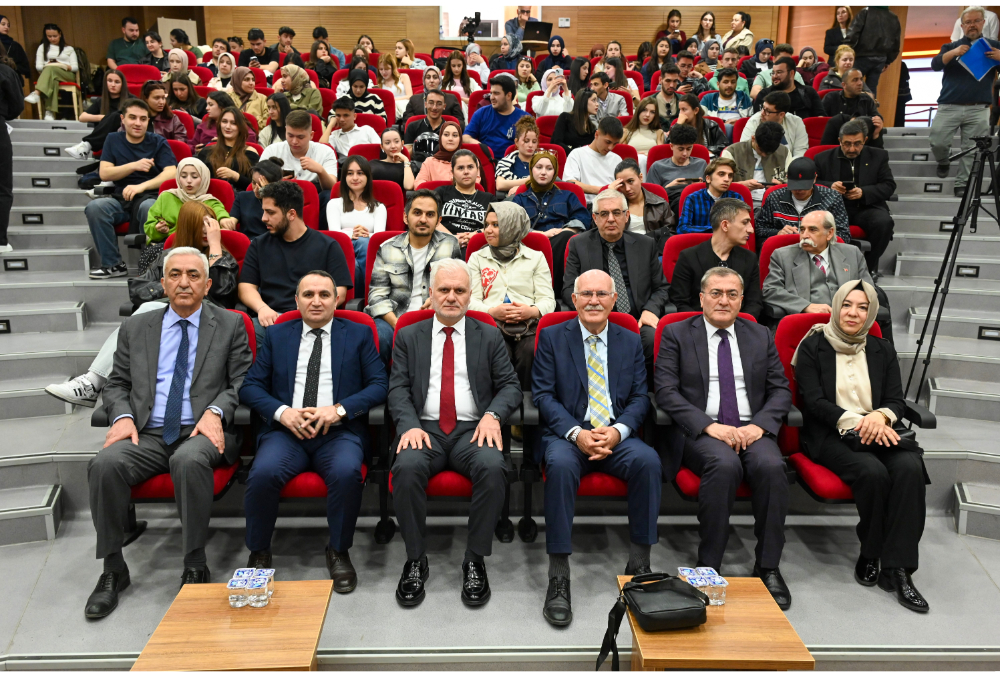
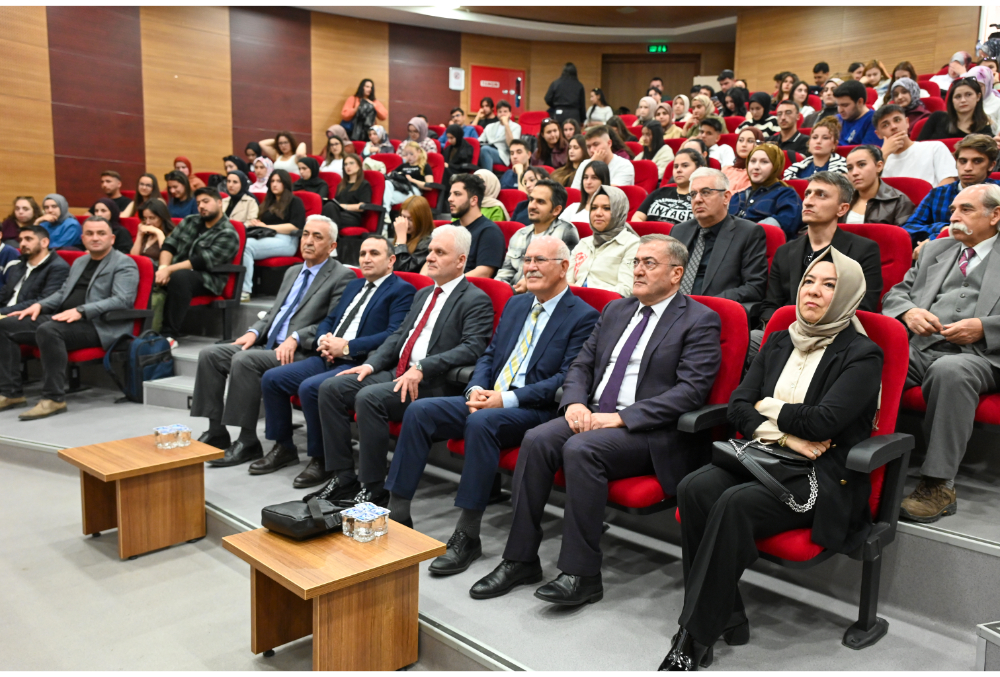
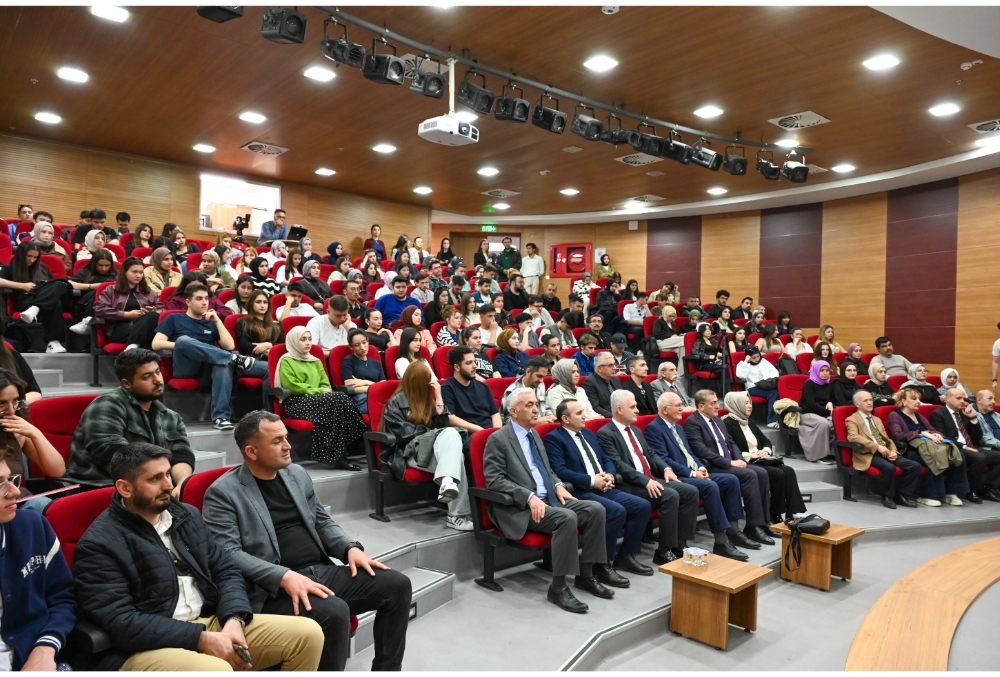
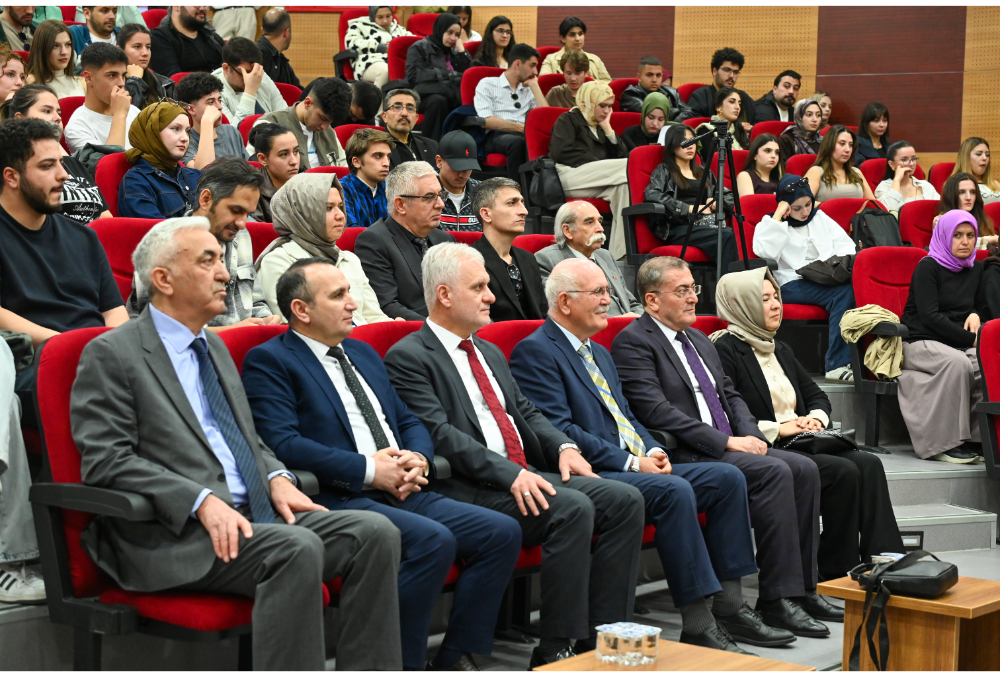
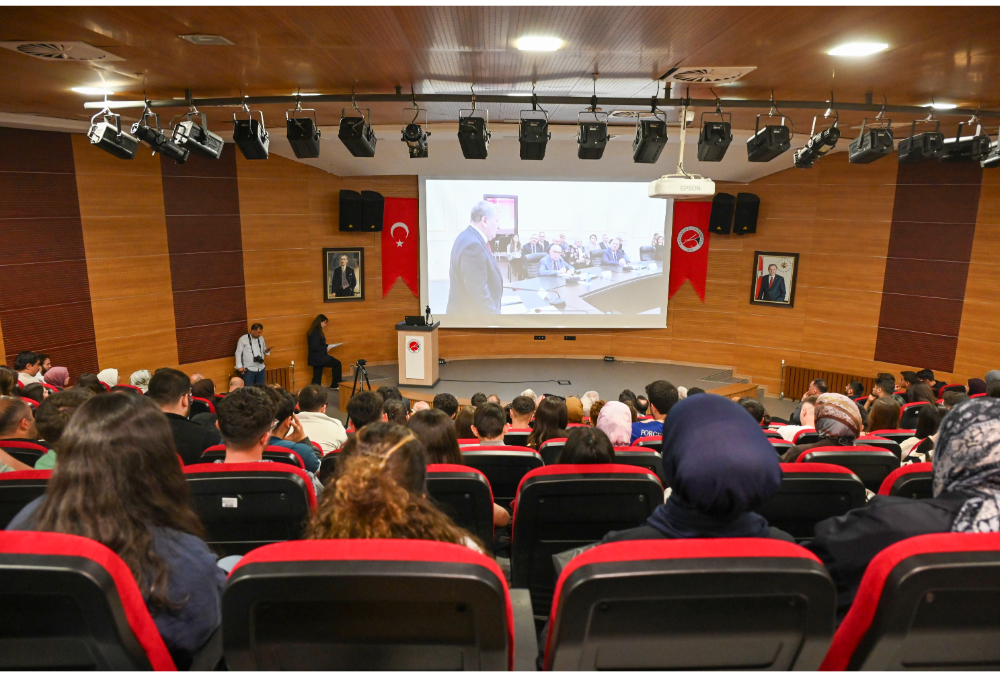
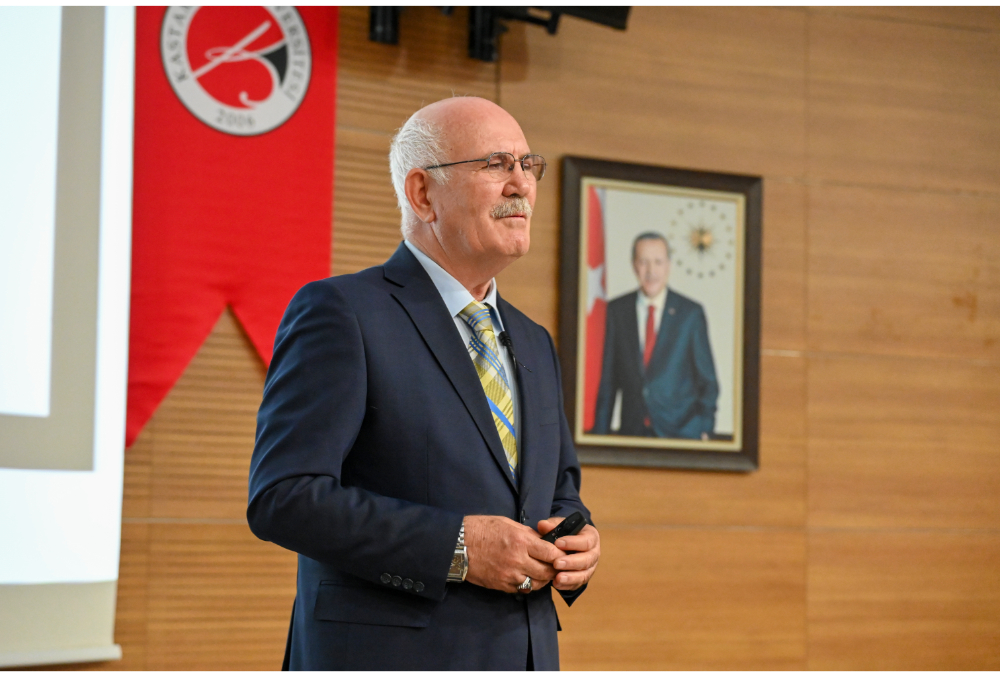
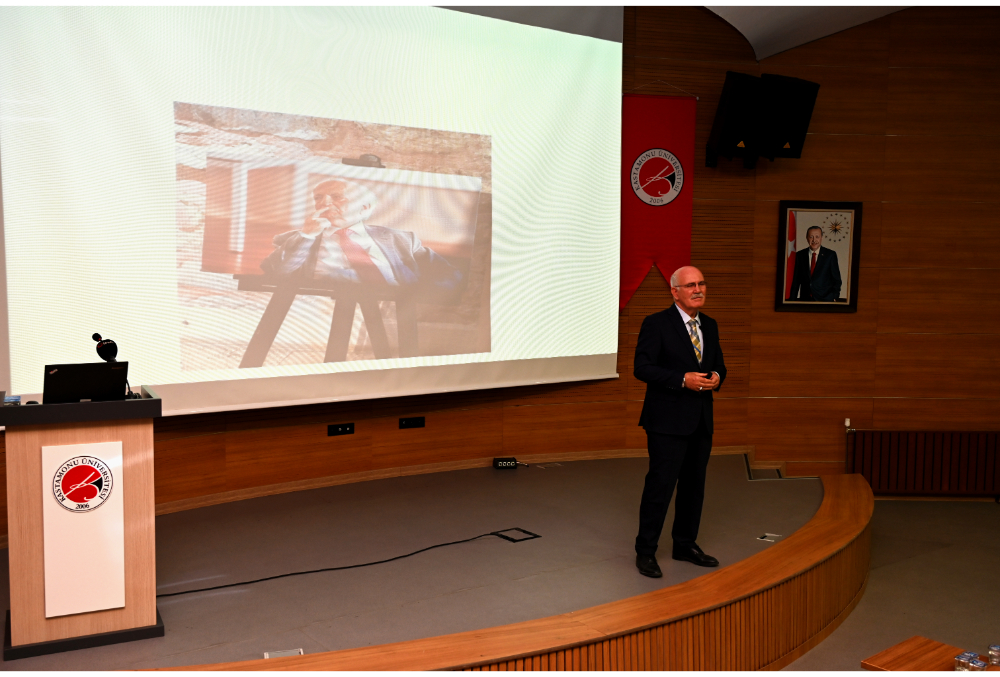
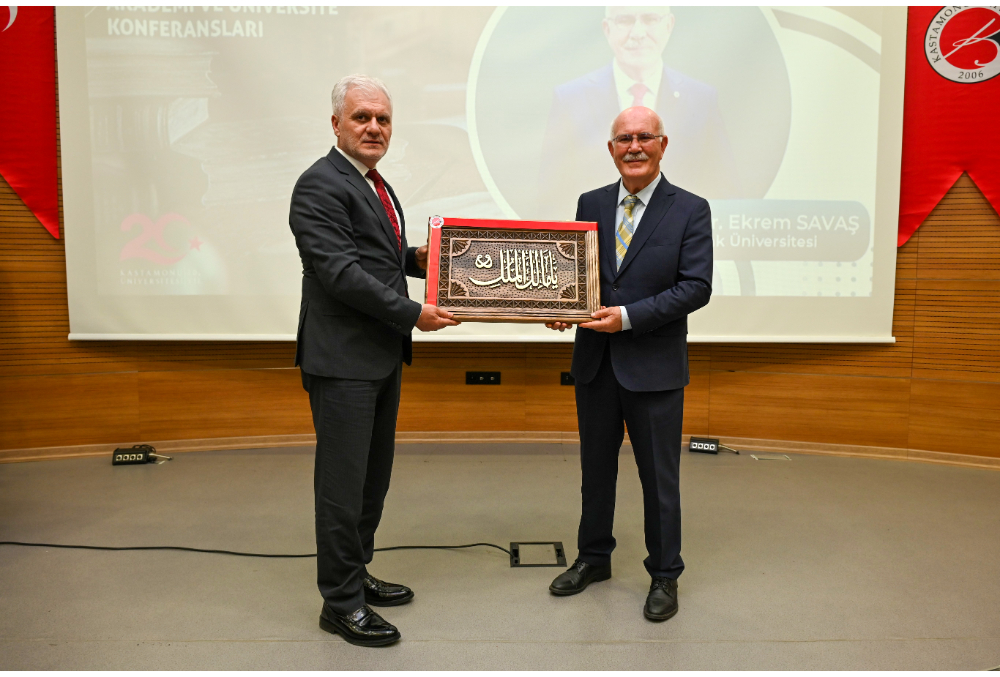
Kastamonu University hosted a conference titled "The Place of the Islamic Cultural World in the History of Science," featuring Prof. Dr. Ekrem Savaş, a faculty member at Uşak University and a full member of the Turkish Academy of Sciences (TÜBA), as a speaker, as part of the "University Conferences" program conducted by TÜBA.
On April 28, 2026, the program held in the Cemil Meriç Hall of our University's Central Library was attended by Vice Rectors Prof. Dr. Mehmet Atalan and Prof. Dr. Ömer Küçük, as well as Prof. Dr. Ekrem Savaş, academics, and students.
The program began with the screening of the TÜBA promotional film, followed by the conference presentation, during which information about Prof. Dr. Ekrem Savaş's academic studies was shared.
The conference addressed the place of Islamic civilization in the history of science from multiple perspectives. Prof. Dr. Ekrem Savaş, drawing attention to the contributions of the Islamic world to scientific development in many fields from mathematics to astronomy, from geography to chemistry, stated that reading the history of science solely from a Western-centric perspective is an incomplete approach.
Emphasizing the importance of learning Ottoman Turkish and Arabic for understanding the scientific heritage, Prof. Dr. Savaş advised students to improve themselves in these fields. In his speech, Savaş, who also mentioned Prof. Dr. Fuat Sezgin, known for his studies on the history of Islamic science, touched upon Sezgin's contributions to the scientific literature.
Emphasizing that science is a cumulative process, Prof. Dr. Savaş stated that the Islamic cultural world played an important role in preserving, developing, and transferring knowledge to Europe, especially during the Middle Ages. He stated that in order to understand the foundations of modern science, this scientific heritage must be read correctly.
The conference also addressed translation activities in the early Islamic world, the acceleration of information circulation with the widespread use of paper, the support of scientists, and the works presented in different disciplines from the 9th century onward. The impact of the transfer of Arabic numerals to the Latin world on scientific development was also discussed.
Prof. Dr. Savaş, noting that the intellectual legacy of past scientists serves as inspiration for today's researchers, emphasized that scientific production is directly related to cultural accumulation.
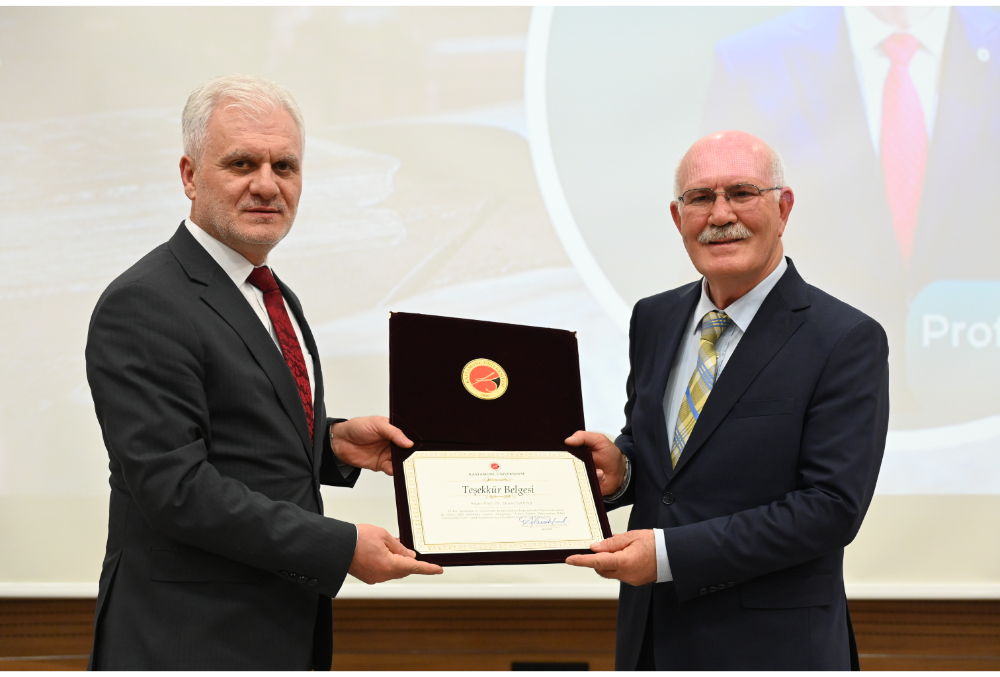
The program concluded with the presentation of a certificate of appreciation to Prof. Dr. Ekrem Savaş, followed by a commemorative photo session.