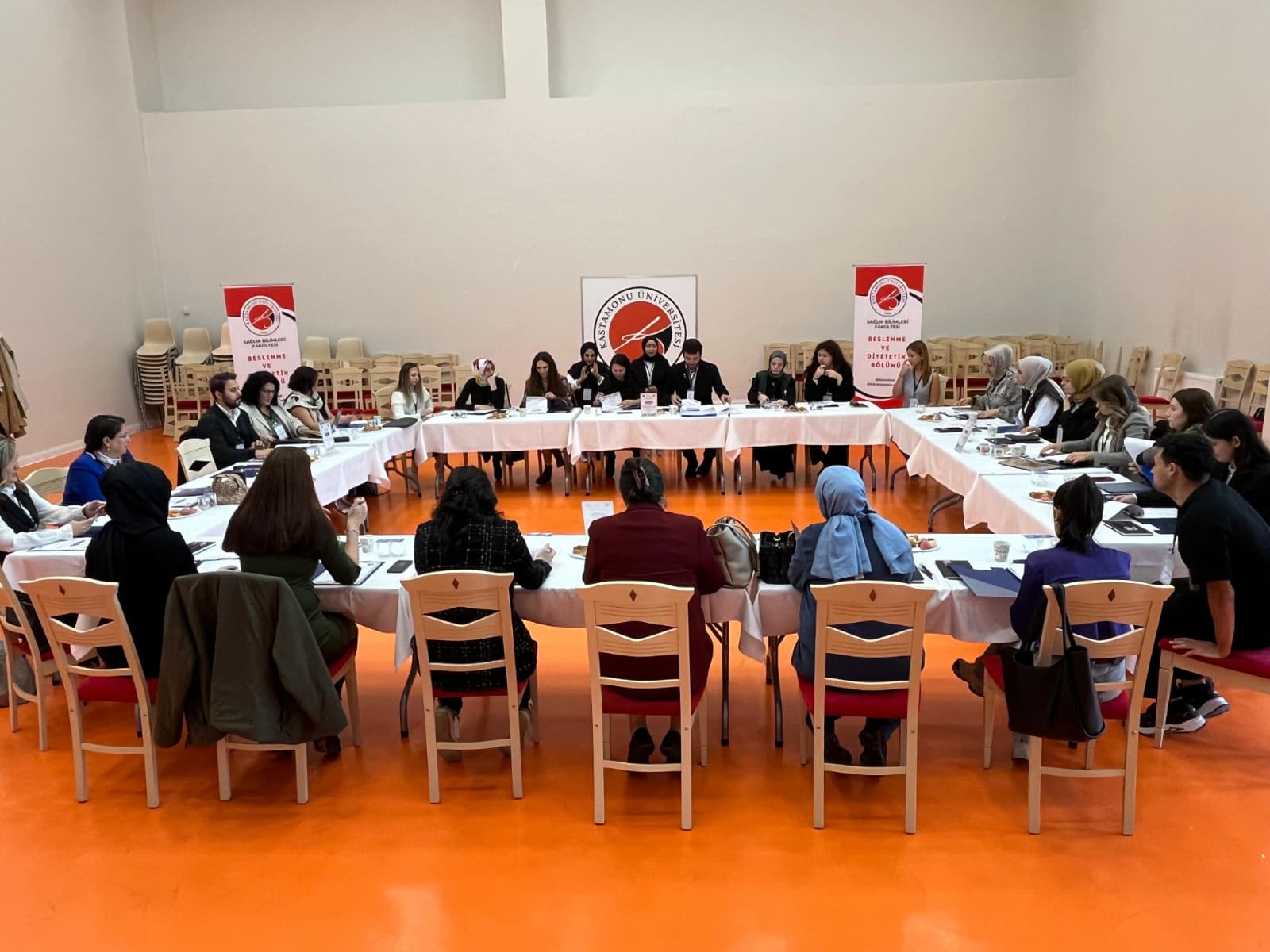
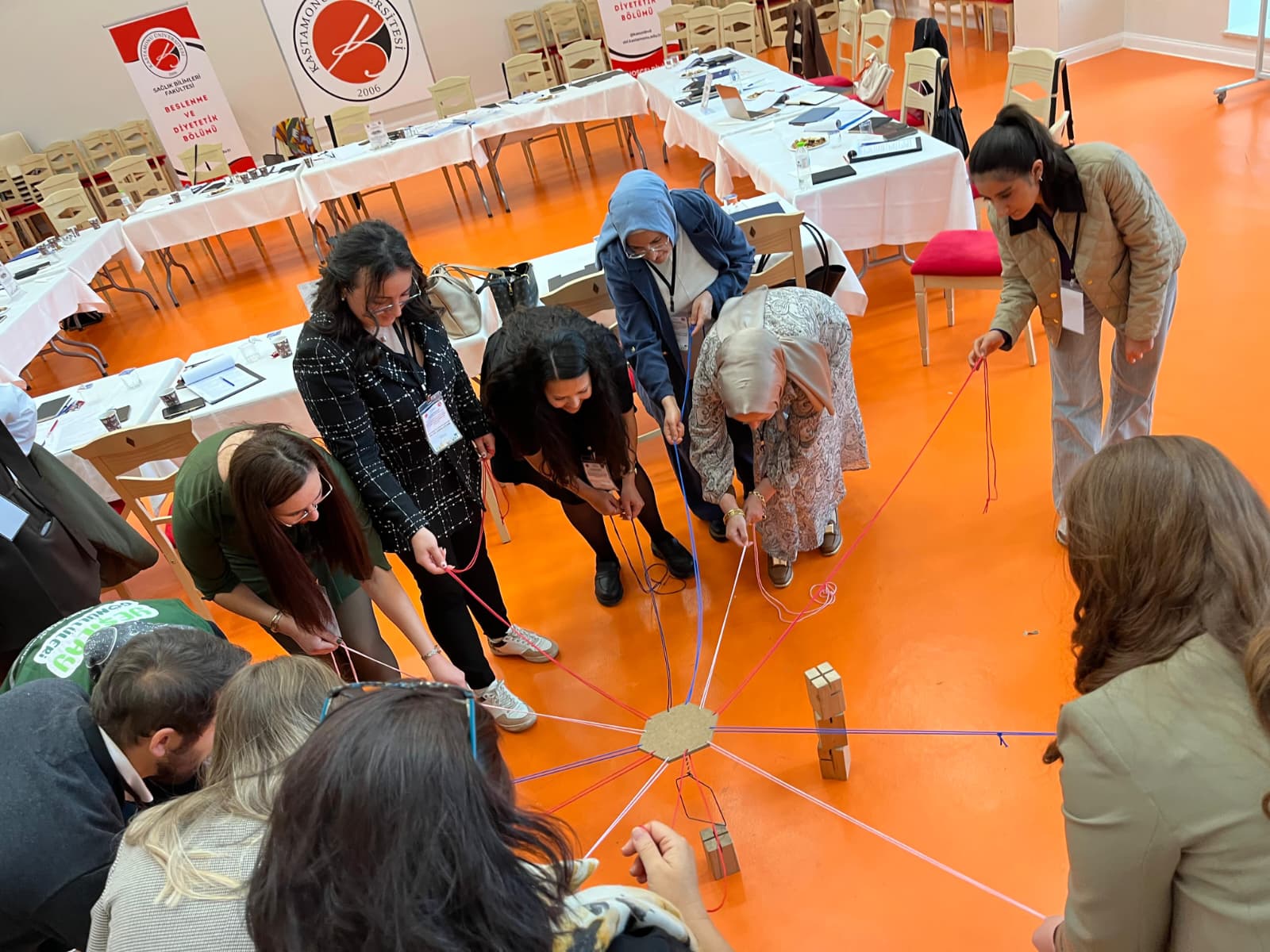
The "Workshop on the Development of Materials and Models for Nature-Based Nutrition Education with Forestry Materials," supported by the Kastamonu University Specialization Coordination Office for Forestry and Nature Tourism and coordinated by the Department of Nutrition and Dietetics at the Faculty of Health Sciences, was held on October 10-11, 2025, hosted by Kastamonu University.
At the workshop, which was held with the participation of a wide range of experts from public institutions, non-governmental organizations, and academia, the processes of developing materials and models for nature-based nutrition education for children aged 0-18 were addressed with an interdisciplinary approach.
In the process of adapting forestry materials obtained from nature (wood prints, seed collections, etc.) to educational processes, fundamental elements such as safety, pedagogical suitability, sustainability, cultural context, and scientific accuracy were evaluated holistically.
The opening remarks of the workshop were delivered by Kastamonu University Vice Rector Prof. Dr. Ömer Küçük, Faculty of Health Sciences Dean Prof. Dr. Abdulkadir Tuna, and Head of the Nutrition and Dietetics Department Tuğba Tatar.
Project and Workshop Chair Dr. Asst. Prof.Dr. Mücahit Muslu shared information about the event's purpose, scope, and operation in his opening presentation, creating a common ground for interdisciplinary collaboration. While round table discussions were held in the morning session with the participation of experts, the afternoon sessions delved into the critical topics identified, concretizing actionable recommendations. The findings obtained at the end of the day were systematically recorded by the rapporteurs.
Two separate work tables were set up as part of the workshop. In the Work Table 1 (Material Development) session, critical control points were identified under the headings of material type selection (printed, digital, physical), content alignment with reliable sources such as TÜBER, Turkish Food Codex, WHO/FAO/EFSA, pedagogical adaptation, accessibility, inclusivity, safety, hygiene, cultural adaptation, and sustainable production.
Within the scope of Study Table 2 (Model Development), the target audience and benefits of the model, a safe learning environment (Ministry of National Education approved areas, National Parks, risk analysis, AFAD protocols), age-appropriate pedagogical approaches, scientific and cultural foundations, activity plan, material and resource planning, and evaluation and monitoring processes were addressed. Additionally, safety-focused implementation criteria were defined, such as the elimination of environmental hazards, emergency plans, water and hygiene standards, and surveillance rates.
At the end of the workshop, the critical point tables produced at both tables will be compiled by the Organizing Committee in a scientifically sound manner and transformed into a draft "Consensus Report on Scientific Recommendations and Standards." The draft will be shared with participants within two weeks, accompanied by the Consensus Assessment Form, and will be revised based on the feedback received, resulting in a book co-authored by all participants. Thus, it is aimed that the outputs of the workshop will serve as a permanent resource, guiding both practical applications and contributing to the scientific literature.
The workshop was supported by local stakeholders including the Kastamonu Provincial Directorate of Youth and Sports, the Kastamonu Provincial Directorate of National Education, the Kastamonu Provincial Directorate of Health, the Kastamonu Provincial Directorate of Family and Social Services, the Kastamonu Mountaineering and Nature Sports Club (KADASK), Kastamonu Yeşilay, Kastamonu YEDAM, Kastamonu TEMA, and the Kastamonu Association for the Support of Contemporary Life. Internal stakeholders included the Scientific Research Projects Coordination Office, the Forestry and Nature Tourism Specialization Coordination Office, the TTO Social Responsibility Projects Office, the Department of Health, Culture and Sports, the Faculty of Health Sciences, the Faculty of Education, the Faculty of Forestry, and the Faculty of Sports Sciences.
The Turkish Dietitians Association (TDD), the Pediatric Dietitians Association (PEDİDER), the Sustainable Life Association (SUYADER), the International Children's Rights Ambassadors Association (ICHILD), and the Climate Pioneers organizations also contributed to the workshop as national supporters.