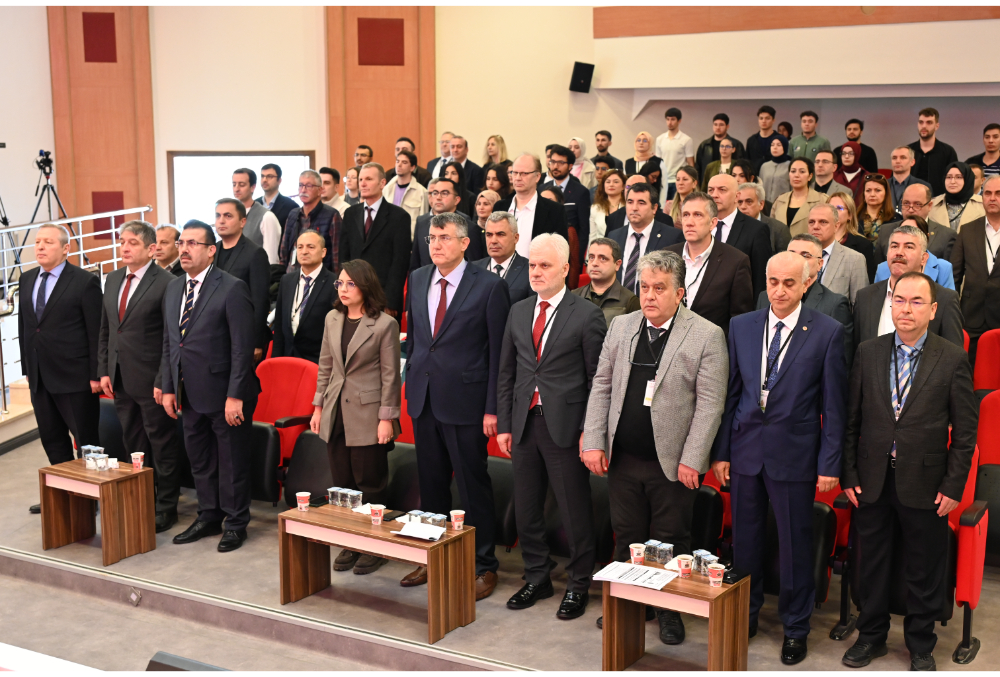
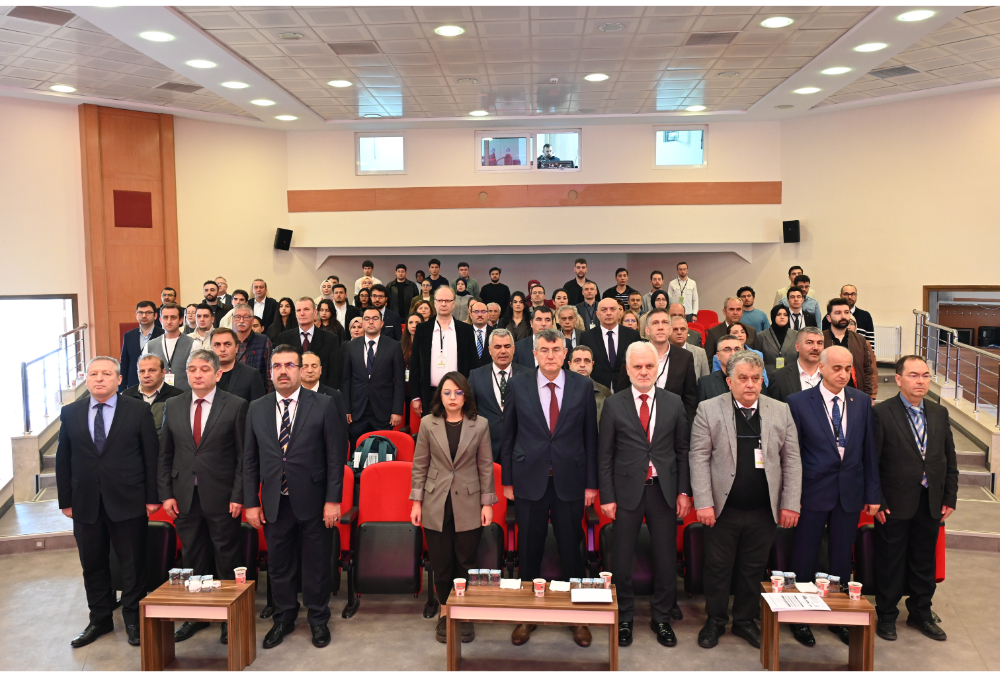
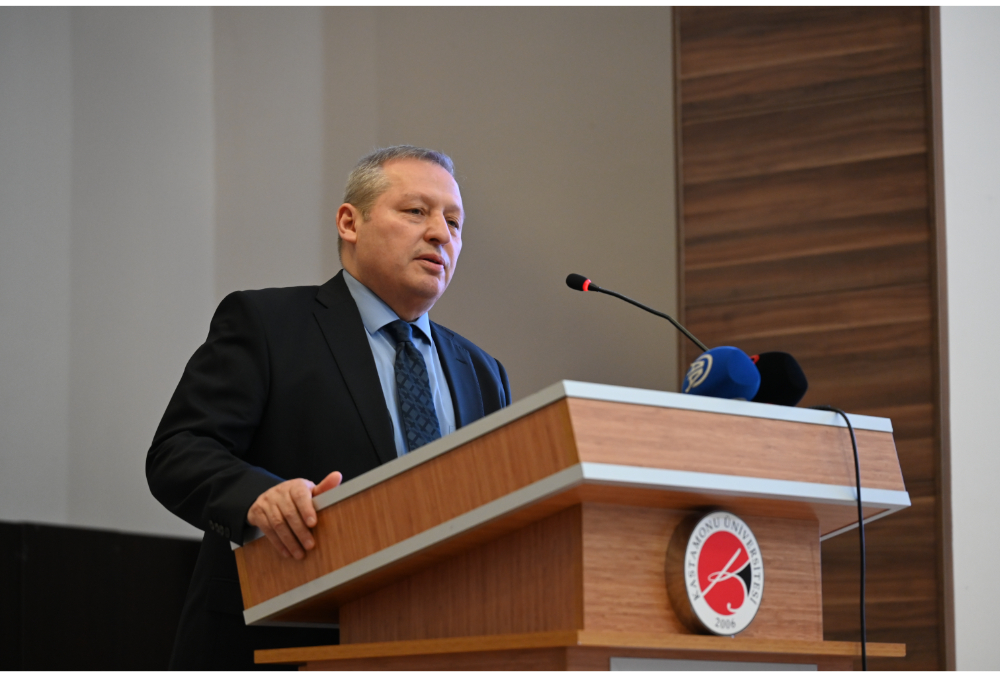
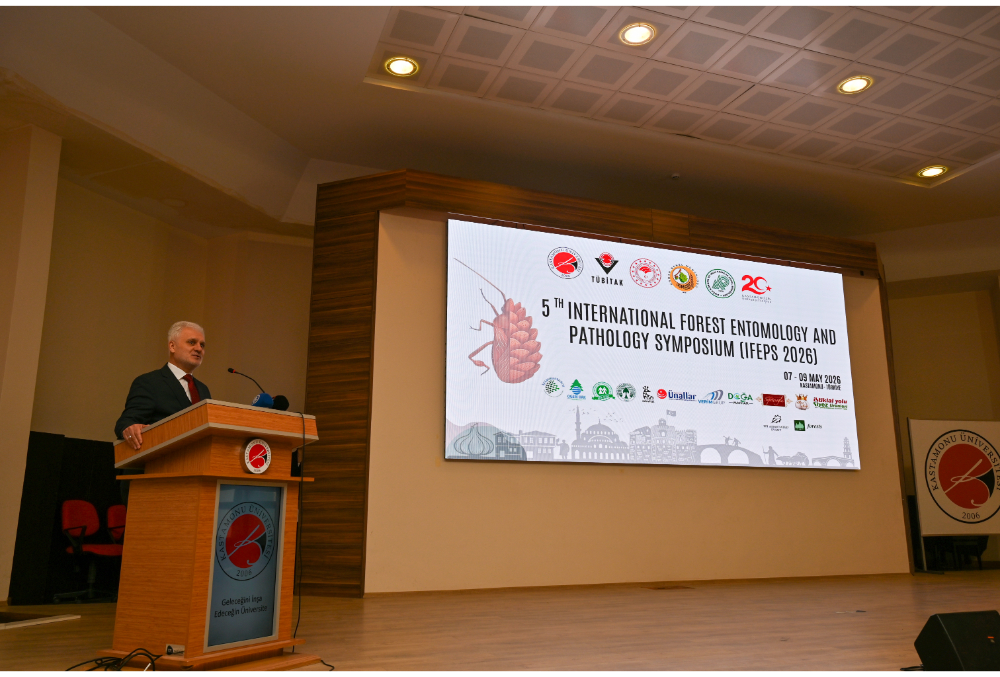
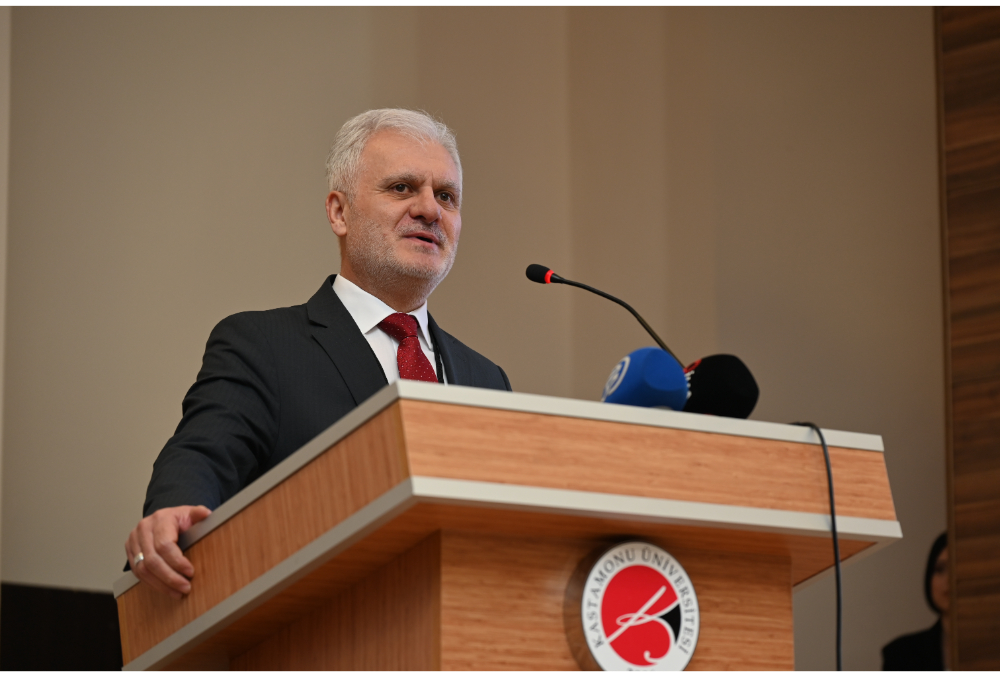
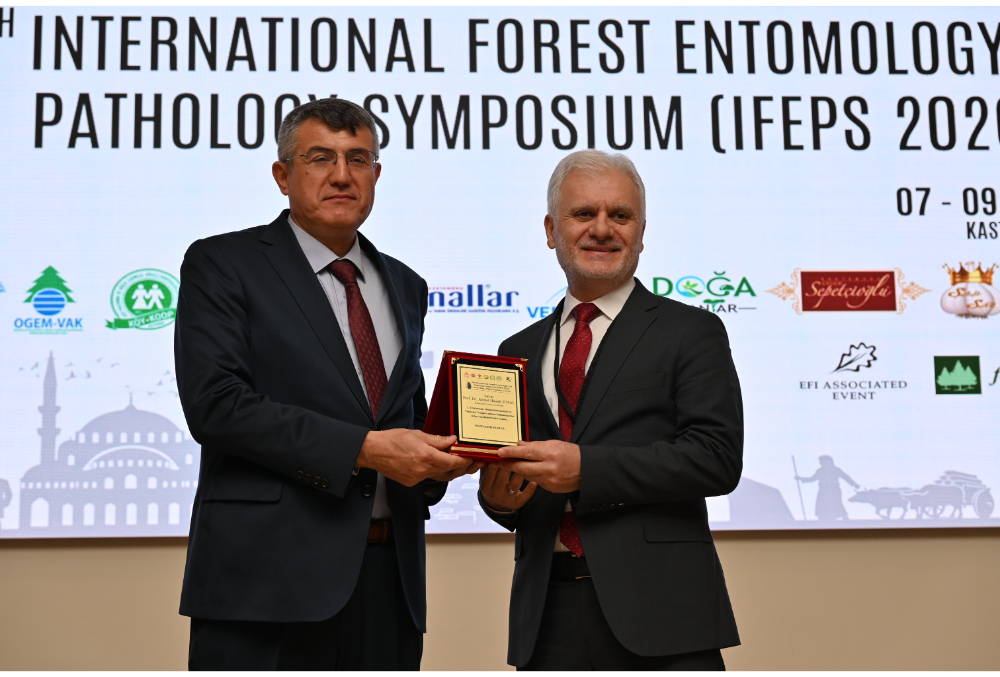
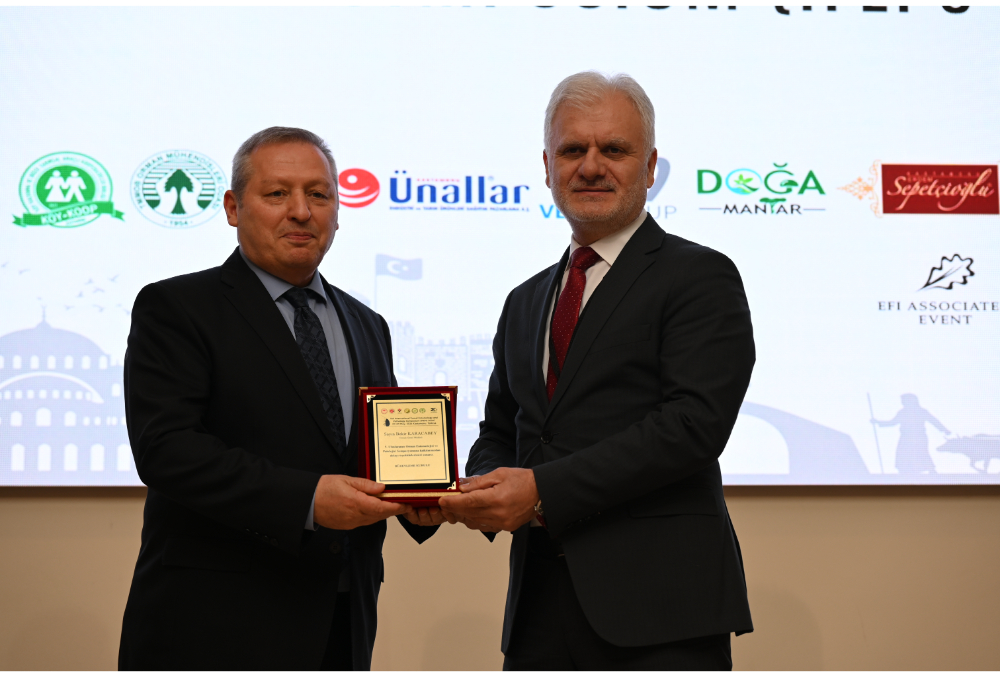
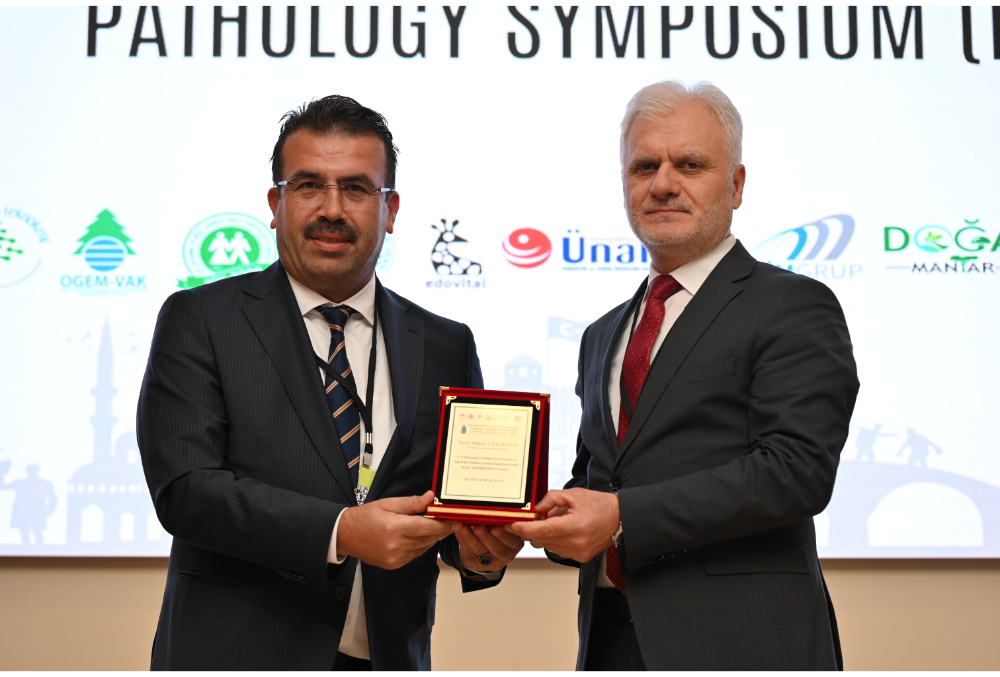
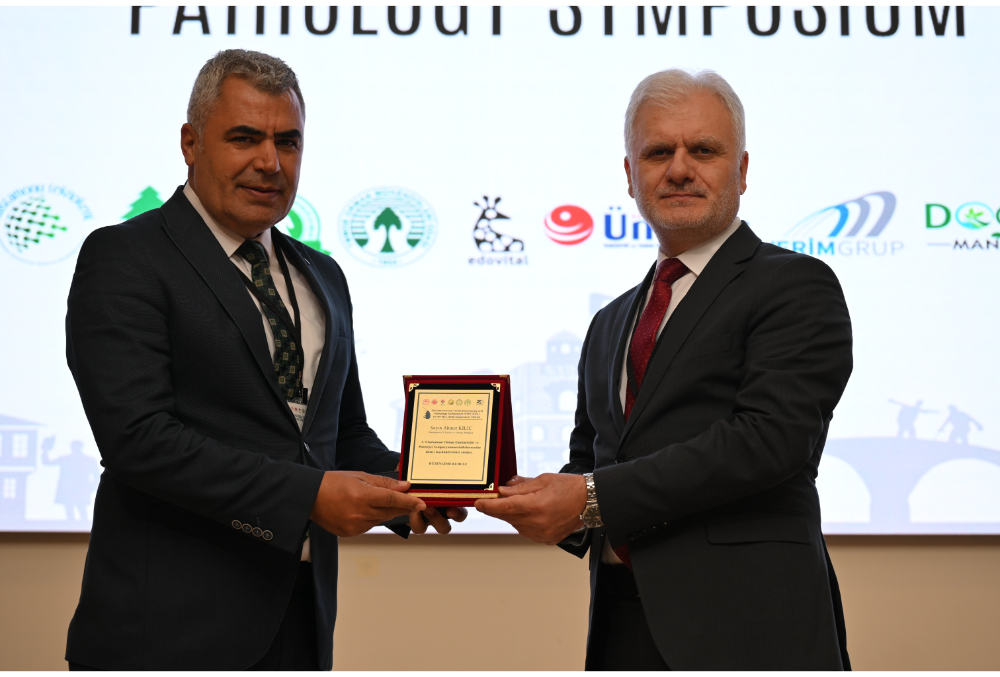
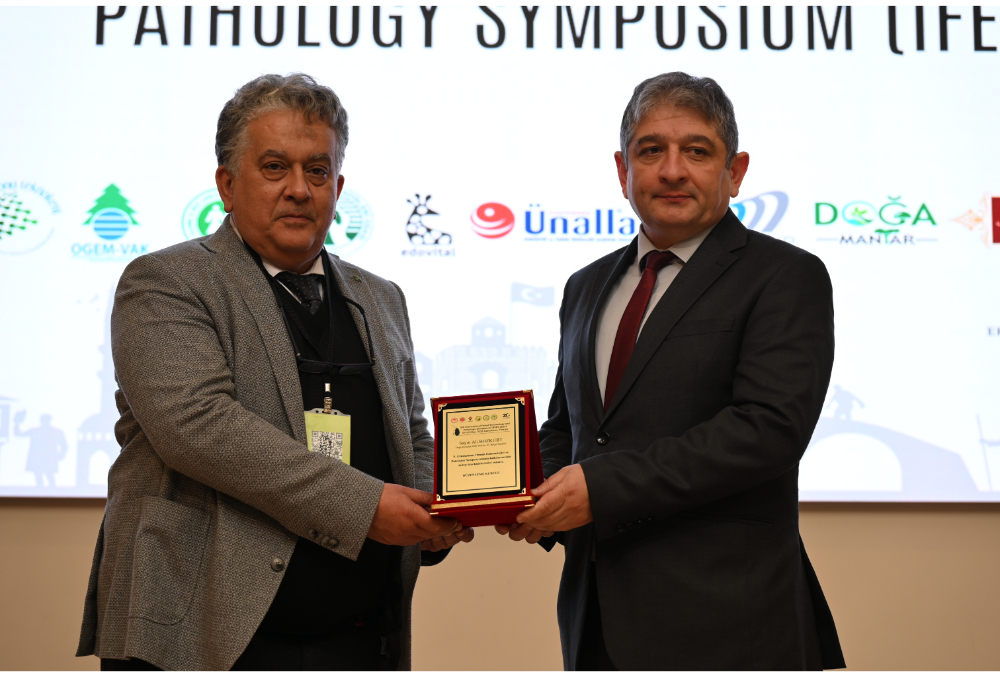
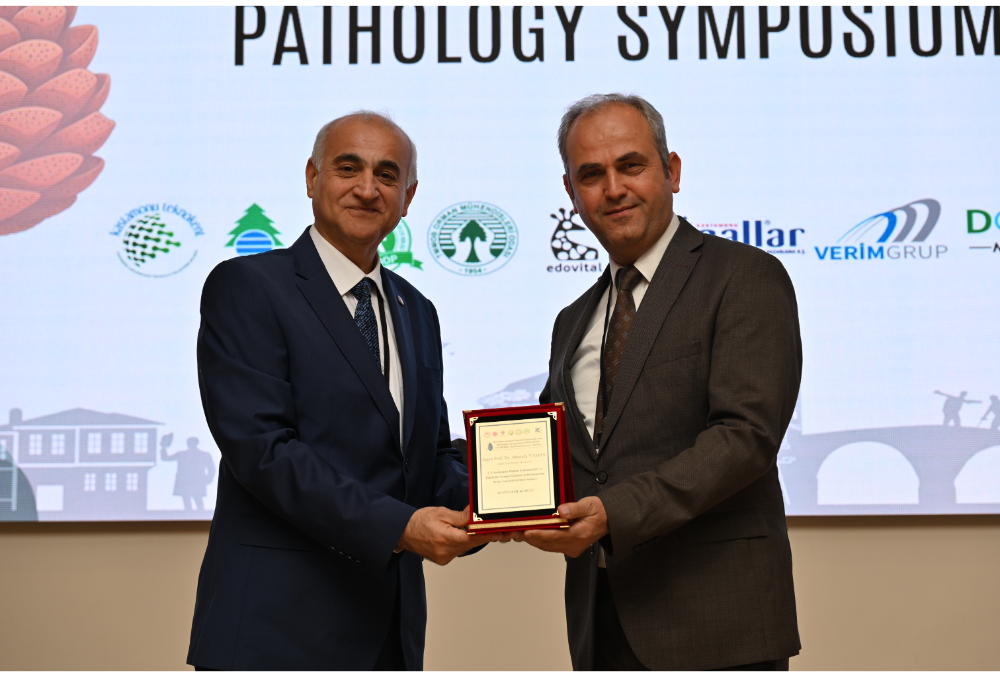
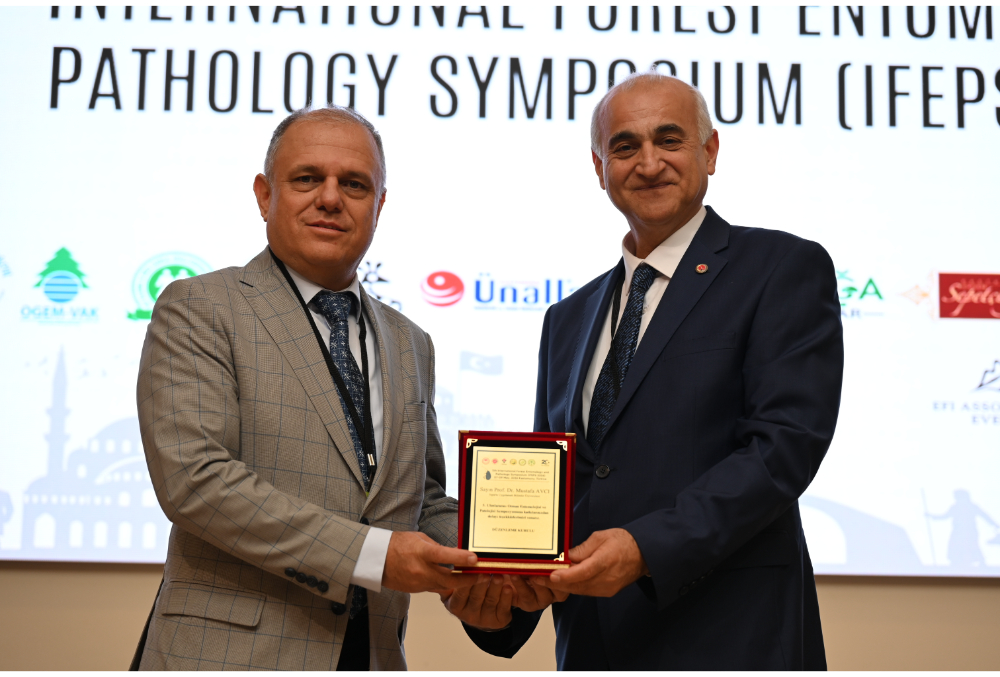
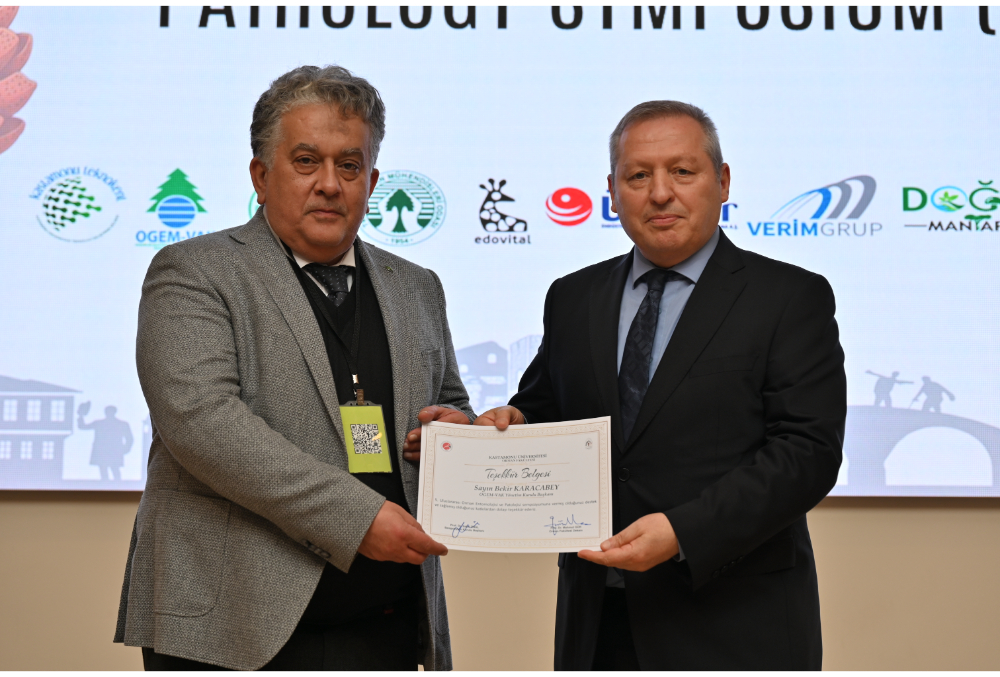
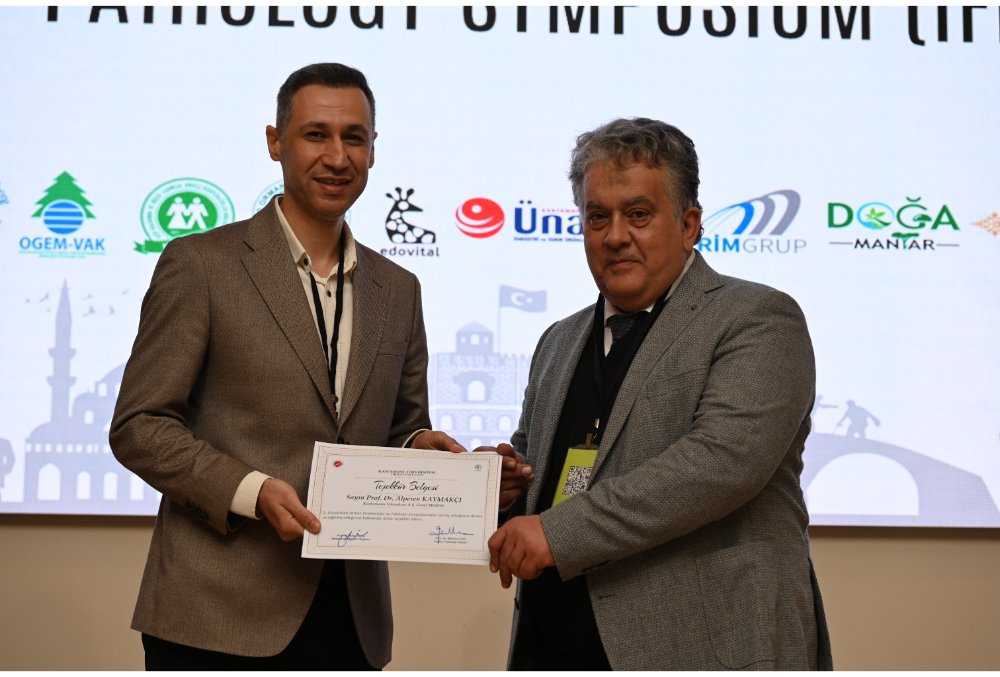
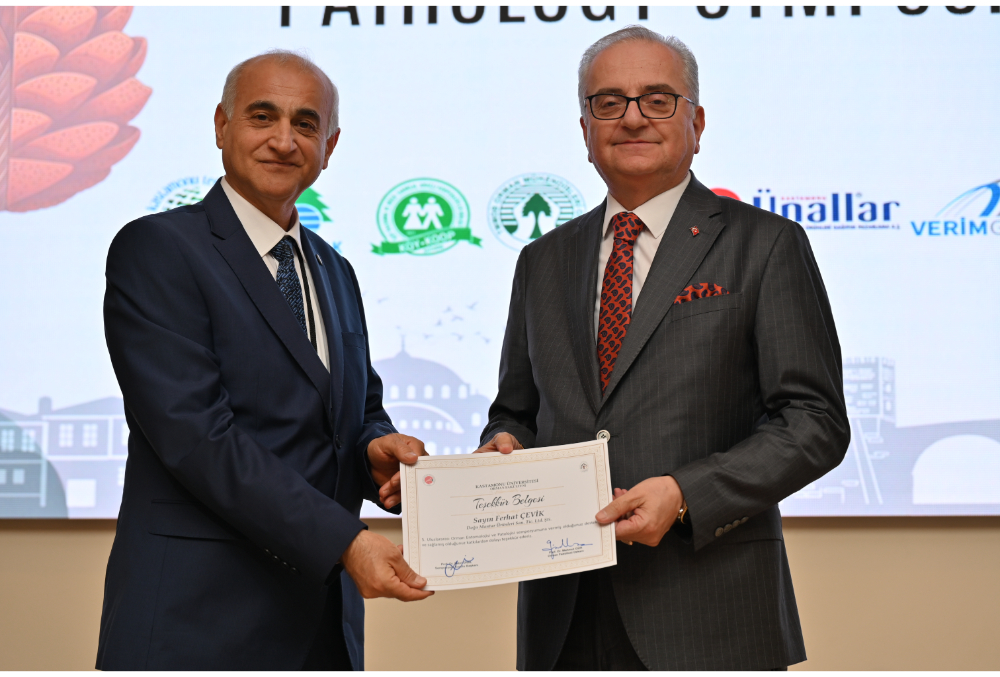
The "5th International Forest Entomology and Pathology Symposium (IFEPS 2026)," hosted by Kastamonu University, began on May 7, 2026, at the Hoca Ahmet Yesevi Cultural Center.
The event was attended by Deputy Governor Ahmet Atılkan, Deputy Mayor Eda Büyükdemirci, Vice Rector Prof. Dr. Ömer Küçük, Forest Regional Director Hakan Yaslıkaya, 10th Regional Director of Nature Conservation and National Parks (DKMP) Ali Bozkurt, Deputy Director of the Forest General Directorate's Pest Control Department Hakan Ragıpoğlu, Dean of the Faculty of Forestry Prof. Dr. Mahmut Gür, representatives from public institutions and organizations, academics, and many students.
Our university, with the support of TÜBİTAK and the General Directorate of Forestry and the General Directorate of Nature Conservation and National Parks under the Ministry of Agriculture and Forestry, is organizing a symposium that brings together leading scientists in forest health, biodiversity, and sustainable forestry.
While the symposium's opening ceremony was held at our university's Hoca Ahmet Yesevi Cultural Center, the sessions will continue at Kastamonu Technopolis.
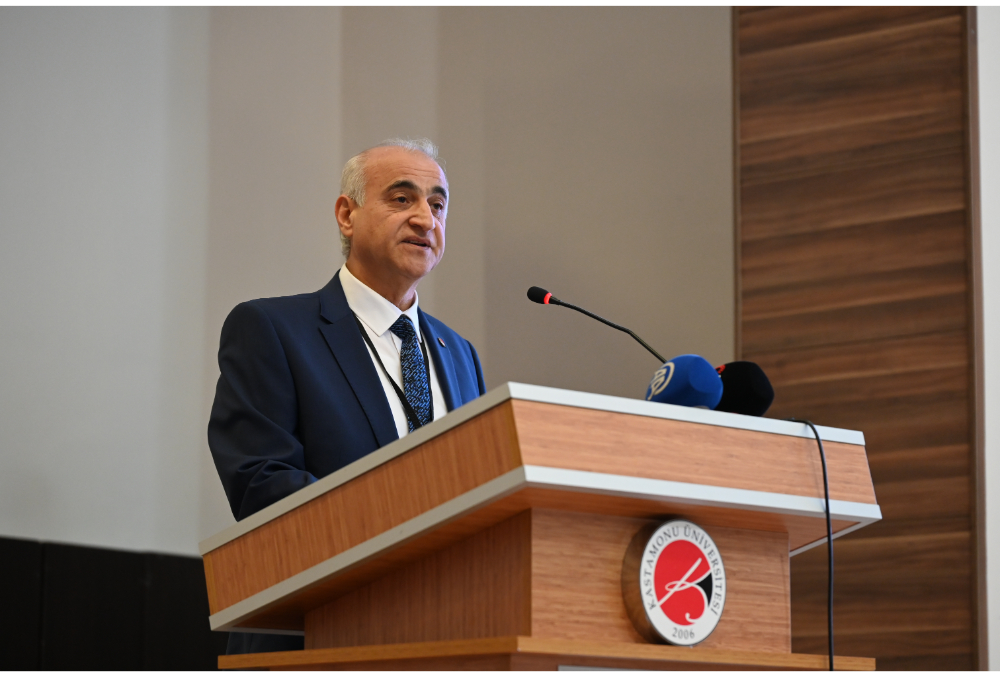
The program, which began with a moment of silence and the reading of the National Anthem, was opened by the Symposium Chair, Prof. Dr. Sabri Ünal. Prof. Dr. Ünal stated that approximately 1.2 million cubic meters of forest wealth in Türkiye are damaged each year due to bark beetles, and he expressed that the economic losses create a serious situation that often goes unnoticed.
Pointing out that the damage caused by bark beetles is as significant as forest fires, Prof. Dr. Ünal stated that the health status of European forests has been monitored according to international standards for many years, and said: "Studies are being conducted to monitor the health status of European forests, assess the impacts of air pollution, and reveal the effects of climate change and other environmental pressures on forest ecosystems." Thanks to the long-standing, internationally coordinated data infrastructure, changes in forest ecosystems can be scientifically monitored, and solution-oriented approaches developed. "Studies are being conducted to monitor the health status of European forests, assess the impacts of air pollution, and reveal the effects of climate change and other environmental pressures on forest ecosystems." Thanks to the long-standing, internationally coordinated data infrastructure, changes in forest ecosystems can be scientifically monitored, and solution-oriented approaches developed.
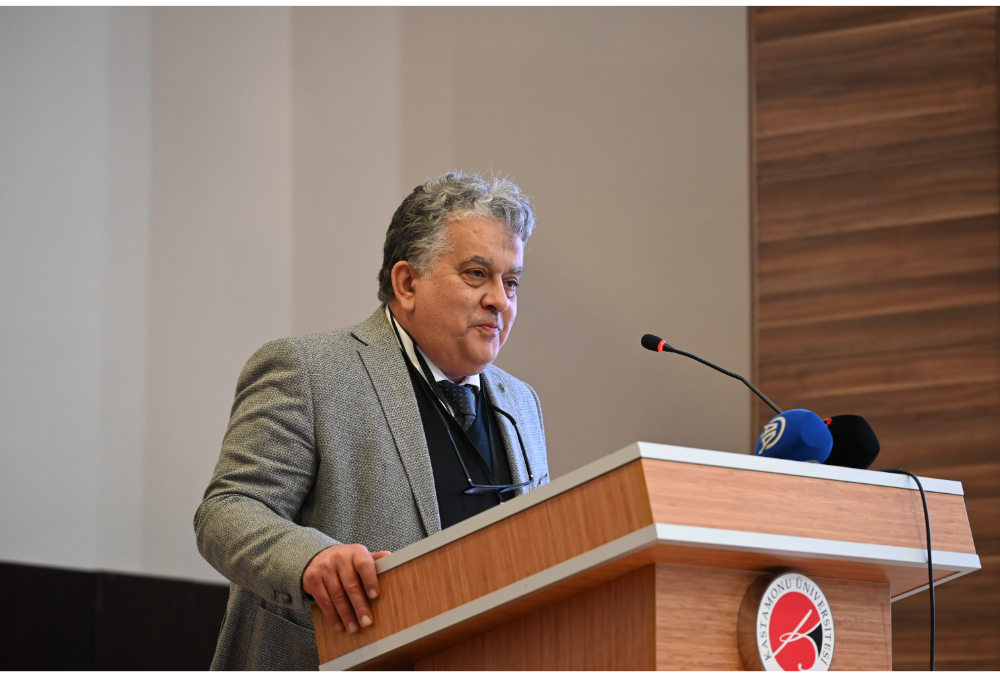
Following Prof. Dr. Ünal, the Dean of the Faculty of Forestry, Prof. Dr. Mahmut Gür emphasized that losses in forest ecosystems are not limited to visible damage and highlighted the importance of the ongoing studies. Referring to Kastamonu's academic expertise in forestry, Gür said, "Developing international collaborations in the field of forestry science is of great importance." Thanks to this symposium, scientific knowledge will be shared, and new research networks will be established. As Kastamonu University, we are pleased to host such an important organization.
Speaking at the program, Hakan Ragıpoğlu, Deputy Director of the Forest Pests Combat Department of the General Directorate of Forestry, drew attention to the impacts of the global climate crisis on forestry activities.
Stating that the effects are more pronounced in countries of the Mediterranean region due to changing climate conditions, Ragıpoğlu said that increasing forest fires, drought, temperature changes, and the shift of forest ecosystems to the north or to higher altitudes have led to a significant increase in harmful organism populations.
Ragıpoğlu stated, "Within the scope of ICP Forests, there are numerous level 1 and level 2 monitoring sites worldwide." In Türkiye, significant amounts of data are collected from hundreds of monitoring points. These data are highly valuable for monitoring forest health. We generate a large amount of field data; however, we need contributions from our universities and academics to scientifically evaluate it. Our doors are always open to researchers who want to work in these fields”.
Finally, speaking at the opening program, Vice Rector Prof. Dr. Ömer Küçük emphasized that biotic and abiotic factors affecting forest ecosystems should be addressed holistically. Stating that merely fighting is not enough today, Küçük emphasized the need for a new management approach that accurately analyzes risks, saying: "Artificial intelligence applications, digitalization, decision support systems, and data-driven management models are opening the door to a new era in forestry studies." I believe that in the near future, these technologies will be used much more effectively to protect forest health and manage harmful organisms. I would like to thank all our academics, administrative staff, supporting institutions and organizations, and sponsors, especially our Faculty of Forestry, for their efforts in preparing this symposium.
As part of the three-day symposium, in addition to scientific presentations, technical tours, and academic evaluation meetings, other activities will also be held.