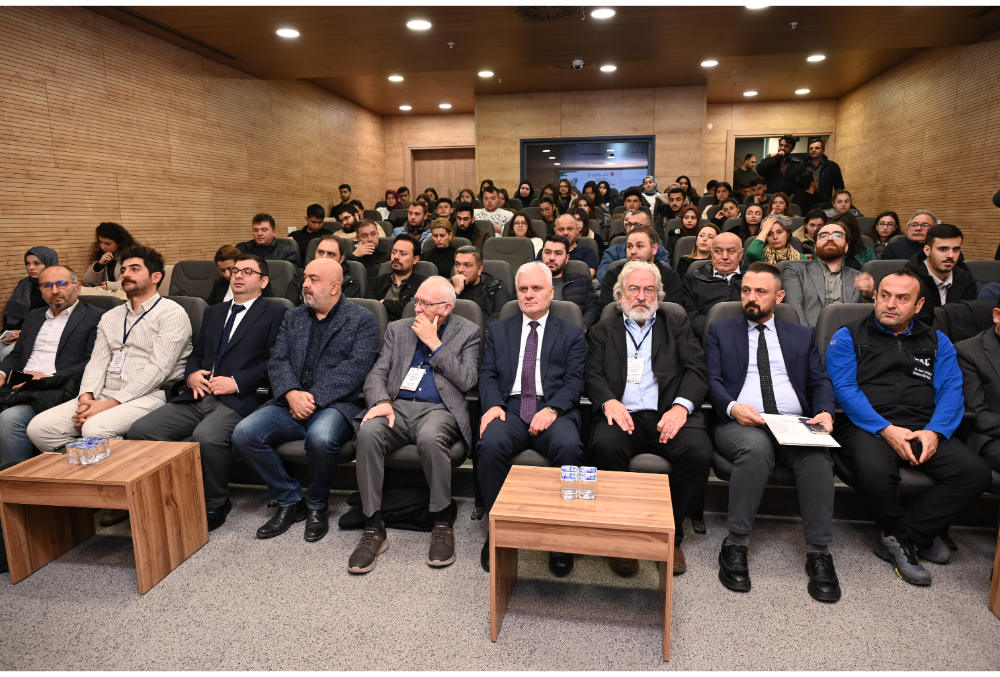
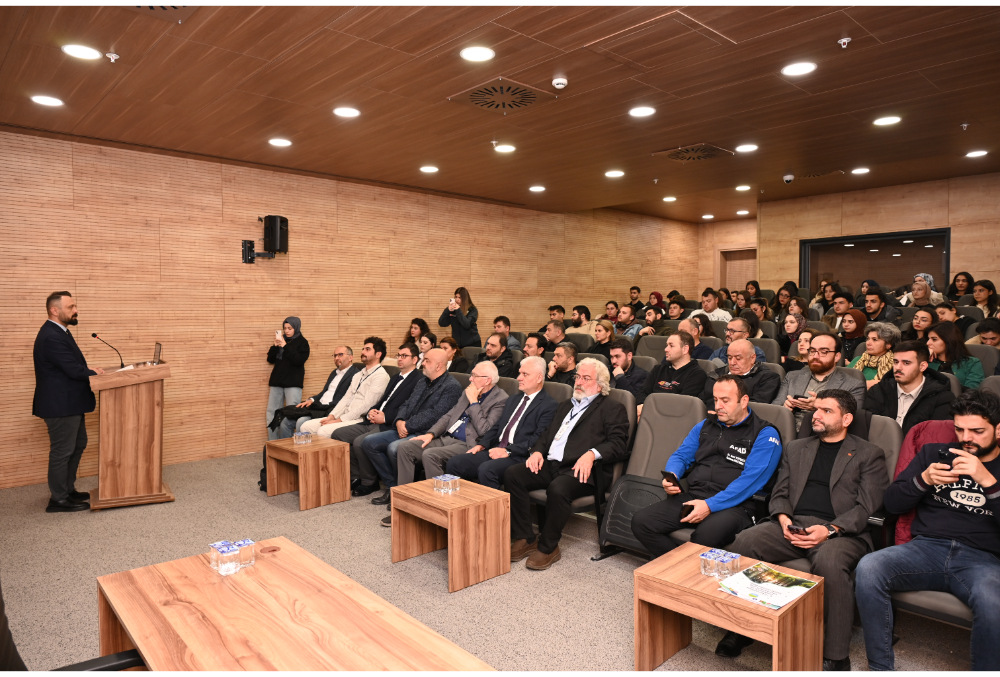
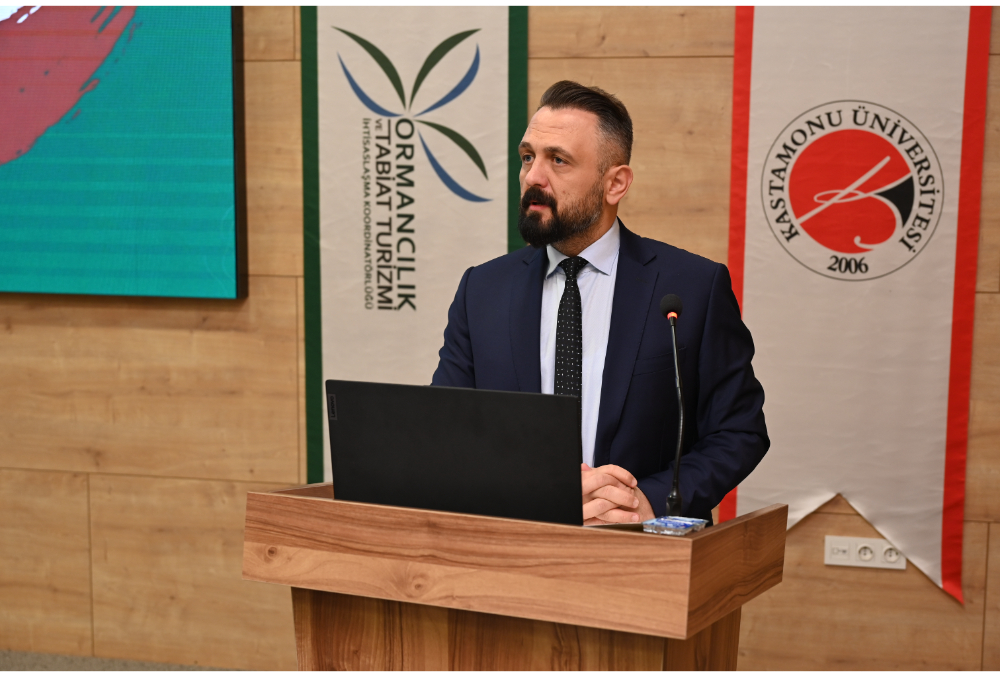
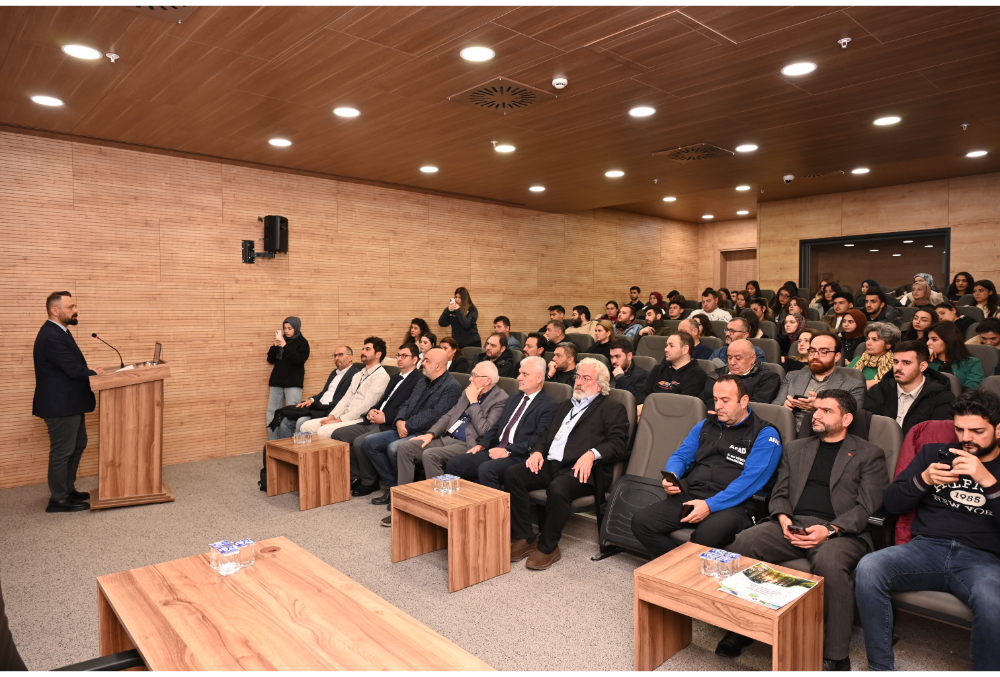
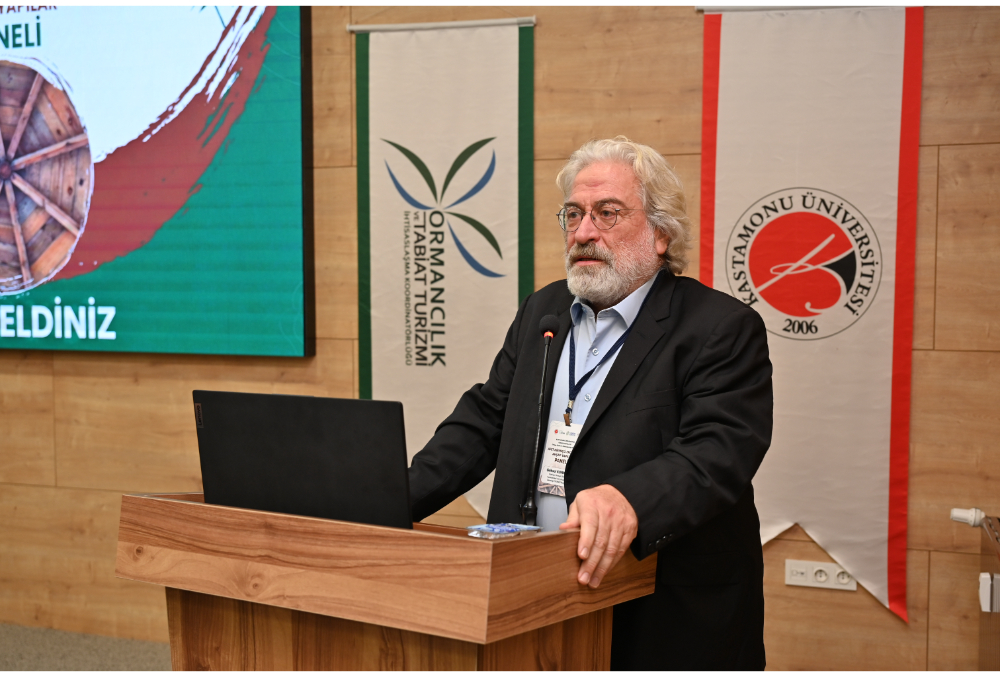
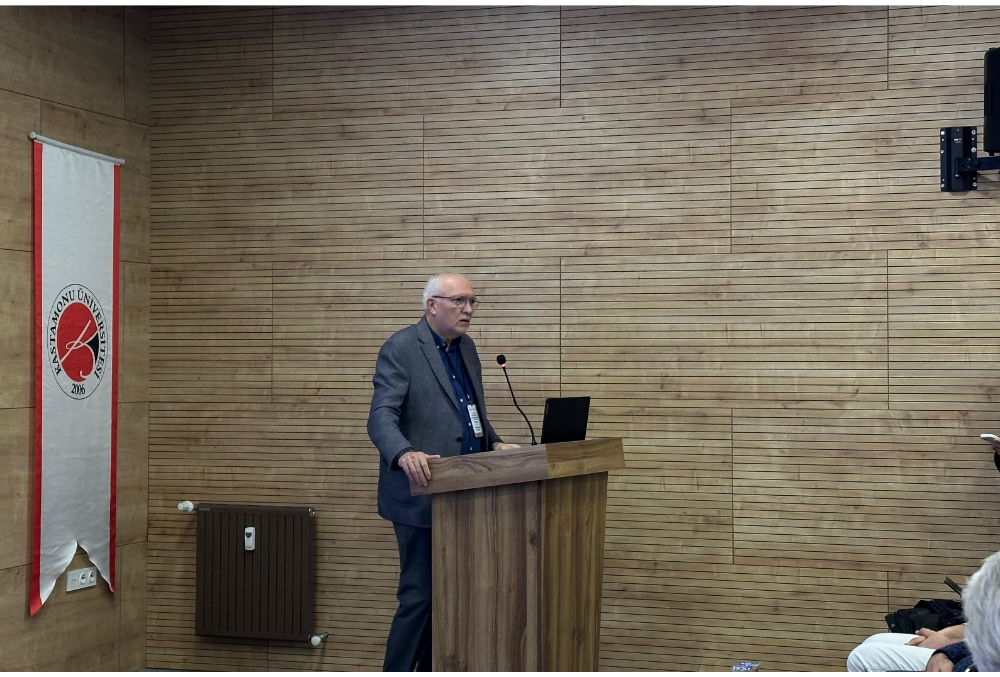
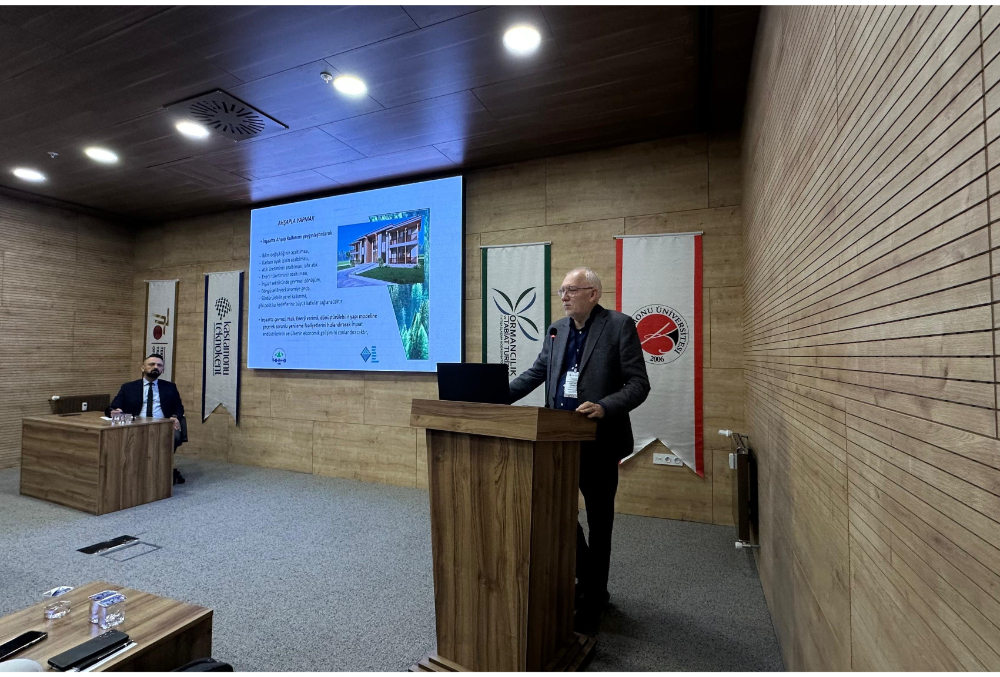
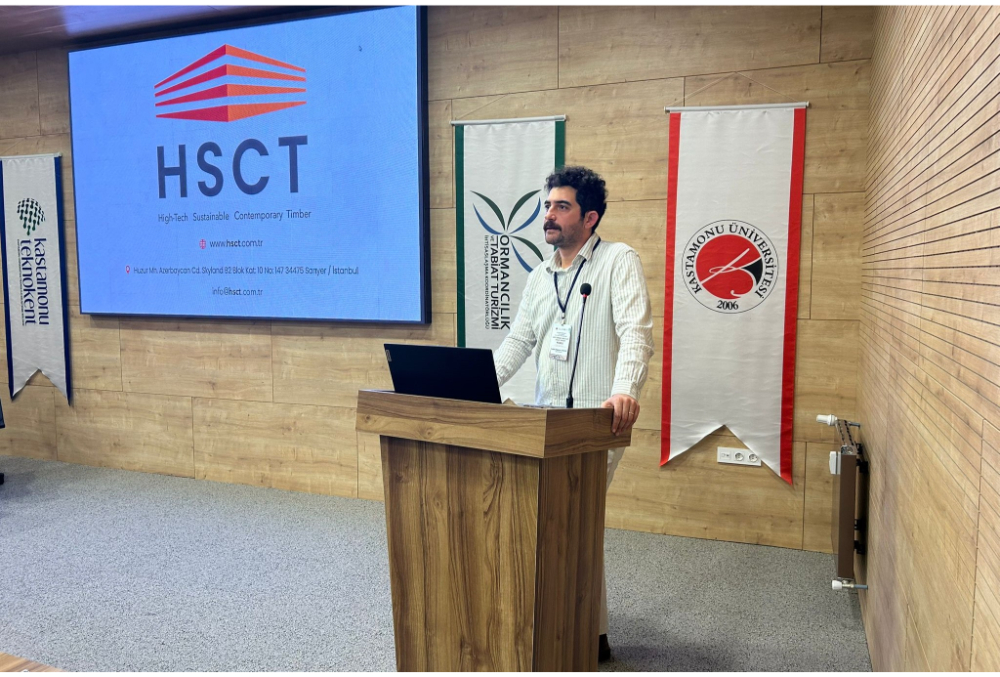
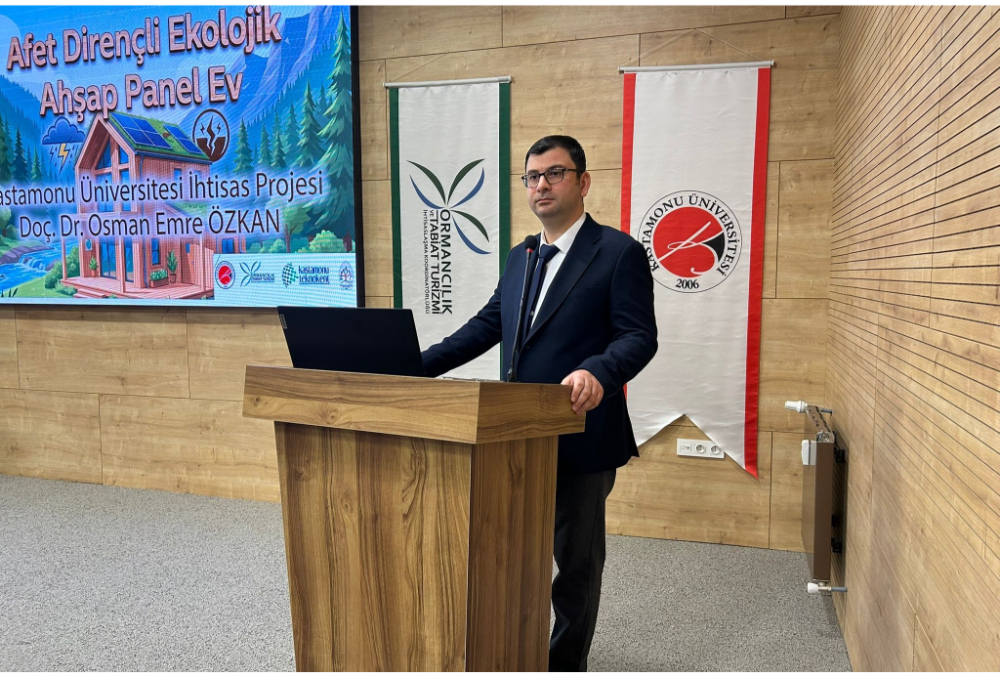
The "Disaster-Resilient Ecological Timber Structures Panel," hosted by the Department of Forest Industry Engineering at Kastamonu University's Faculty of Forestry, brought together academics and industry representatives.
At the event held on December 2, 2025, in the Ilgaz Hall of Kastamonu Technopark, the resilience of wooden structures against disasters and their critical role in sustainable architecture were discussed. In the panel discussion, which saw strong participation, it was emphasized that wood is not only a traditional material but also holds strategic importance for the cities of the future.
In his opening remarks as Panel Chair, Assoc. Prof.Dr. Emre Birinci highlighted the contributions of wood from both ecological and engineering perspectives. First, in his speech, he used the following expressions:
“Wood is not only a traditional material; it is also resistant to disasters, especially earthquakes, environmentally friendly, and an important component of the sustainable cities of the future. We want to make this potential more visible through scientific and sectoral collaborations.”
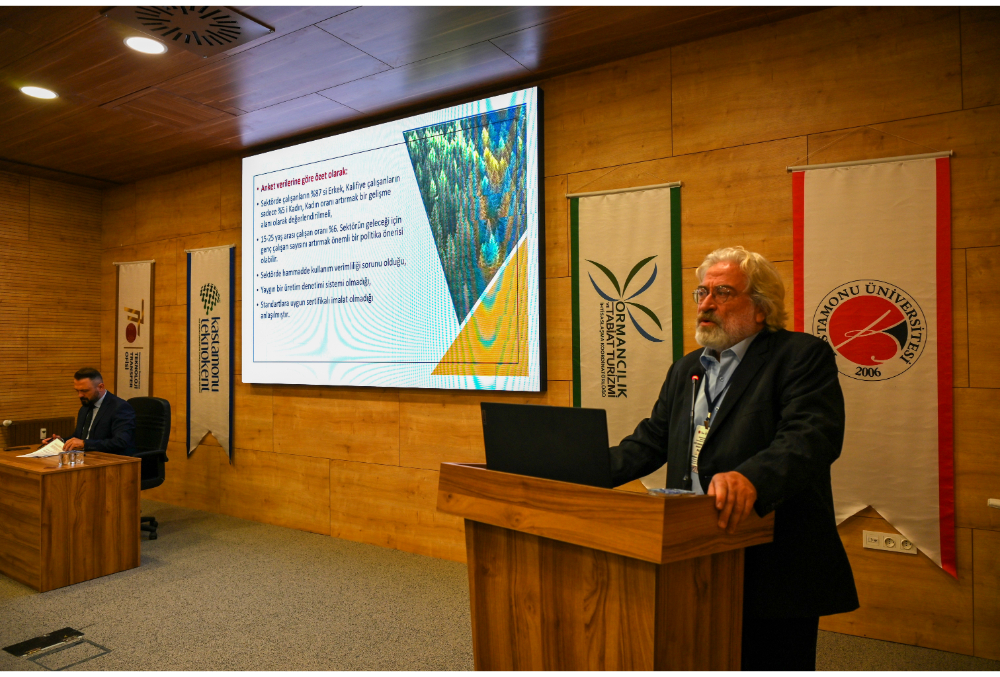
Speaking at the panel, Göksel Korkmaz, President of the Turkish Forest Products Industrialists and Businessmen's Association (TORİD) and a member of the TOBB Forest Products Council, made important observations about the current state of the sector. Referring to the survey studies they conducted, Korkmaz stated that there was a problem with the efficiency of raw material use and that there was no widespread monitoring mechanism in place.
Korkmaz also highlighted the inadequacy of certified production that meets standards, emphasizing the urgent need to standardize this area.
Following Korkmaz, Architect Celalettin Akça, Chairman of the National Wood Association's Board of Directors, stated that the mass needs brought about by modern city life necessitate standard applications. Akça, who argues that the current building codes predominantly favor a reinforced concrete approach and neglect wood, stated that increasing the use of wood will play a key role in combating climate change. Akça touched upon the role of wood in reducing the carbon footprint, waste generation, and energy consumption. Akça emphasized that environmentally friendly, fast, energy-efficient, and recyclable building models could revitalize the construction industry and the country's economy, stating that structures focused on Akça and wood, sustainable local development, and the transition to a circular bioeconomy could be achieved.
Panelist Assoc. Prof. Dr. Osman Emre Özkan stated that wooden structures reinforced with modern engineering techniques are a strong alternative in terms of disaster safety. Stating that the tests conducted showed the capacity of well-designed wooden structures to absorb and dissipate earthquake energy to be extremely high, Özkan emphasized that the priority is to put these scientific results into practice.
Cevdet Korkmaz from Ünsal Ahşap Ağaç Ürünleri, who participated in the panel as a sector representative, stated that the industry can now produce more durable, lightweight, and environmentally friendly materials, and drew attention to Turkey's growth potential in this area.
Cevdet Korkmaz from Ünsal Ahşap Ağaç Ürünleri, who participated in the panel as a sector representative, stated that the industry can now produce more durable, lightweight, and environmentally friendly materials, and drew attention to Turkey's growth potential in this area.
The event concluded with photos taken to commemorate the day after the Q&A session