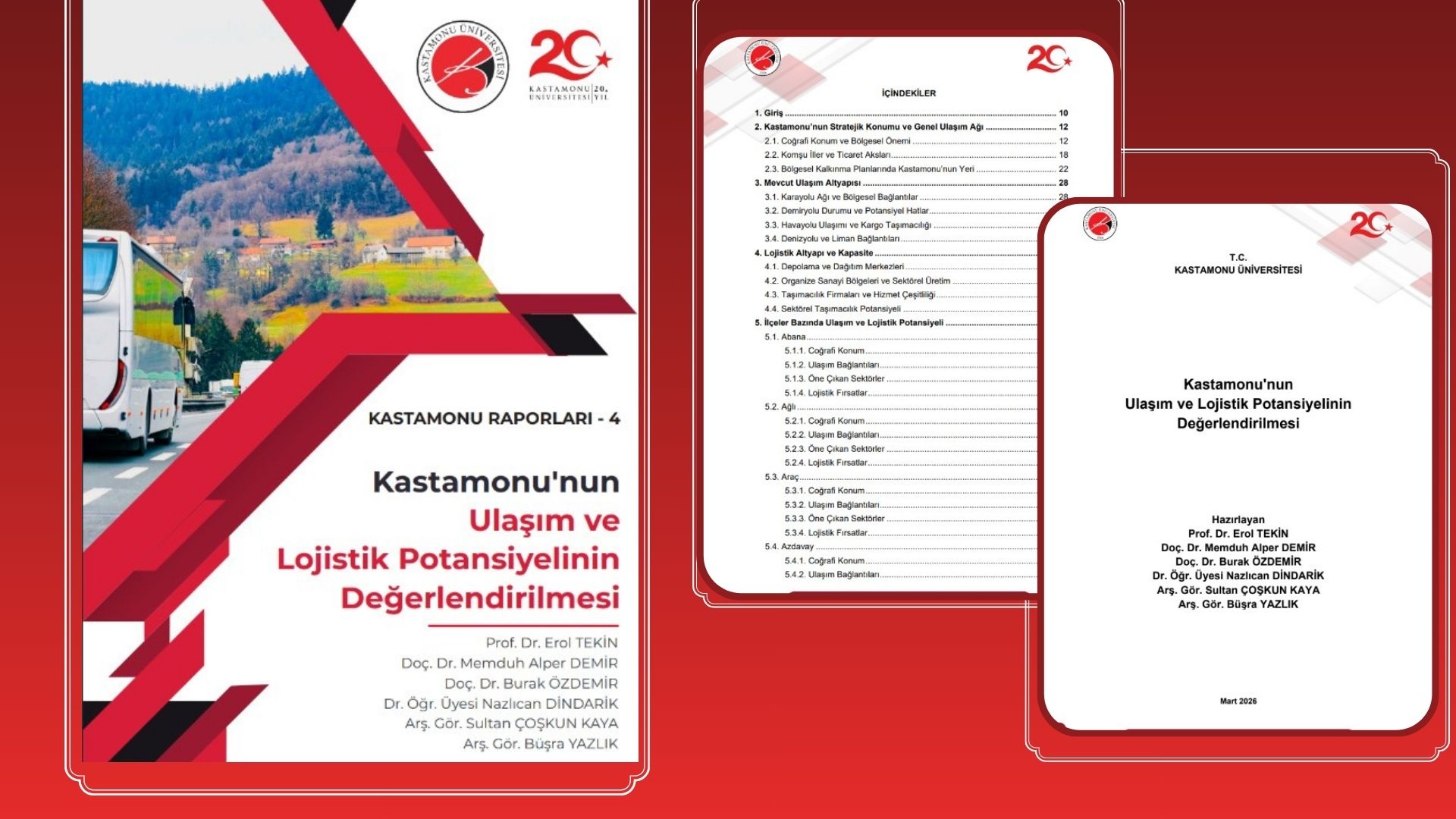
The "Kastamonu Reports" series, prepared by Kastamonu University, continues to examine the city's natural, environmental, and socio-economic structure using scientific data. The fourth report in this series, titled "Evaluation of Kastamonu's Transportation and Logistics Potential," addressed the city's logistics capacity from a multifaceted perspective.
In the report prepared with the contributions of our university's Faculty of Economics and Administrative Sciences faculty members, primarily Prof. Dr. Erol Tekin, Assoc. Prof. Dr. Memduh Alper Demir, Assoc. Prof. Dr. Burak Özdemir, Assist.Prof.Dr. Nazlıcan Dindarik and Research Assistants Sultan Coşkun Kaya and Büşra Yazlık comprehensively analyzed the transportation infrastructure, logistics capabilities, and future potential of Kastamonu.
It is expected that the report, which draws on current data from public institutions and national and international academic studies, will contribute to regional development in Kastamonu. This study, which supports the university's mission of being a "regionally development-focused university," also sheds light on the city's future logistics strategies.
The report emphasized that logistics is not merely about transportation; it is a key element that determines global competitiveness, drives regional development, and contributes to sustainable growth. It was stated that Kastamonu's natural resources, agricultural production capacity, tourism potential, and strategic geographic location strengthen the city's potential to become a logistics center.
In the study, it was noted that Kastamonu's location in the Western Black Sea and its proximity to both Central Anatolia and the Black Sea ports offer significant logistical advantages. It emphasized that in order to effectively utilize this potential, it is necessary to develop transportation infrastructure, increase logistics investments, and ensure inter-sectoral integration.
The report also detailed the examination of road, air, sea, and rail infrastructure, as well as storage and distribution centers, organized industrial zones, and transportation services. Kastamonu's logistics structure is not limited to the city center; it is also evaluated at the district level, revealing the unique potential of each district.
The report, which also addresses the logistics needs of sectors such as forestry and furniture, agriculture and livestock, food processing, and tourism, aims to serve as a guiding resource for public institutions, investors, and academic circles.
Our Rector, Prof. Dr. Ahmet Hamdi Topal, in his evaluation of the published report, emphasized our University's mission to contribute to regional development.
Our Rector stated, "This study, which reveals the transportation and logistics potential of Kastamonu in light of scientific data, is not just academic research but also serves as a strategic guide that will shape the economic future of our province. We see contributing to the development of the city we are in as one of our primary responsibilities. He stated, "I believe that this report will be an important reference source for public institutions, local governments, and investors."
To access the report, click here.