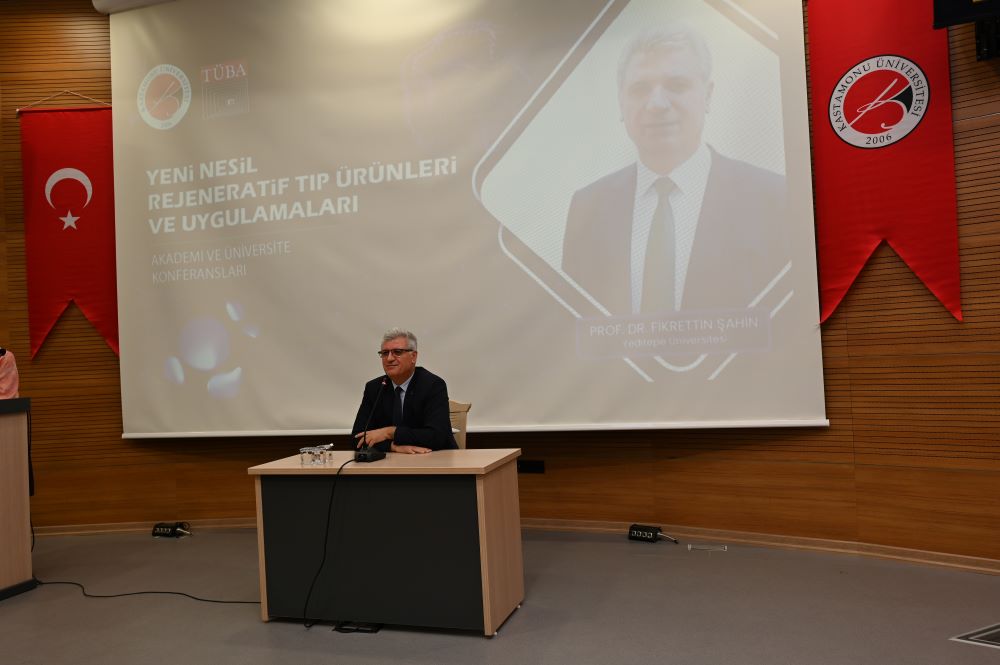
Kastamonu University hosted an event as part of the Turkish Academy of Sciences (TÜBA) "University Conferences" program, with Prof. Dr. Fikrettin Şahin from Yeditepe University as the speaker.
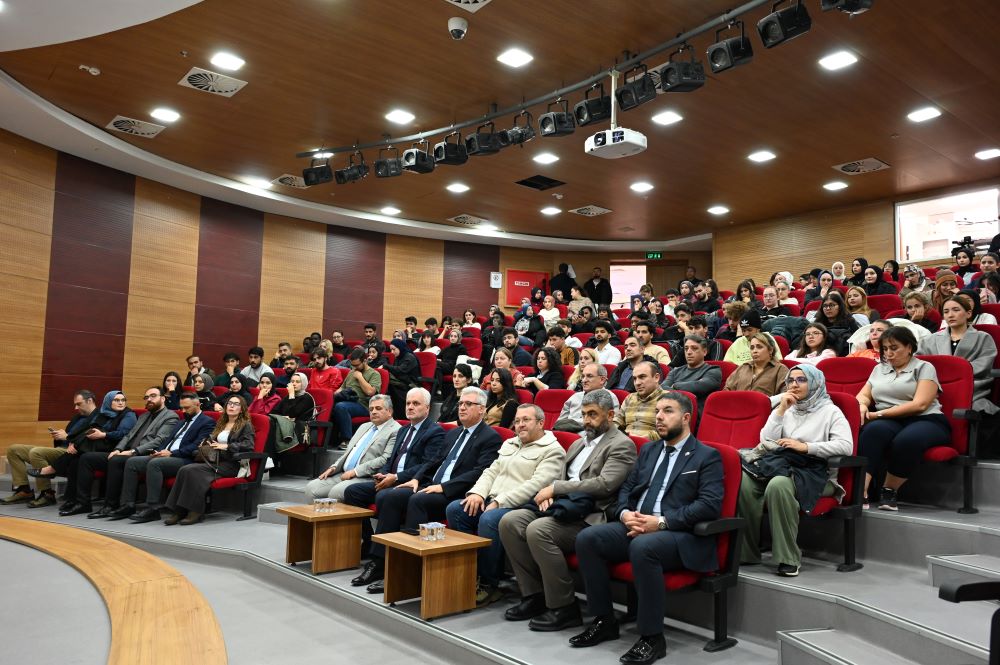
The program, held on October 23, 2025, in the Cemil Meriç Hall of our University's Central Library, was attended by Vice Rector Prof. Dr. Ömer Küçük, our faculty members, and a large number of our students.
The "University Conferences" program, conducted by TÜBA, aims to bring scientists together with universities, encourage the sharing of academic knowledge, increase the scientific awareness of young researchers, and strengthen the scientific environment in universities.
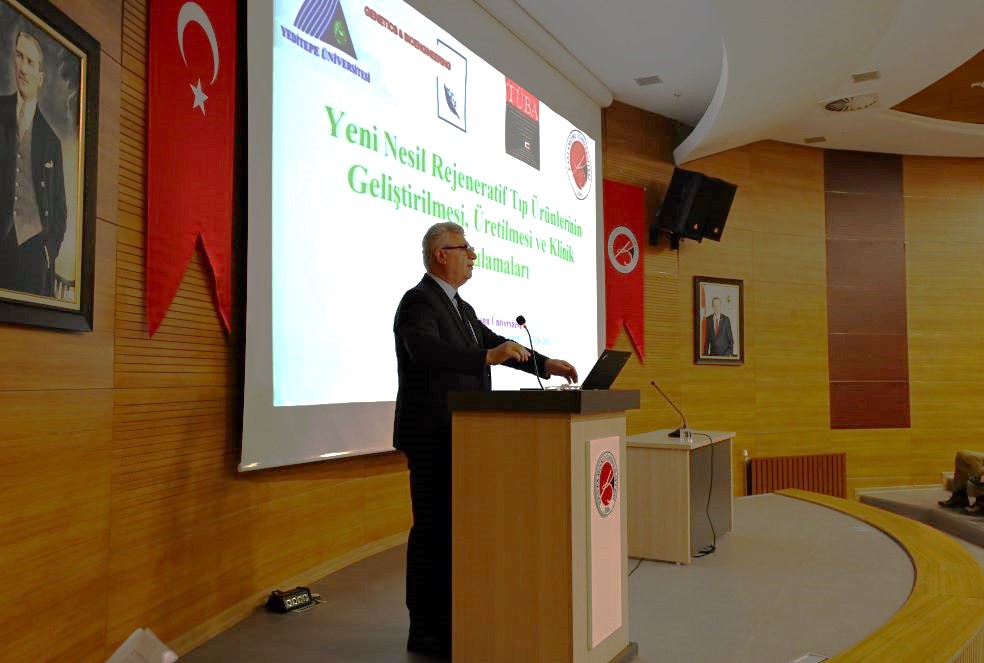
In this context, Prof. Dr. Fikrettin Şahin, Head of the Department of Genetics and Bioengineering at Yeditepe University Faculty of Engineering and a Full Member of TÜBA, delivered a presentation titled "New Generation Regenerative Medicine Products and Applications."
In his speech, Prof. Dr. Şahin stated that regenerative medicine is a branch of science that aims to develop new treatment methods for repairing and regenerating damaged or diseased organs. He stated that stem cells, gene therapy products, cellular products (e.g., exosomes), biologically active compounds, biomaterials, and artificial tissues are used in this field.
Emphasizing the growing importance of exosomes, which play a role in intercellular communication, Prof. Dr. Şahin stated that exosomes obtained from plants such as lemon, beet, tomato, radish, and wheat support the proliferation of stem cells and yield effective results in cartilage regeneration. He stated that exosome applications are widely used in the treatment of joint wear in elderly individuals, and that plant exosomes possess properties that accelerate wound healing, reduce inflammation, and regenerate cells.
Prof. Dr. Şahin also touched upon the potential of garlic, one of Kastamonu's important local values, in this field, stating that exosomes derived from garlic have begun to be used in research for the treatment of breast, colon, and lung cancer, and that these studies have yielded promising results.
Stating that boron compounds also have remarkable potential in the field of regenerative medicine, Prof. Dr. Şahin emphasized that boron possesses antimicrobial, antiviral, anti-inflammatory, antioxidant, and anticancer properties, and that this element can be actively used in the treatment of many diseases in the future.
At the end of his presentation, Prof. Dr. Şahin emphasized the importance of interdisciplinary collaboration, stating, "Interdisciplinary collaboration in scientific research is the most powerful way to produce sustainable health solutions."
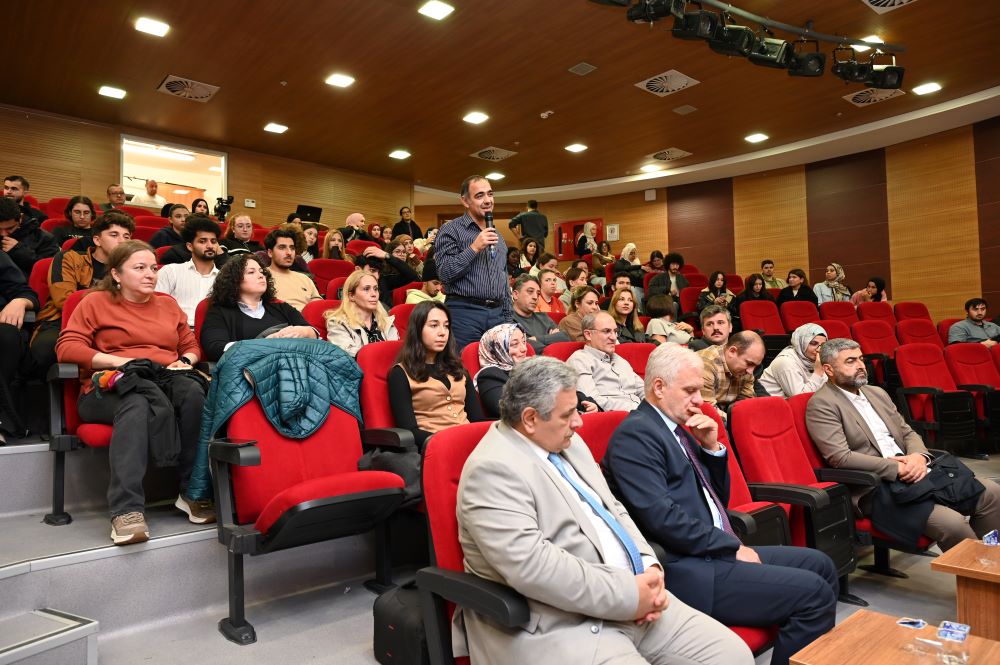
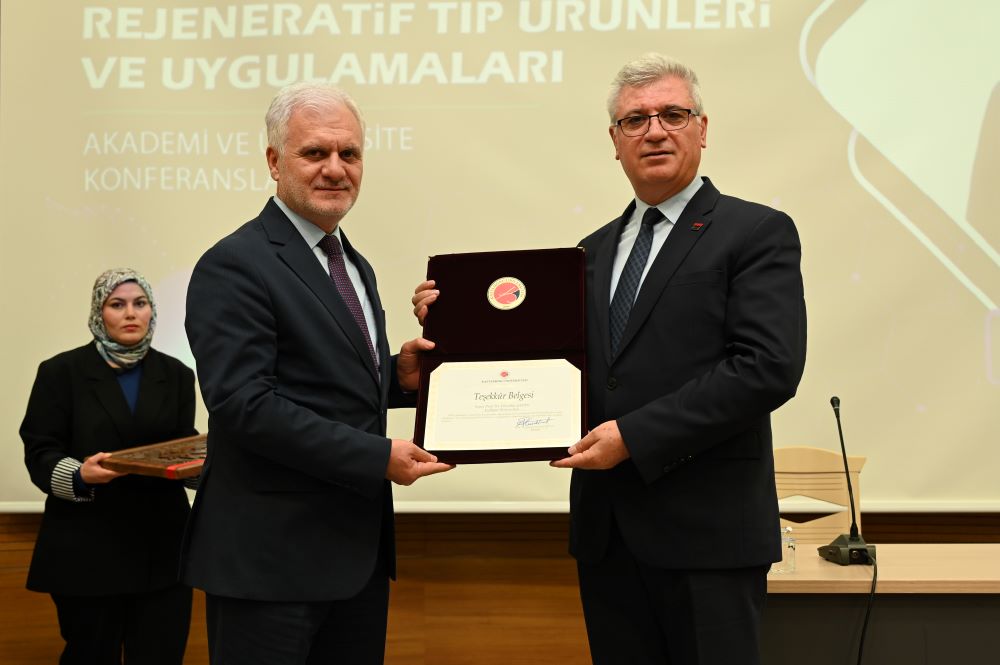
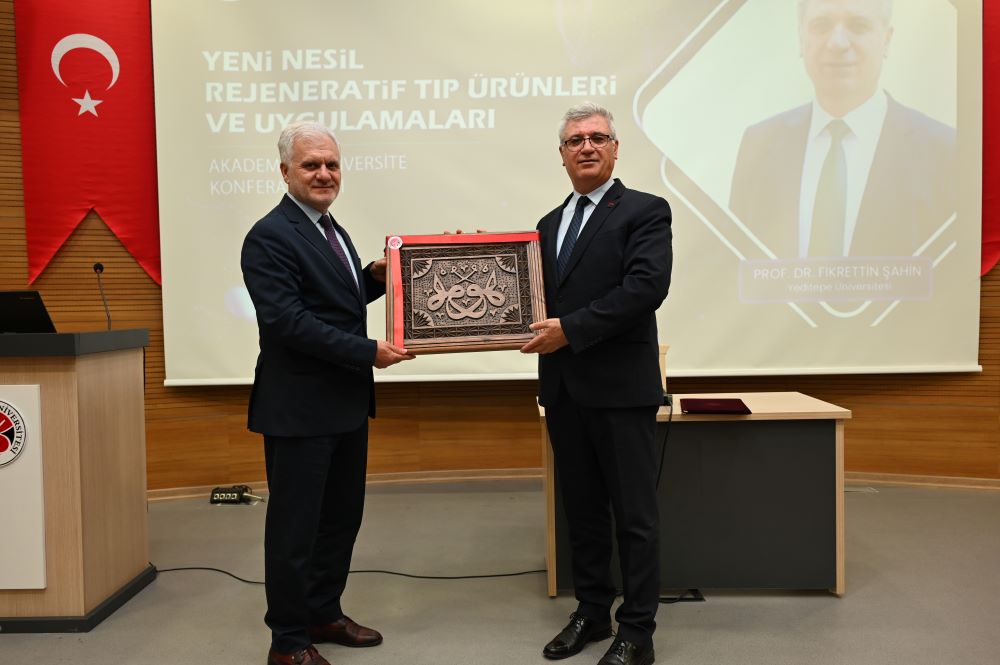
The event concluded after the Q&A session. Participants particularly asked questions about clinical applications and biotechnology-based treatment methods. At the end of the program, Vice Rector Prof. Dr. Ömer Küçük presented a certificate of appreciation and a gift to Prof. Dr. Fikrettin Şahin.