Prof. Dr. Ömer Küçük: 85% of Fires Are Human-Caused, Wind Accelerates Spread
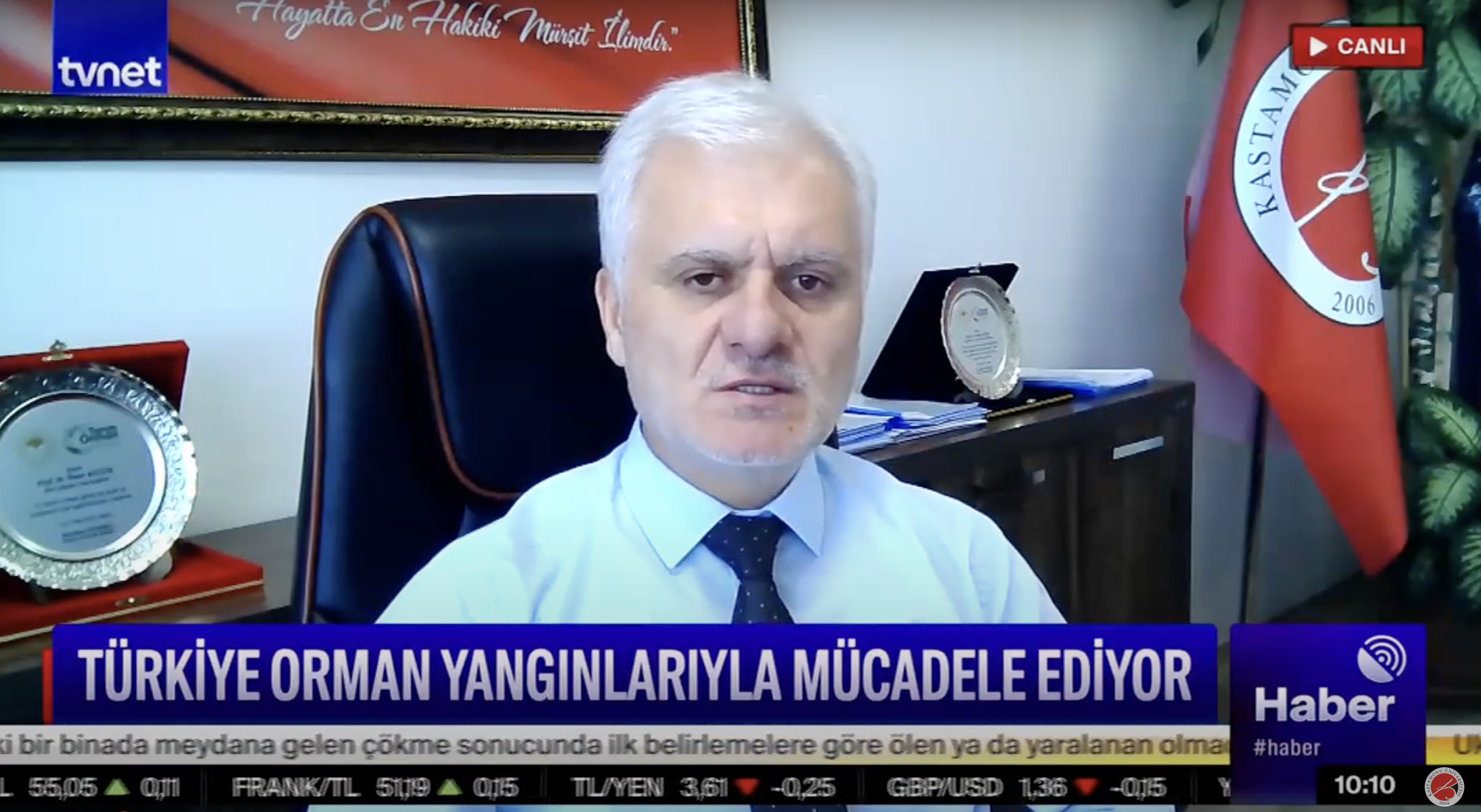
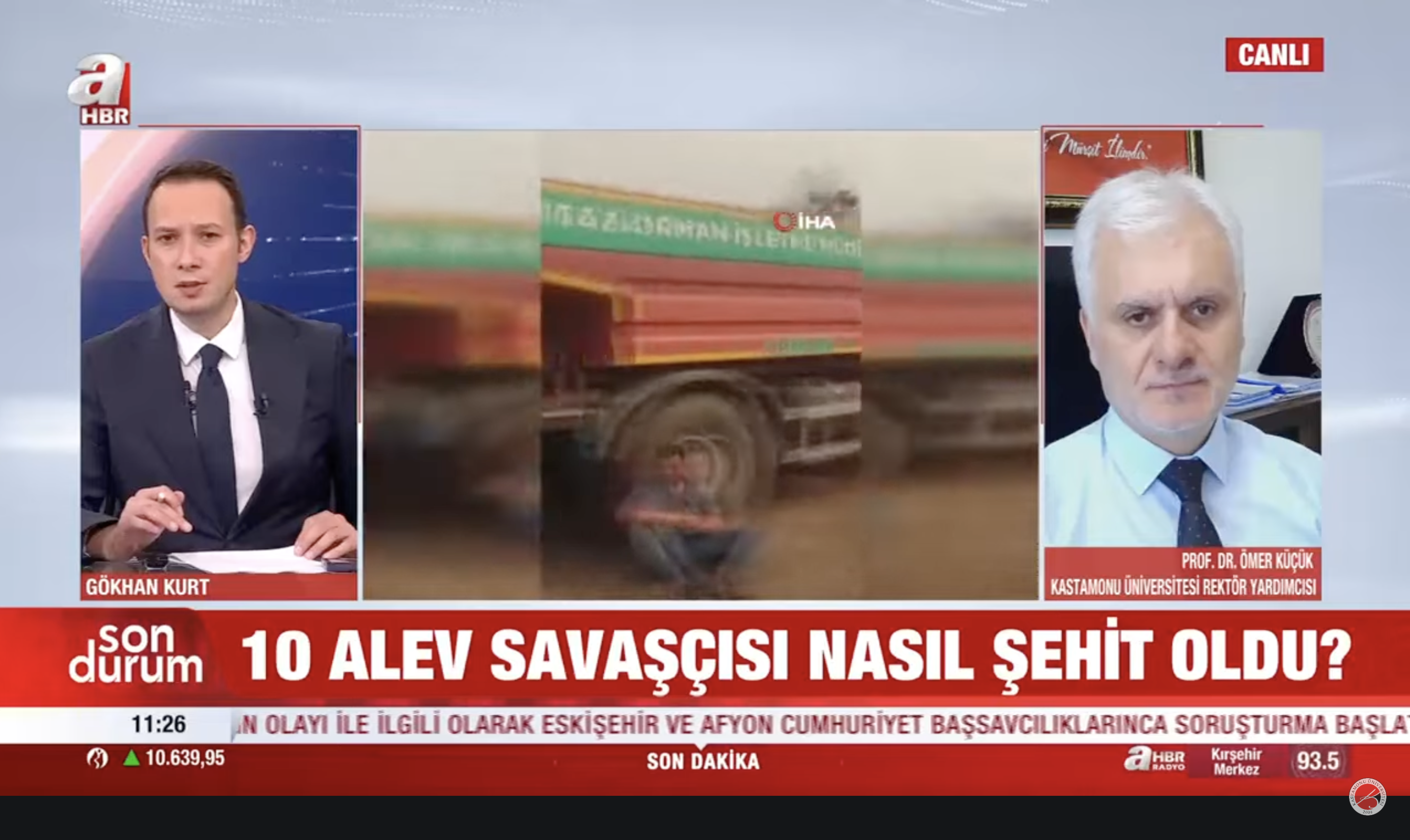
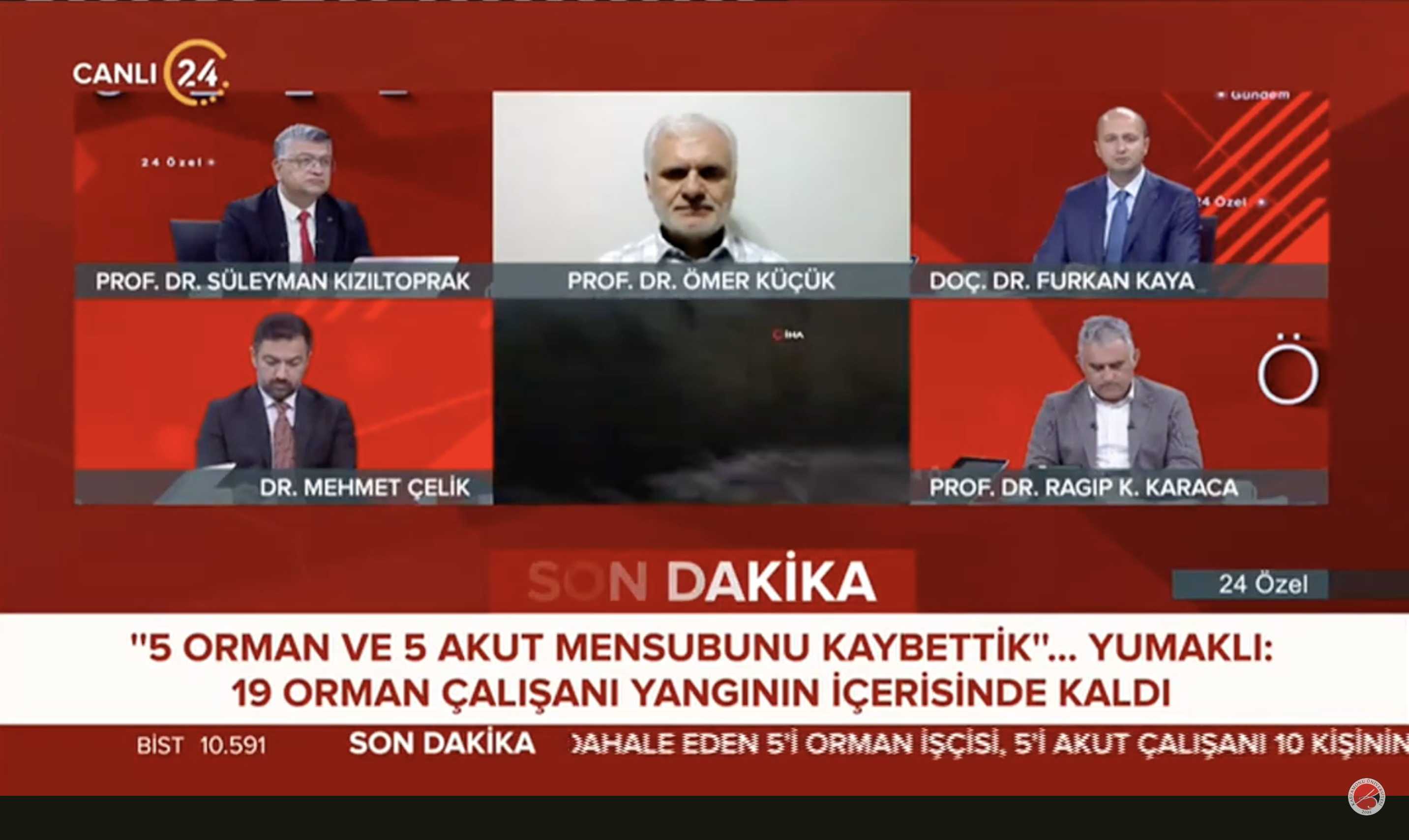
Kastamonu University, responsible for being designated a specialized university by the Council of Higher Education in the field of Forestry and Nature Tourism by the Council of Higher Education (YÖK), continues to inform the public by conducting scientific assessments regarding forest fires in our country. In this context, Vice Rector Prof. Dr. Ömer Küçük made essential statements on various television programs regarding the causes of forest fires, the necessary precautions, and Turkey's firefighting capacity.
As forest fires continue to rage in Turkey's provinces of Eskişehir, Bursa, Karabük, Bilecik, Uşak, Antalya, Mersin, and Kahramanmaraş, Prof. Dr. Küçük provided public information in live broadcasts on television channels such as NTV, Habertürk, TVNET, 24 TV, Haber Global, A Haber, Bengü Türk, and Akit TV, explaining the causes of the fires, the precautions citizens should take, fire organization, fire management, ecological impacts, and Turkey's robust infrastructure for responding to fires.
Prof. Dr. Küçük emphasized that most fires are human-caused, noting that lightning-caused fires are infrequent. He said that a fire requires a temperature of at least 250-300 degrees Celsius (300-400 degrees Fahrenheit) to start, adding that spontaneous forest fires are impossible under normal conditions. Emphasizing that protecting forests is a shared responsibility of society, Prof. Dr. Küçük stated that the importance of carbon sinks has increased with global climate change, and that forests hold critical value from both an environmental and social perspective.
The Cost of Neglect Cannot Be Recovered for Years
Prof. Dr. Küçük emphasized that fire prevention should not be viewed solely as the responsibility of the General Directorate of Forestry, adding that the entire society must develop a shared awareness of this issue. He emphasized the importance of prohibiting entry into forests during fire-sensitive periods, emphasizing that even the slightest negligence can cause irreparable damage for years. He noted that the ecological benefits of forests are being lost, the amount of carbon released into the atmosphere is increasing, and it takes many years to recover lost areas. He also stated that afforestation efforts following fires should favor the region's ecologically native tree species, saying that the change in species occasionally discussed in public is incompatible with forestry science and techniques.
He emphasized that citizens should avoid using forested areas during curfew periods, refrain from burning stubble, refrain from picnicking, refrain from throwing cigarette butts on roadsides, avoid littering in forested areas, and ensure that intersections between residential areas and agricultural lands adjacent to forests are cleared of flammable materials.
He Draws Attention to Stubble Fires
Prof. Dr. Küçük noted that approximately 45 percent of the fires responded to each year in Turkey are stubble or rural fires, and he emphasized the need to raise greater awareness on this issue. He stated that plowing and incorporating stubble into the soil, rather than burning it, could prevent stubble fires from spreading to the forest. He reminded us that forests and agricultural lands are intertwined, particularly in rural areas, and therefore, the risk of stubble fires spreading to the forest is very high.
He emphasized that meteorological conditions increase the risk of fires. Küçük stated that forest areas should not be used when temperatures exceed 30 degrees Celsius and wind speeds exceed 30 kilometers per hour.
Wind is the Most Important Factor in the Spread of Fires
Prof. Dr. Küçük, offering his condolences to the nation and those who lost their lives in the fires, emphasized that wind is the most critical factor in the spread of fires. He noted that a series of fires have broken out in various regions of our country, which have recently experienced a dry period. He added that wind corridors have formed, particularly in mountainous and rugged terrain, making fire control difficult.
Prof. Dr. Küçük explained that the black color of the smoke indicates the intensity of the fire, and that the flames' horizontal, rather than upward, movement reveals the influence of wind. He noted that wind speeds can sometimes reach 50-60 kilometers per hour, allowing fires to spread quickly across large areas. Küçük explained that under these conditions, small, spot fires merge into larger fires, making control difficult and making extinguishing the fire before its energy level decreases impossible.
Turkey Leads Europe in Firefighting
Prof. Dr. Küçük noted that Turkey possesses advanced technological infrastructure and strong institutional capacity for detecting and responding to forest fires, noting that uncrewed aerial vehicles are used in fire surveillance and that this system is actively implemented in only two countries. Turkey has the most powerful firefighting fleet in history.