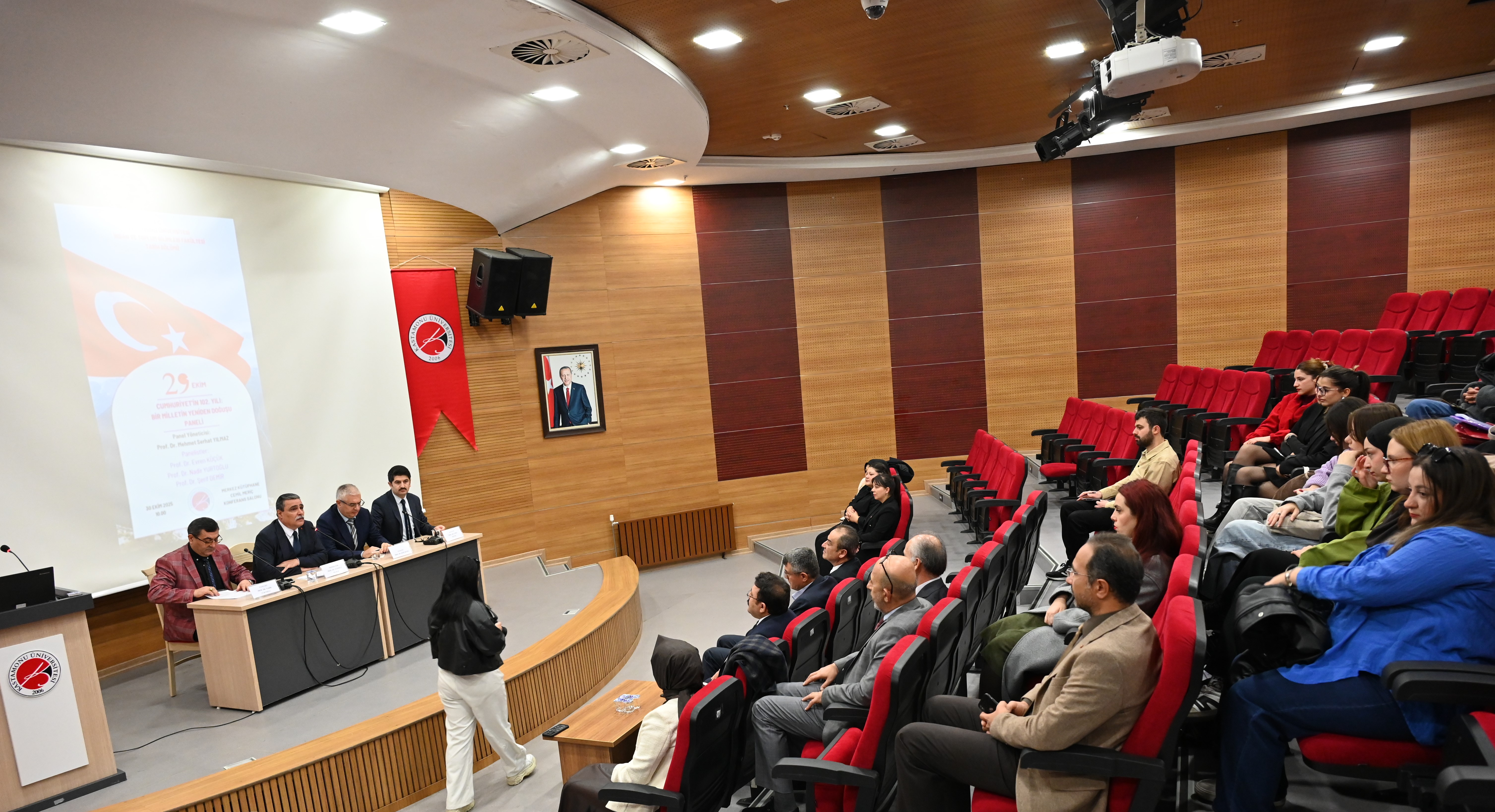
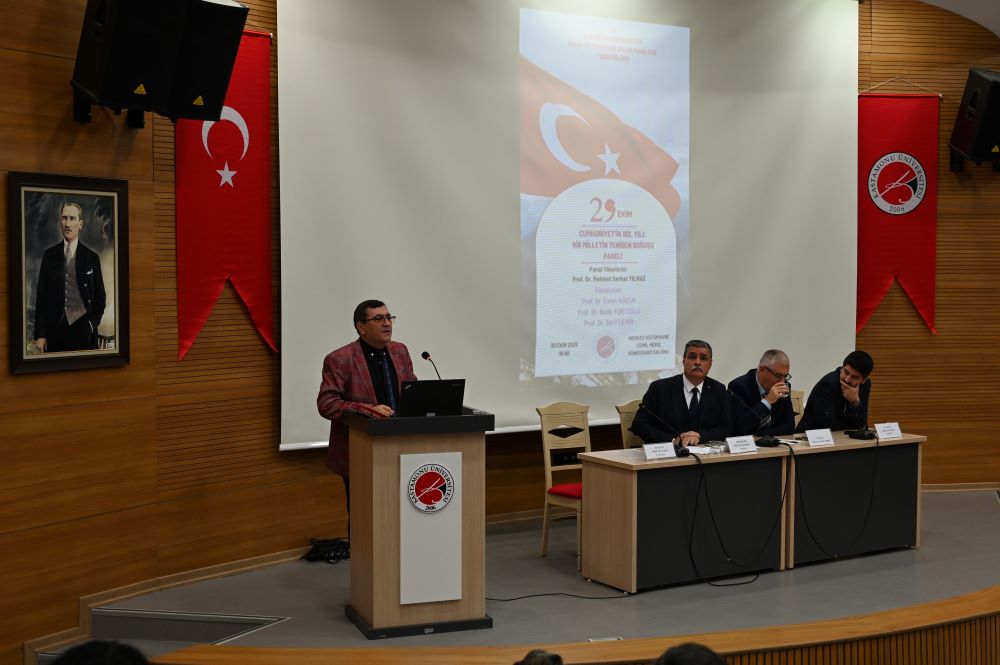
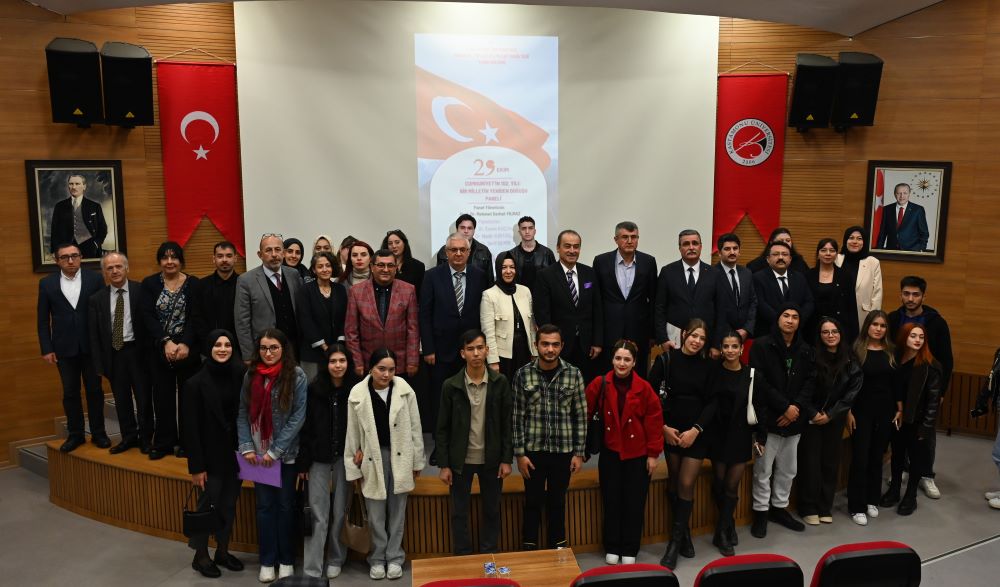
The Department of History at the Faculty of Humanities and Social Sciences of Kastamonu University organized a panel titled "The 102nd Anniversary of the Republic: The Rebirth of a Nation" on the occasion of the 102nd anniversary of the declaration of the Republic. The panel discussion, held on October 30, 2025, in the Central Library's Cemil Meriç Conference Hall, was moderated by Prof. Dr. Mehmet Serhat Yılmaz.
The panel was attended by Kastamonu Deputy Governor Ahmet Atıkan, Deputy Mayor Ahmet Üstün Göksoy, Dean of the Faculty of Humanities and Social Sciences Prof. Dr. Fatma Zehra Pattabanoğlu, as well as academic and administrative staff, and a large number of students.
The panel featured Prof. Dr. Evren Küçük, a faculty member in the Department of International Relations at our university, Prof. Dr. Nadir Yurtoğlu, a faculty member in the Department of Turkish and Social Sciences Education, and Prof. Dr. Şerif Demir, a faculty member in the Department of History, as speakers.
The program, which began with a moment of silence and the reading of the National Anthem, continued with the opening speech by Dean Prof. Dr. Fatma Zehra Pattabanoğlu. Prof. Dr. Pattabanoğlu emphasized the great importance of young people understanding how the Republic was founded and its subsequent development.
In his opening remarks, the panel moderator, Prof. Dr. Mehmet Serhat Yılmaz, stated that the Republic is not only a form of government but also a result of the Turkish nation's modernization process. Stating that societies that could not keep up with the modernization process that emerged after the French Revolution were erased from history, Prof. Dr. Yılmaz said that in this process, citizenship awareness and national feelings came to the forefront.
Speaking as the first speaker, Prof. Dr. Şerif Demir emphasized that the people's will lies at the heart of the Republic. Stating that national holidays represent the most significant turning points in Turkish history, Prof. Dr. Demir emphasized the need to move forward with stronger steps, drawing lessons from the past. Stating that the enthusiasm for the Republic continues to grow every year, Prof. Dr. Demir gratefully remembered the heroes who gifted this enthusiasm.
Prof. Dr. Demir also stated that the Republic of Türkiye was not established by overthrowing the Ottoman Empire, but rather after the Ottoman Empire collapsed with the Armistice of Mondros. Emphasizing that there has never been a dictatorship in Turkish history, Prof. Dr. Demir stated that the Republic is the most suitable form of government for the Turkish social structure. Stating that secularism and education are among the most important achievements of the Republic, Prof. Dr. Demir emphasized that great sacrifices were made during this process.
Secondly, Prof. Dr. Nadir Yurtoğlu took the floor, explaining the concepts of the Republic and democracy and stating that the idea of the Republic had been in Atatürk's mind since his youth. Prof. Dr. Yurtoğlu stated that the revolutions carried out during the Atatürk era formed the foundation of modern Türkiye, and that these reforms changed not only institutions but also the thot worlds of individuals and society.
Stating that Atatürk implemented innovations considering the conditions of the time, Prof. Dr. Yurtoğlu noted that economic development became one of the priority goals after the declaration of the Republic. Additionally, Prof. Dr. Yurtoğlu stated that significant economic breakthroughs were achieved thru the support of local merchants and the establishment of new companies in the fields of transportation, logistics, and banking.
Following Prof. Dr. Yurtoğlu, Prof. Dr. Evren Küçük addressed the foreign policy and representation dimensions of the Republic of Türkiye. Emphasizing the need to fill the Republic with democracy, Prof. Dr. Küçük highlighted the importance of determining Türkiye's position in the changing global conditions. He stated that the Ottoman Empire pursued a policy based on non-change, while the Republic of Türkiye has a dynamic structure that constantly adapts to change.
Stating that Türkiye's Muslim identity is a determining factor in Middle Eastern politics, Prof. Dr. Küçük said that our country's strategic location has both advantages and disadvantages. Stating that security issues and foreign policy balances are constantly changing, Prof. Dr. Küçük noted that Türkiye stands out as a country that has adopted democracy and turned its direction toward the West, despite its challenging geography.
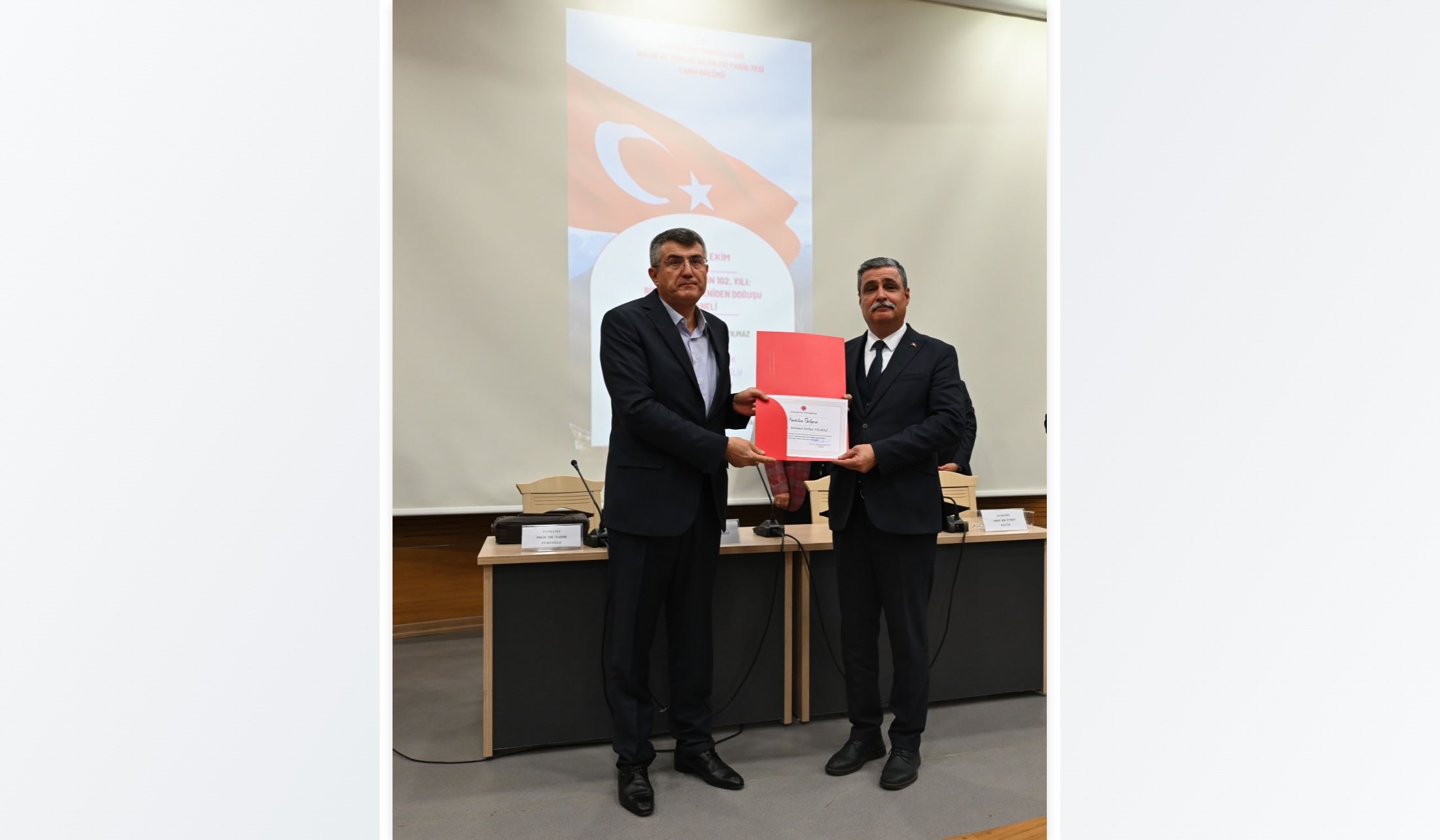
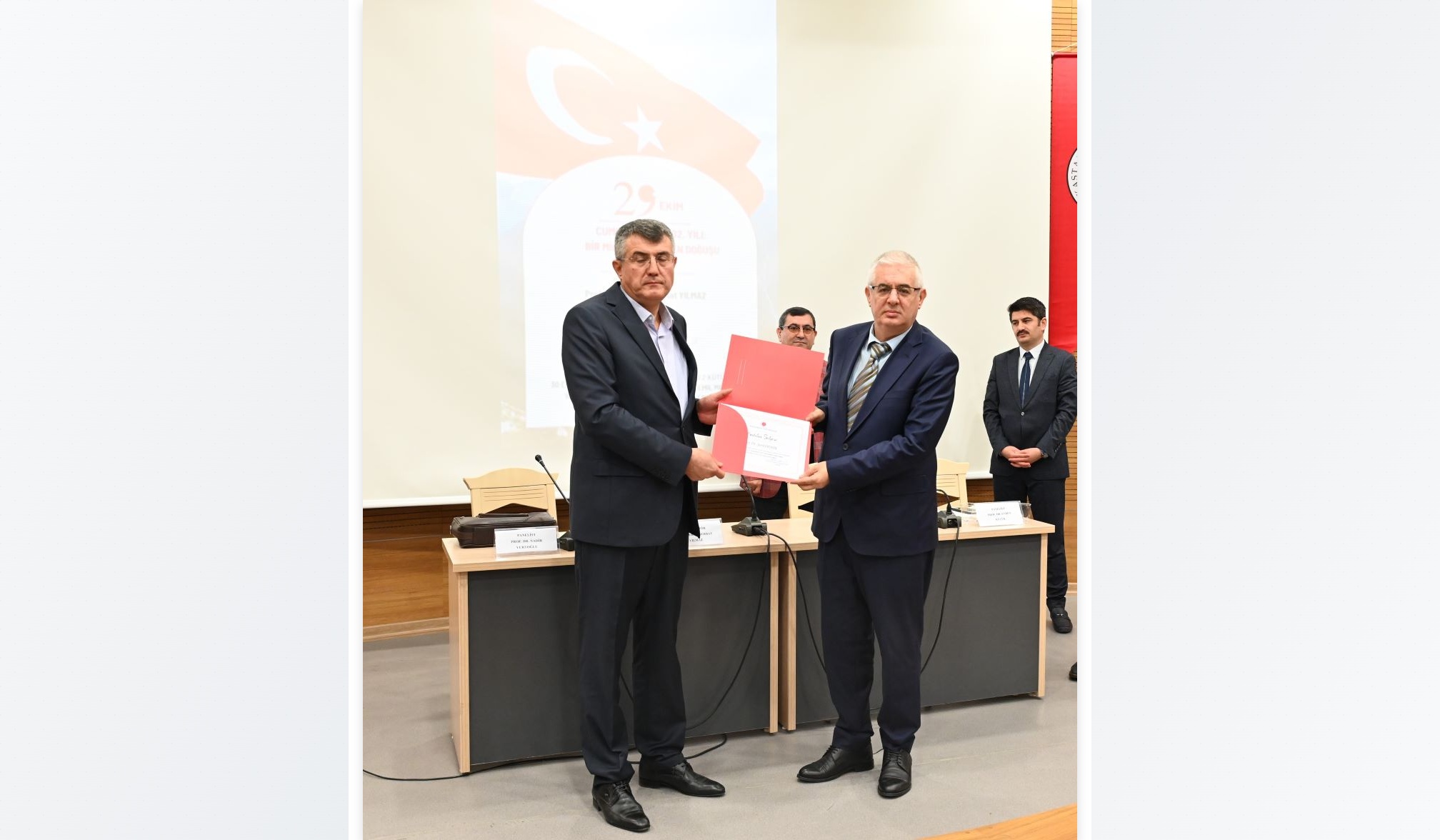
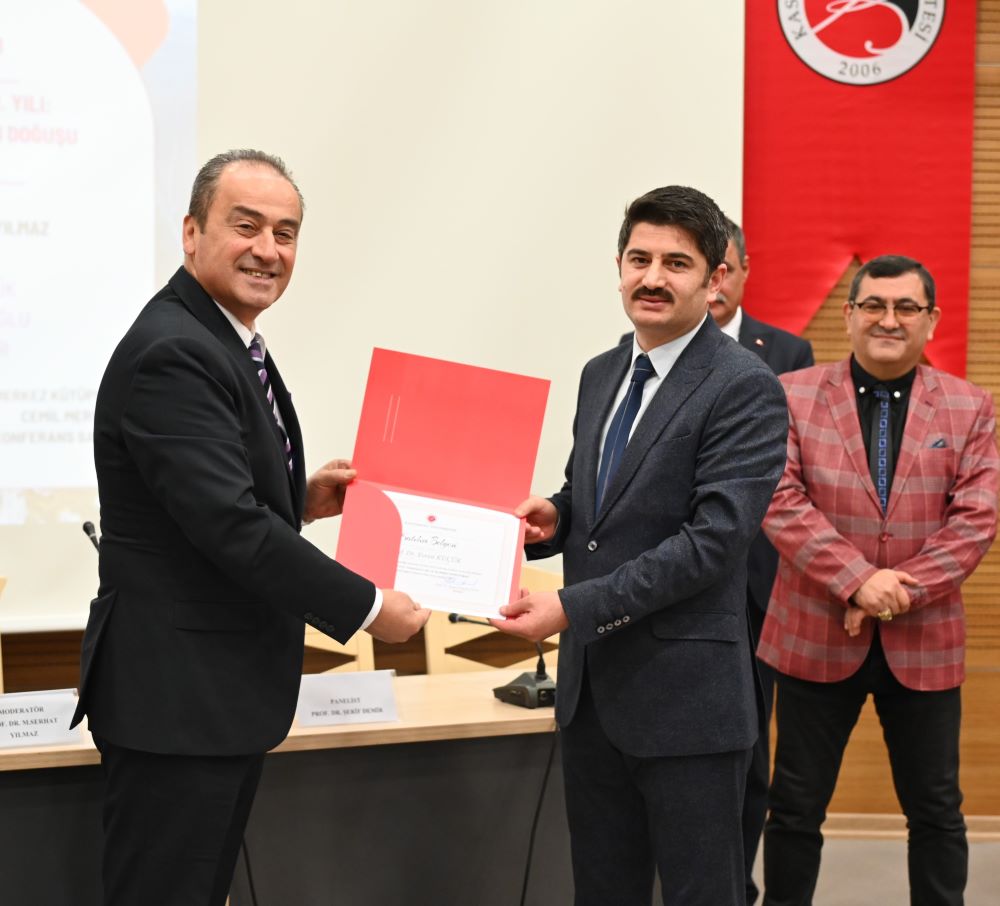
The panel concluded after the participants' questions were answered. At the end of the program, certificates of appreciation were presented to the participants by Deputy Governor Atıkan and Deputy Mayor Göksoy. Dean Prof. Dr. Pattabanoğlu presented gifts to Atıkan and Göksoy in recognition of their participation.