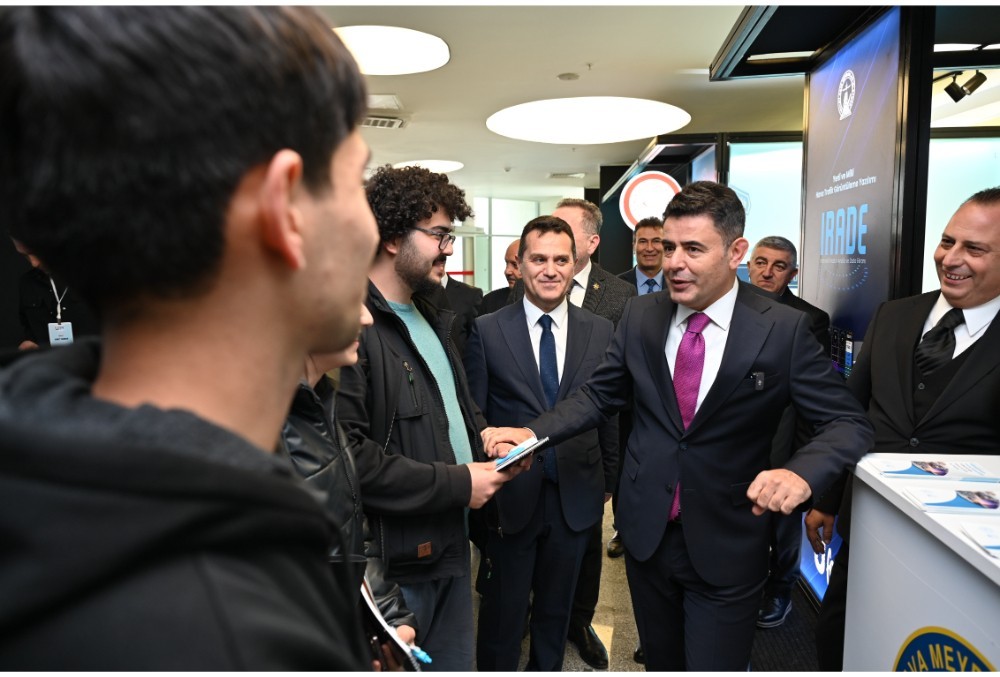
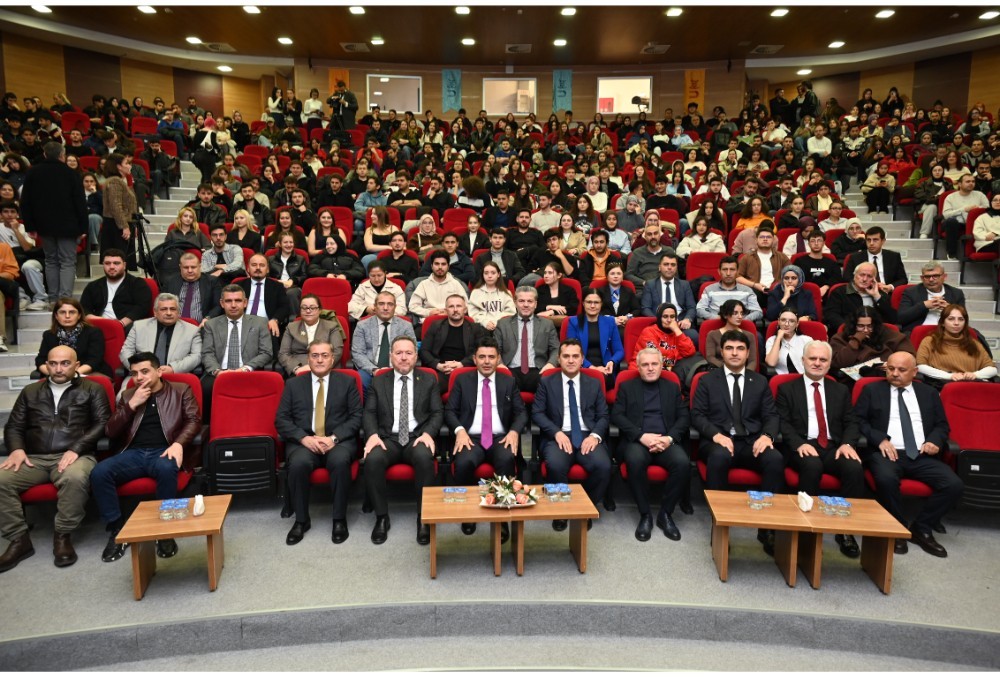
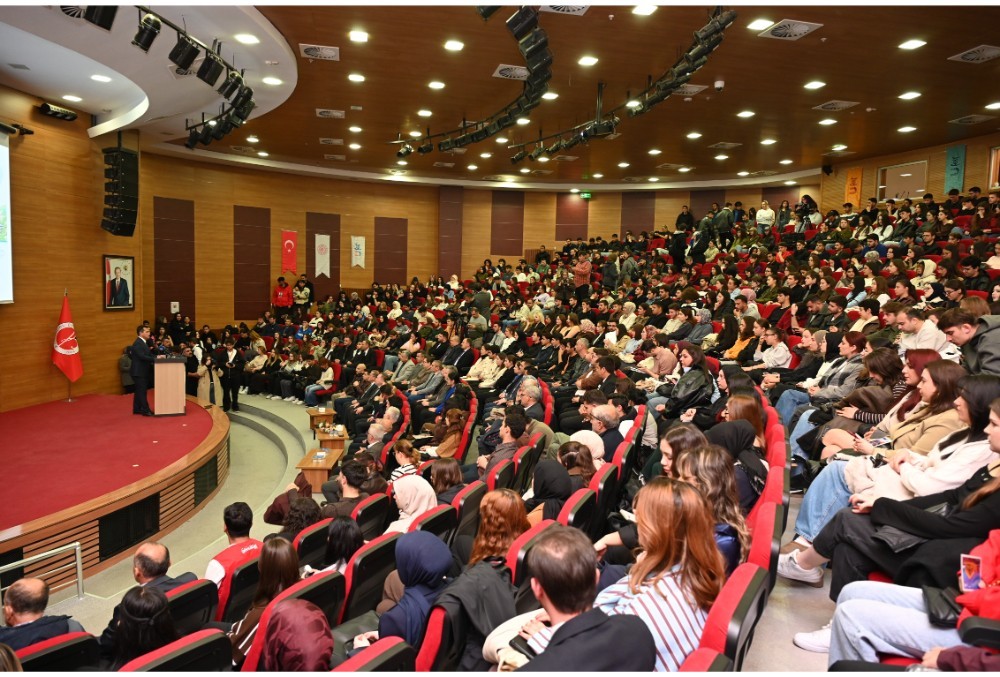
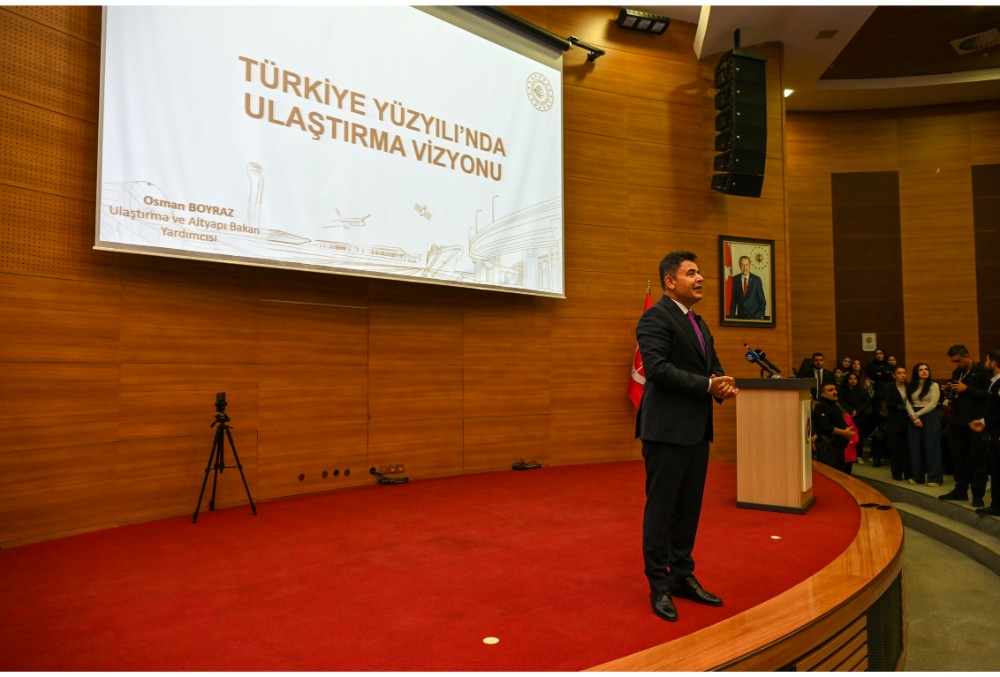
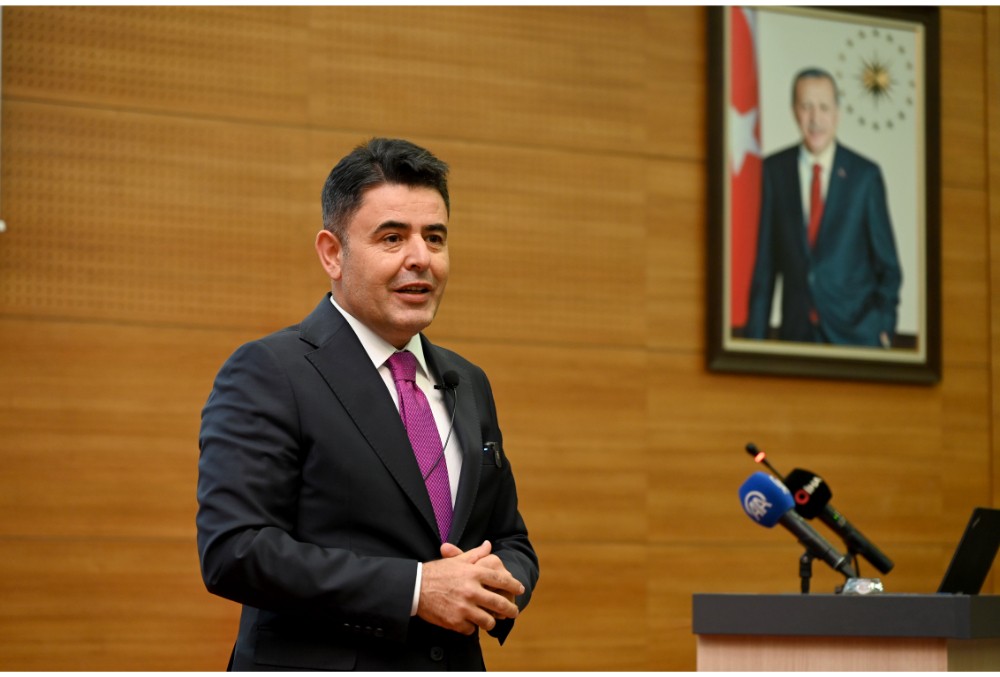
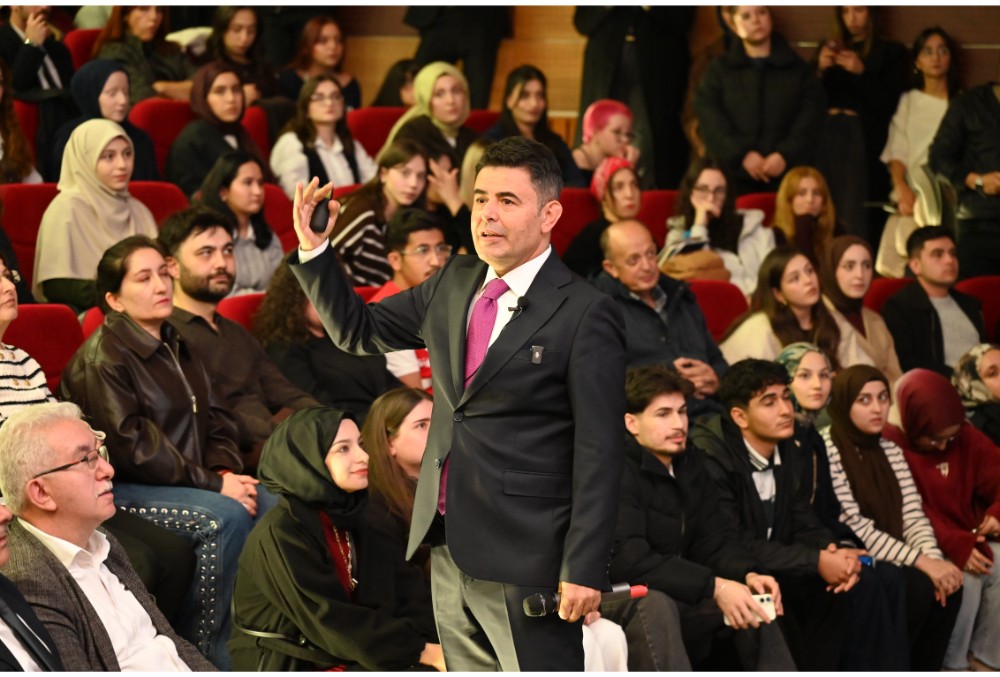
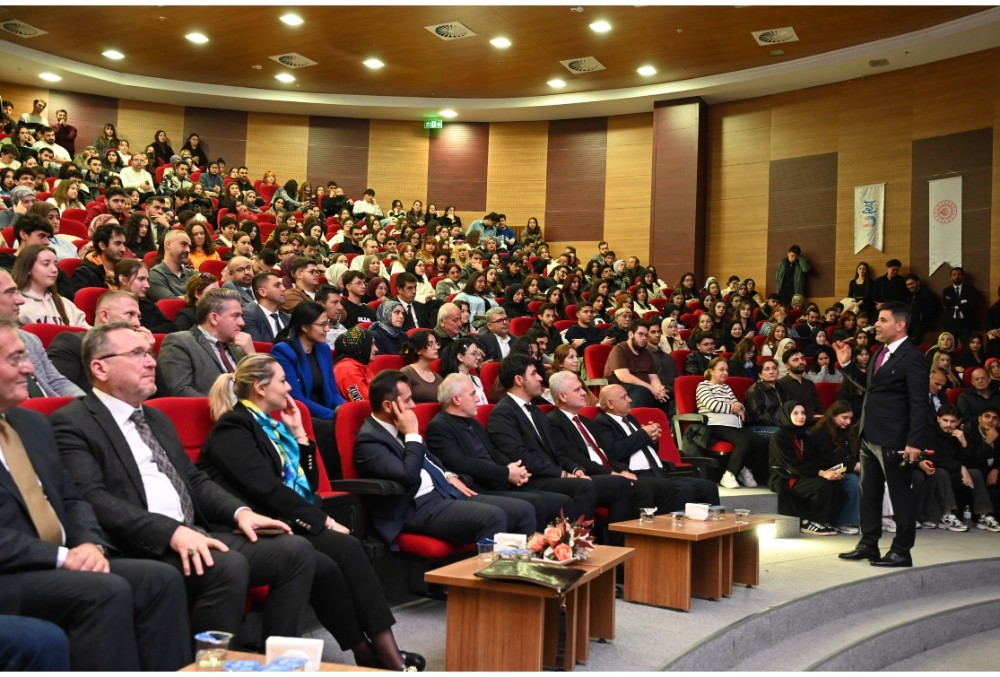
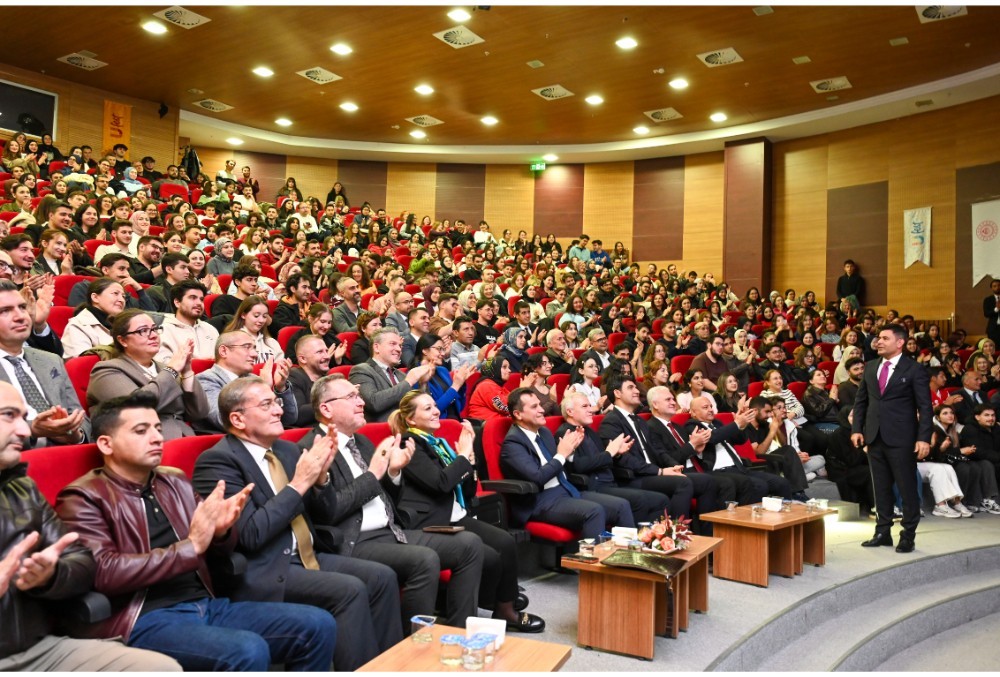
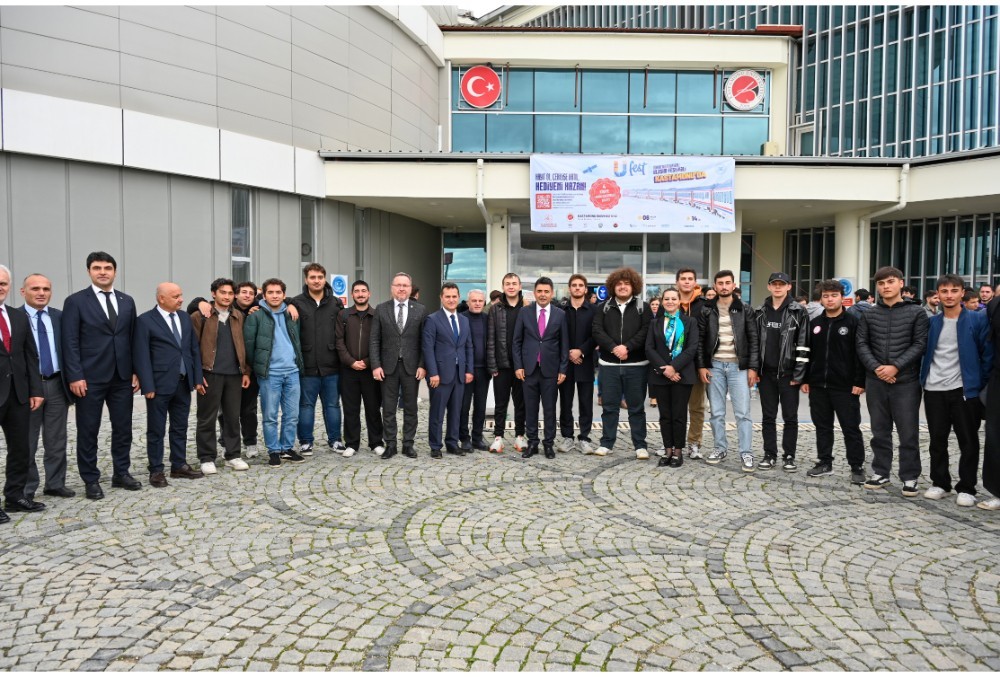
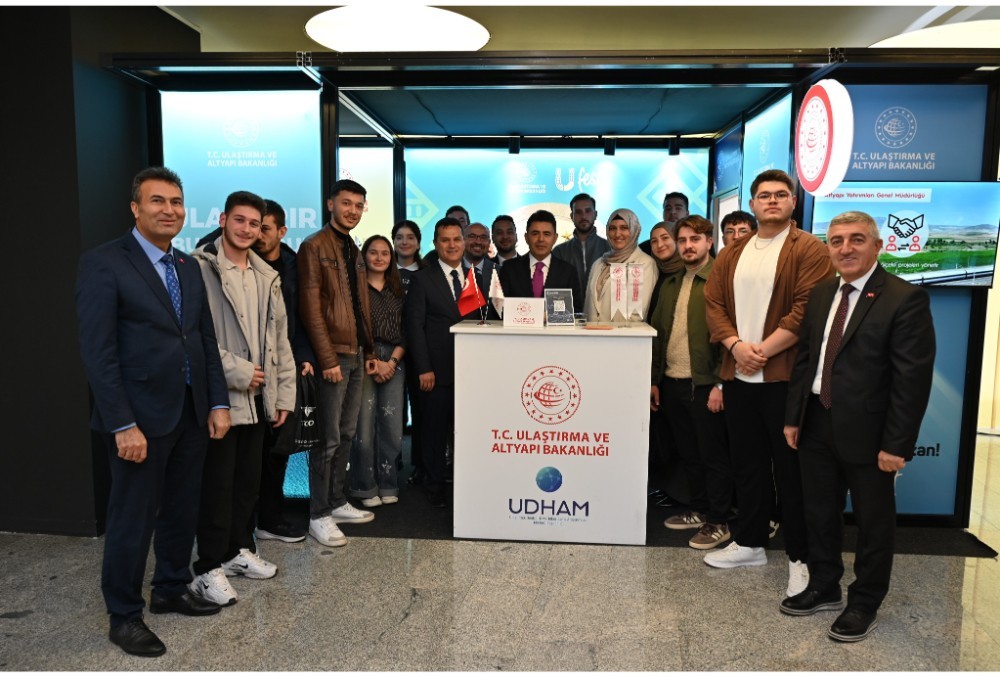
At Kastamonu University, a conference titled "Transportation Vision in the Century of Türkiye" was held as part of the Transportation Festival (UFEST) organized by the Ministry of Transport and Infrastructure. On November 6, 2026, at the Sezai Karakoç Hall of the Central Library, Deputy Minister of Transport and Infrastructure Osman Boyraz shared Türkiye's investments in the transportation sector, current projects, and future goals with students during a conference.
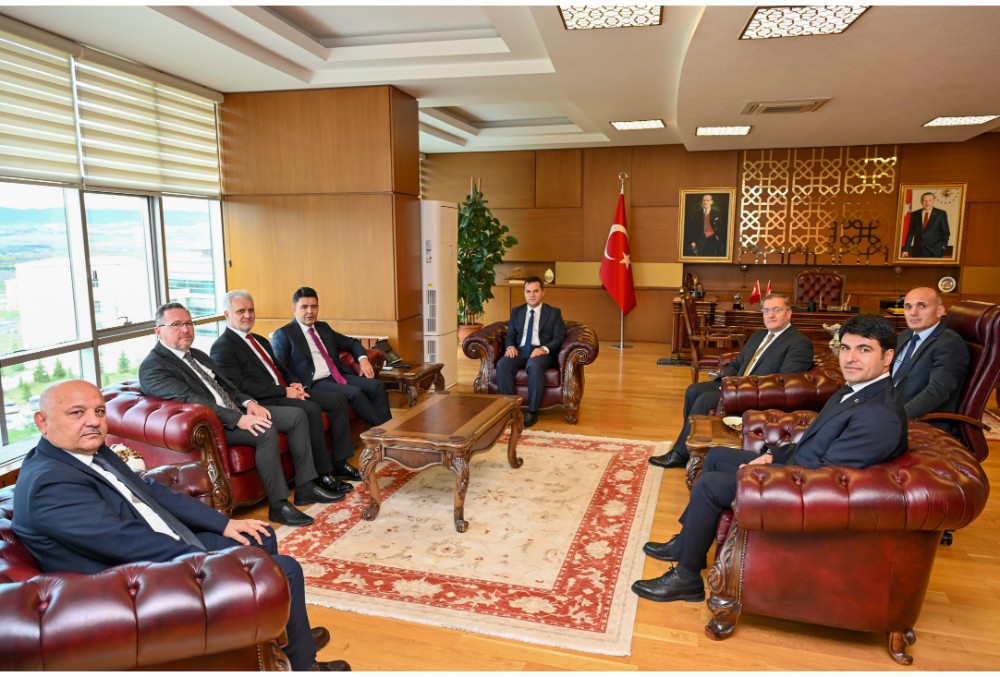
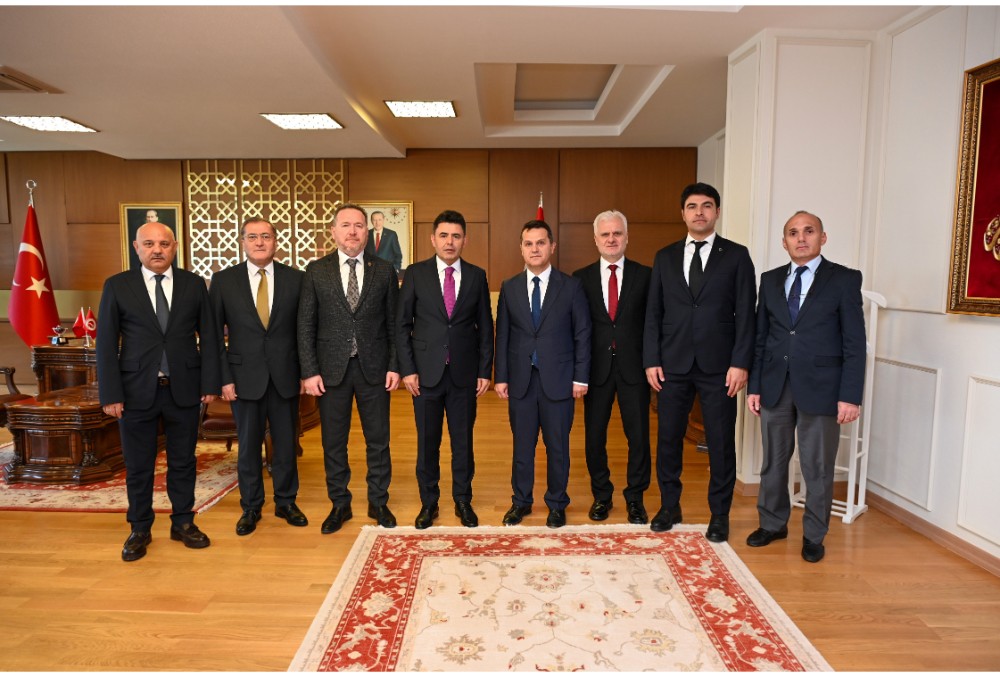
Before the program, Deputy Minister of Transport and Infrastructure Osman Boyraz visited our Rector Prof. Dr. Ahmet Hamdi Topal in his office. In the meeting, our Rector provided Deputy Minister Boyraz with information about our University's academic structure, educational activities, and ongoing projects. Additionally, the possibilities for cooperation between our University and the transportation sector were discussed, and mutual exchanges of views took place.
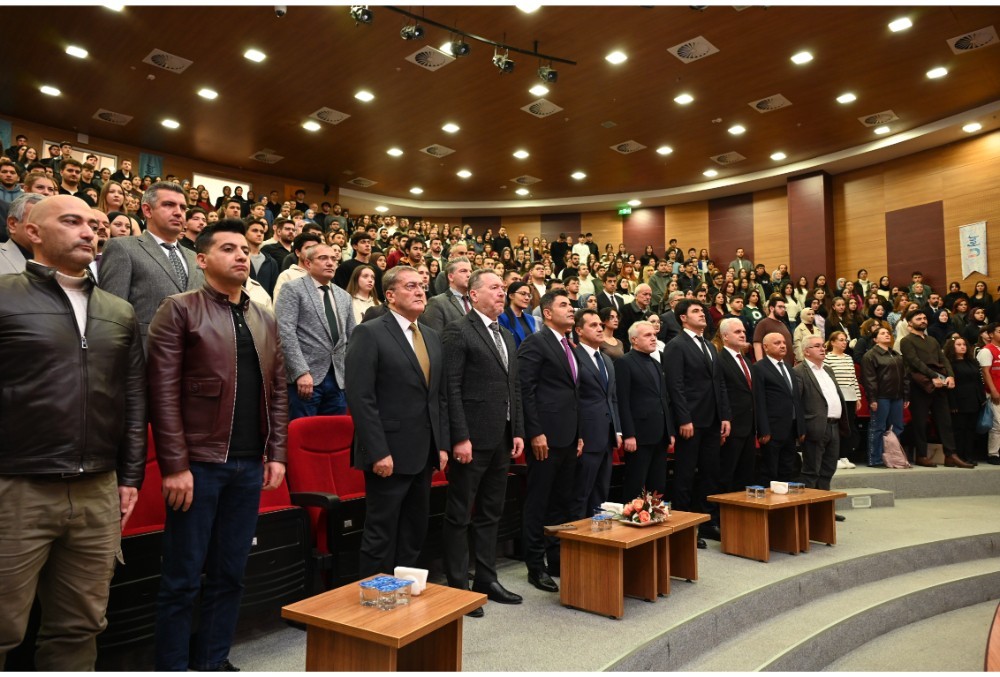
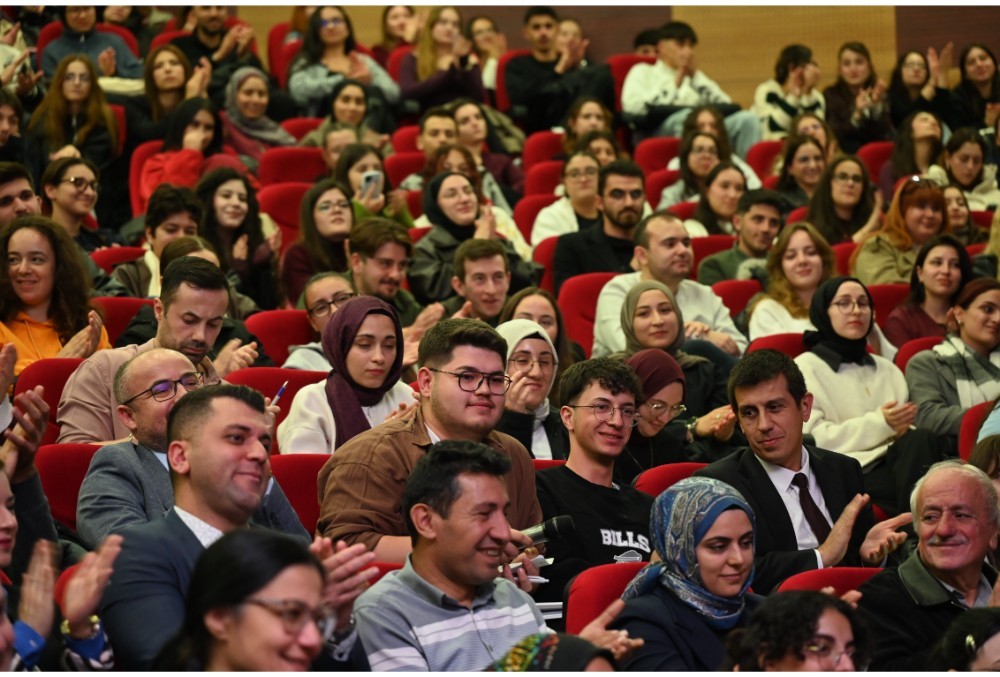
Following the visit, the conference was attended by Kastamonu Deputy Fatma Serap Ekmekci, our Rector Prof. Dr. Ahmet Hamdi Topal, Vice Rectors Prof. Dr. Ömer Küçük and Prof. Dr. Mehmet Atalan, representatives of public institutions and organizations, as well as our academic and administrative staff and students.
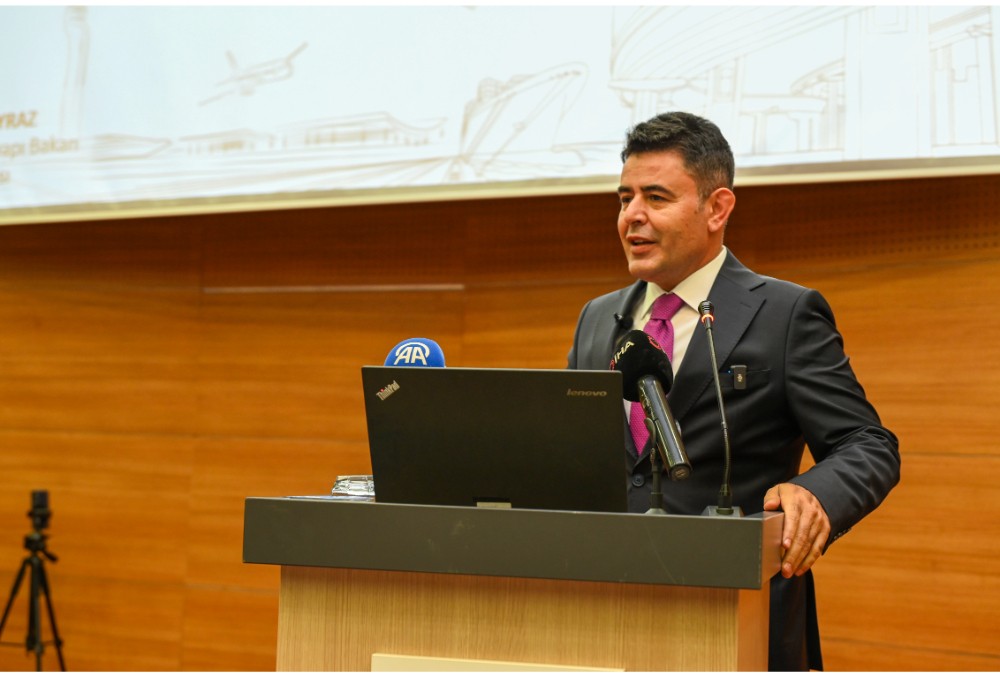
The program, which began with a moment of silence and the reading of the National Anthem, was opened by our Rector, Prof. Dr. Ahmet Hamdi Topal. Our Rector stated that Türkiye has significantly improved its transportation infrastructure recently through major investments in road, rail, air, maritime, and communication sectors and has reached a strategic position both regionally and globally.
Our Rector, emphasizing the vital importance of organizations like UFEST in bringing Türkiye's expertise in the field of transportation together with young people and shaping the vision for future technologies together, highlighted that such events support the imagination, research determination, and production will of the youth.
Our Rector, expressing his belief that the ideas students will develop in areas such as transportation technologies, smart cities, electric and autonomous vehicles, sustainable mobility, logistics, software, artificial intelligence, and communication will make significant contributions to Türkiye's technology production capacity, concluded his speech by thanking those who contributed to the organization of the program.
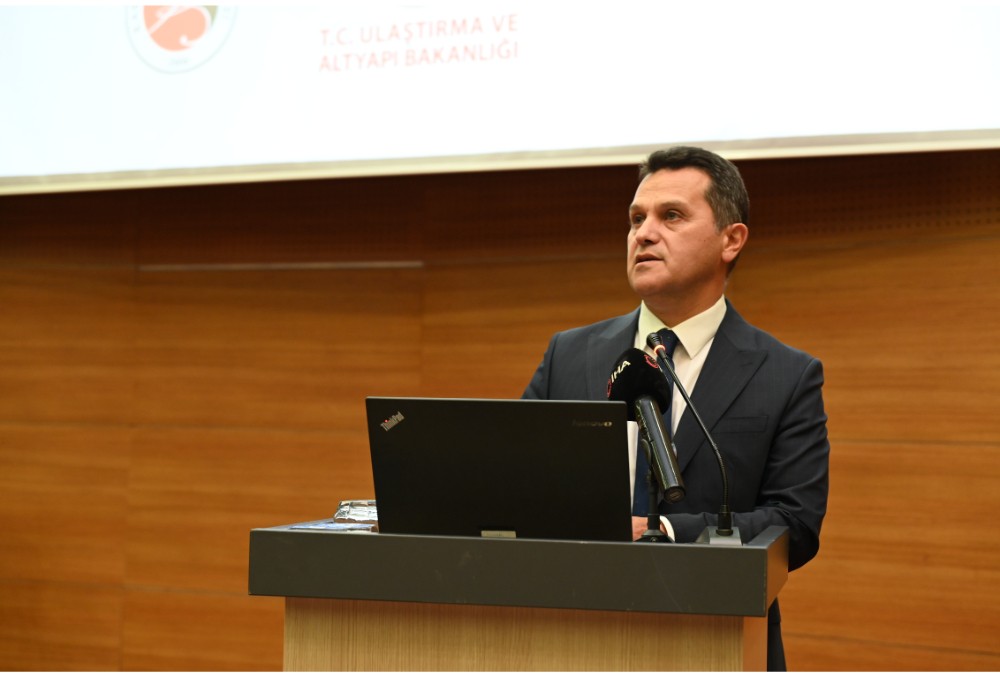
Speaking at the conference, Deputy Minister of Transport and Infrastructure Osman Boyraz highlighted Türkiye's geostrategic and geopolitical position, stating that the country has created an important transportation and trade corridor between the east and the west. Stating that Türkiye has made significant investments in the fields of road, rail, sea, air, and communication to strengthen this strategic position, Boyraz shared the projects implemented and future goals with the students.
Sharing data on road investments, Boyraz stated that the divided road network had been increased by 395 percent in the past 20 years, from 6,101 kilometers to 30,205 kilometers. Expressing his belief that this development will be carried forward by younger generations in the coming years, Boyraz emphasized the importance of a human-centered approach in transportation investments.
Reminding that Türkiye had approximately 6 million vehicles in 2003 and that the death rate in traffic accidents during that period was at the level of 5.72, Boyraz stated that despite the number of vehicles reaching 35 million today, this rate has decreased to 0.98. Emphasizing that human life should be at the center of transportation projects, Boyraz said, "All your projects need to be human-centered." We also say, ‘Let the people live so that the state lives. We say, "Let the people live so that the state lives."
Stating that the planned projects are implemented after consultation with different segments of society, Boyraz said that large-scale investments such as the Osmangazi Bridge, Yavuz Sultan Selim Bridge, 1915 Çanakkale Bridge, and the Eurasia Tunnel are important examples of Türkiye's success story. Stating that the Yavuz Sultan Selim Bridge was built with future transportation needs in mind, Boyraz said that infrastructure was created in the middle of the bridge so that a train line could be laid in the future, and that the tender process was continuing in this context.
Touching on railroad investments, Boyraz stated that the railroad network, which made significant progress in the early years of the Republic, was not sufficiently developed for a long time after 1950 but was supported by renewed investments starting in the 2000s. Stating that Türkiye's railroad transportation capacity is increasing every year, Boyraz said that the ongoing works are aimed to be completed by 2030.
Emphasizing the production of domestic trains and locomotives, Boyraz provided information about the domestic train and locomotive sets developed within the Türkiye Rail System Vehicles Industry Inc. (TÜRASAŞ). Emphasizing the importance of sharing production processes with students, Boyraz stated that the interest shown by students in domestically produced trains reached the workers at the production facilities in Sakarya, and this support increased the motivation of the employees, asking our university students to also support domestic production. Drawing on the rail system investments in Istanbul, Boyraz stated that the Halkalı-Istanbul Airport and Gayrettepe-Istanbul Airport metro lines made significant contributions to the transportation infrastructure.
Stating that Türkiye has reached a remarkable point in air transportation, Boyraz said that Istanbul Airport ranks third in Europe and seventh in the world in terms of capacity. Stating that three planes can take off at the same time from Istanbul Airport, Boyraz said that this capacity demonstrates Türkiye's development in the aviation sector.
Stating that significant progress has been made in the field of maritime, Boyraz noted that Türkiye's shipbuilding capacity has increased every year and that the sector continues to develop.
Reflecting developments in the field of communication and information technologies, Boyraz explained the contributions of the Istanbul Çamlıca Tower to the communication infrastructure. Stating that Türkiye's position among satellite-producing countries is a significant achievement, Boyraz expressed that our country is one of the 11 countries in the world capable of producing satellites in this field, emphasizing that Türkiye has taken important steps toward this goal with domestic aircraft and satellite projects.
In his speech, Boyraz stated that investments in transportation and infrastructure are not limited to meeting today's needs but also contribute to future technologies and Türkiye's global competitiveness, and he emphasized the importance of the role that young people will play in this process.
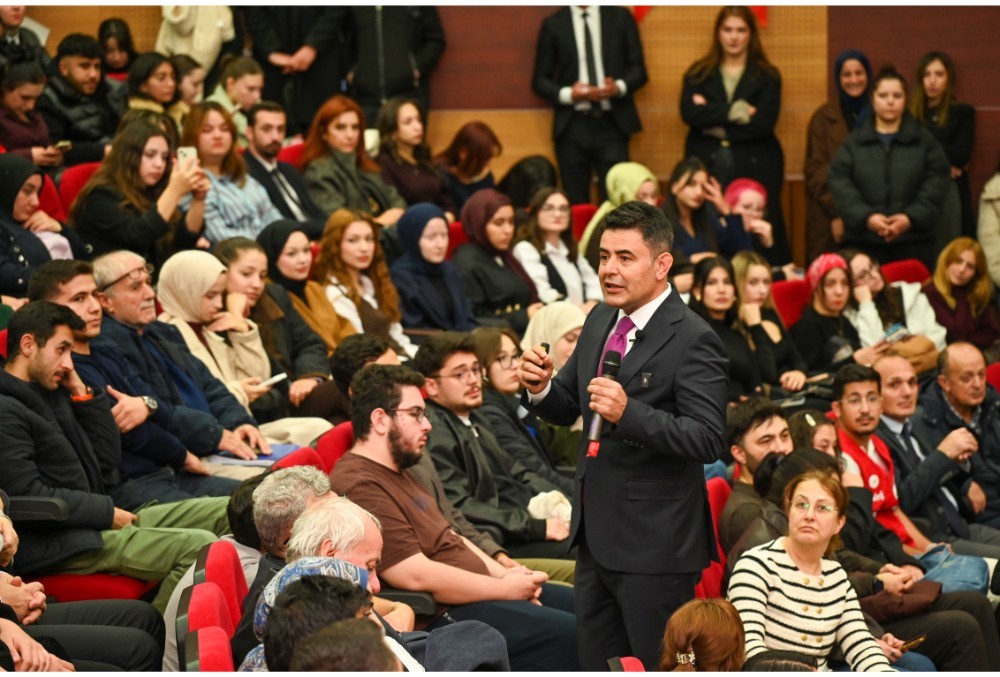
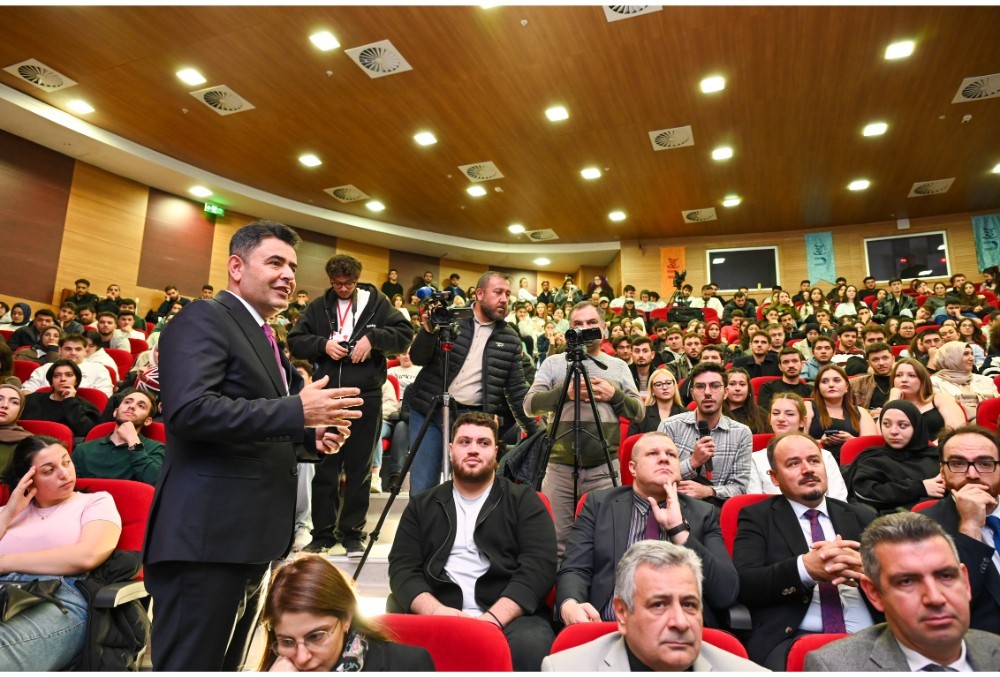
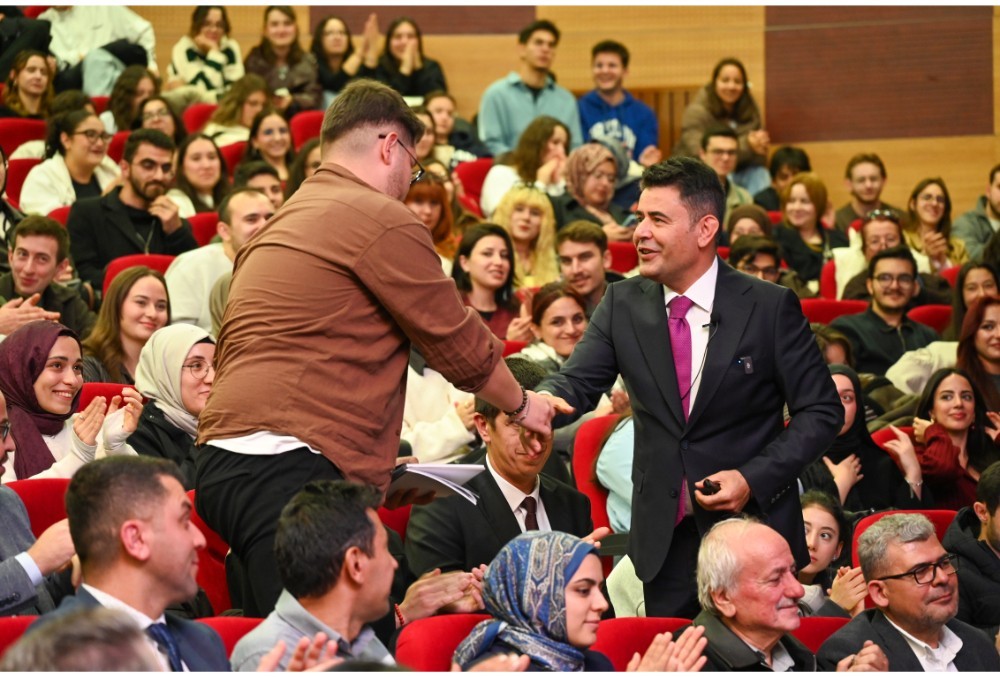
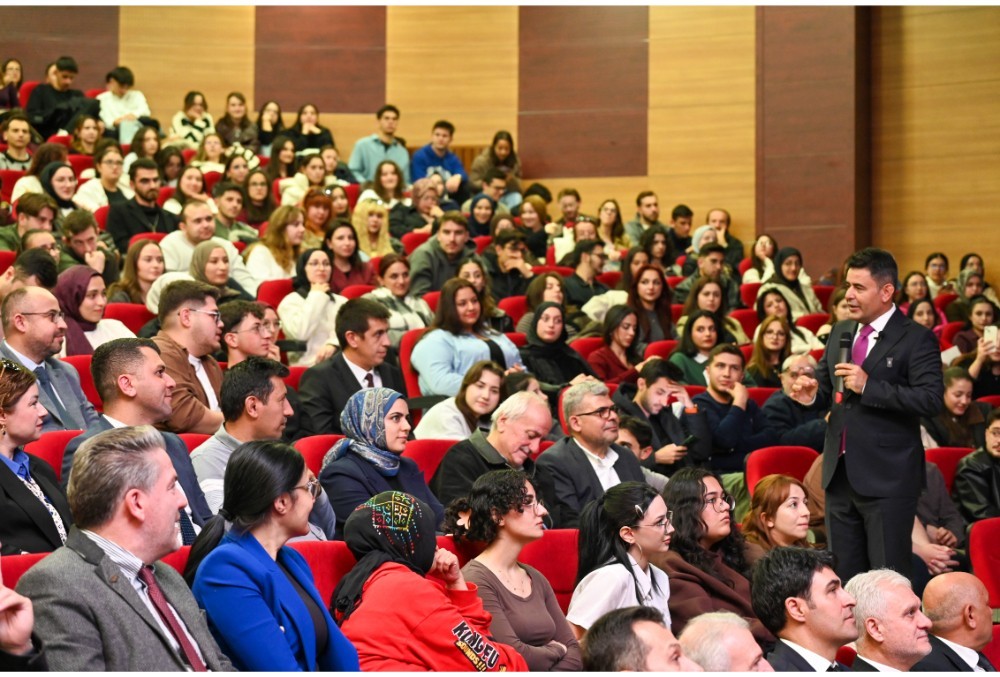
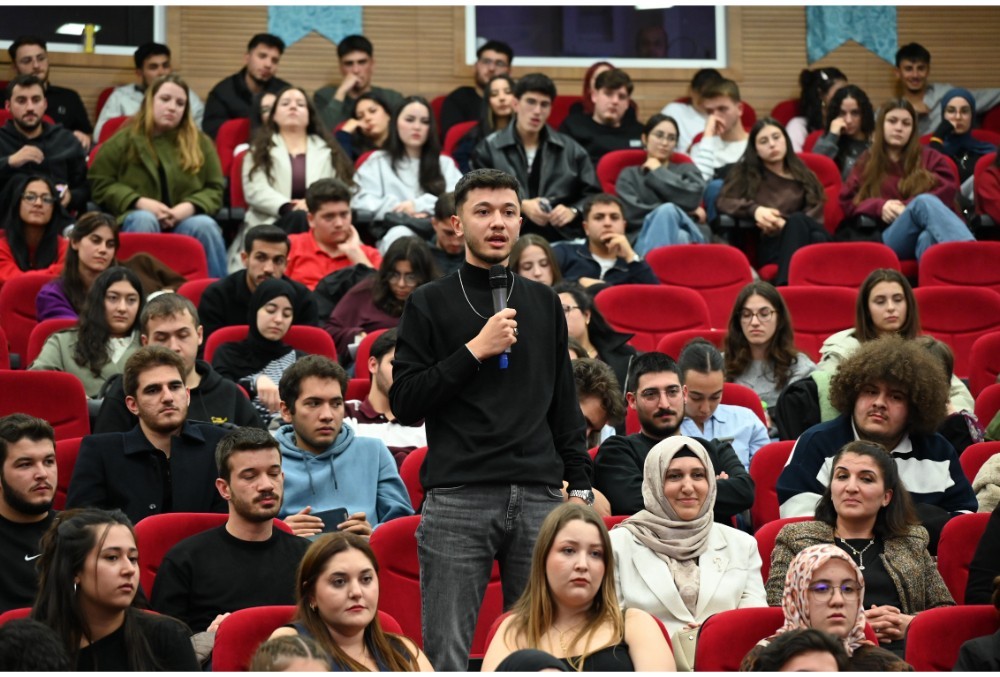
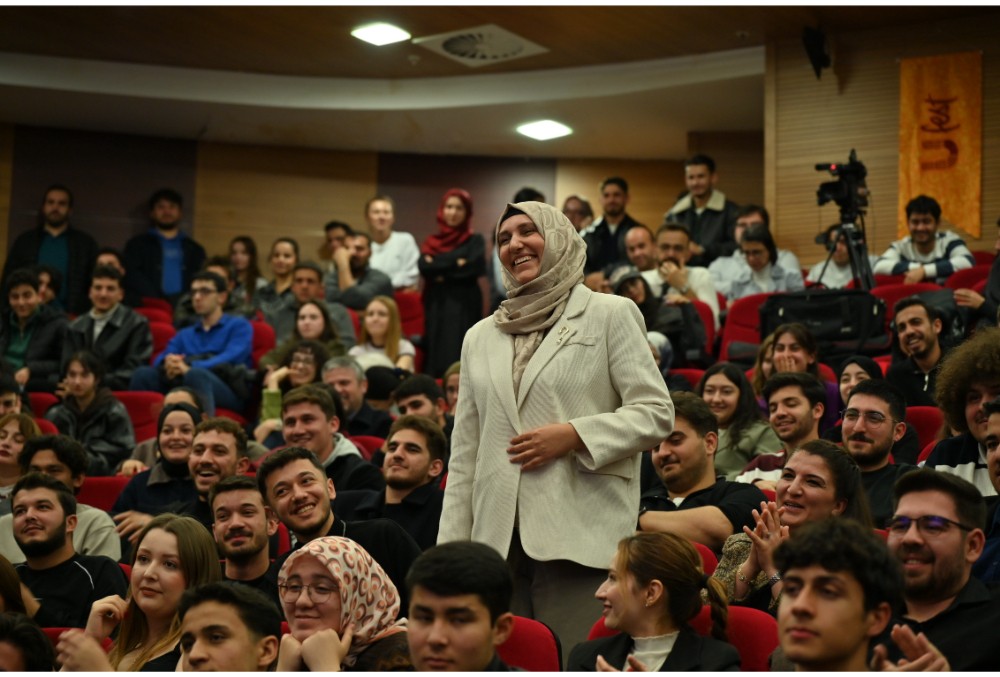
In the question-and-answer session following the conference, our students directed their questions about current developments in the transportation sector, ongoing projects, and future transportation technologies to Deputy Minister Osman Boyraz. Answering the students' questions, Boyraz emphasized the importance of young people's interest in the fields of transportation and technology.
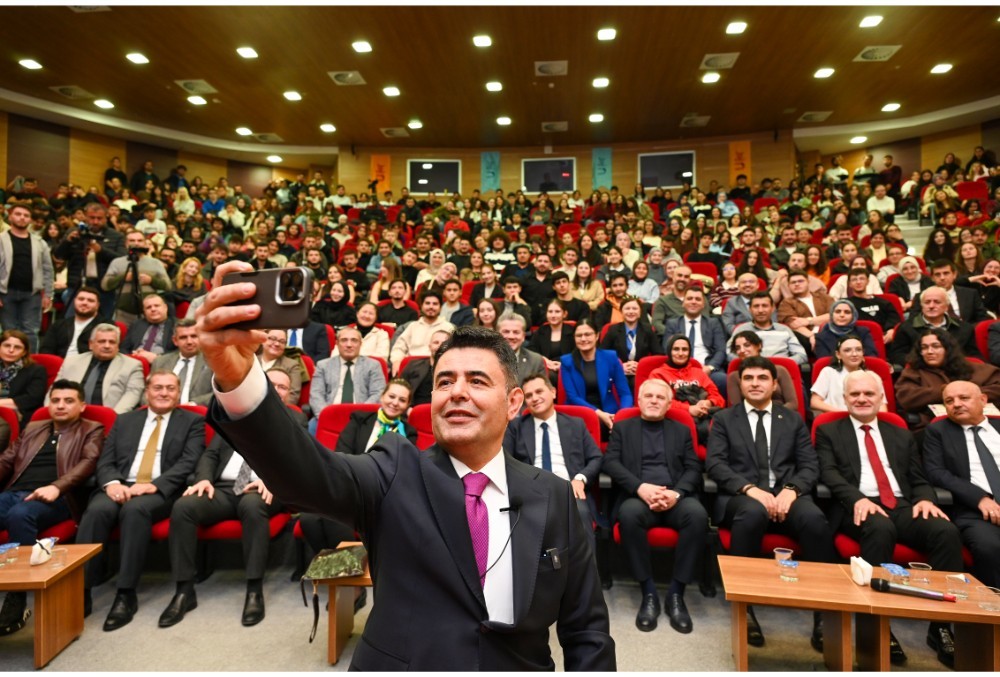
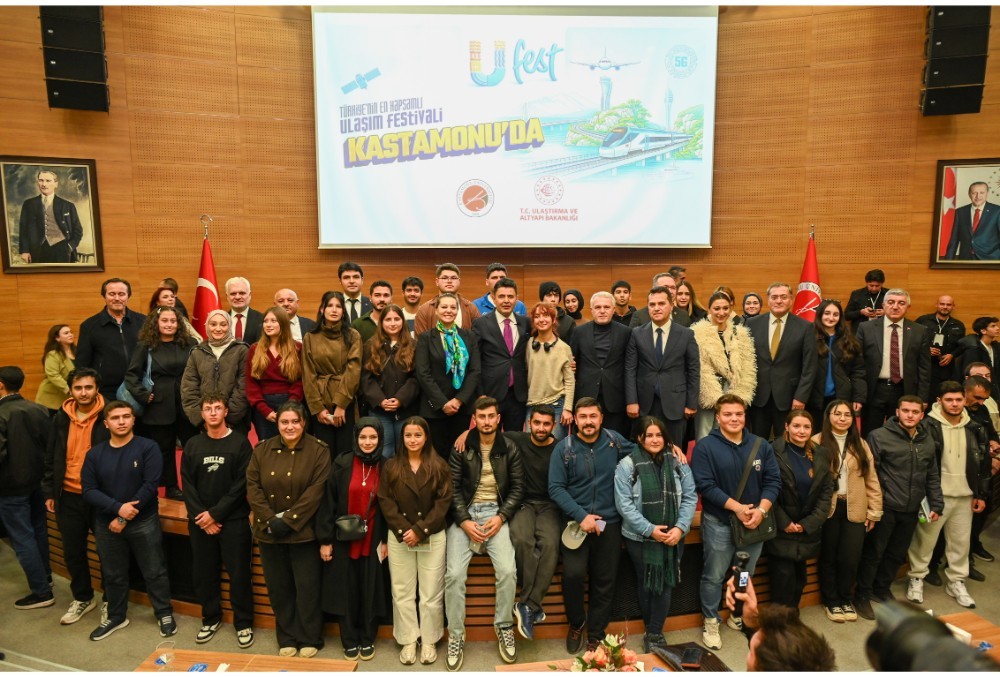
In the lottery held after the conference, our students from different faculties won tickets for the tourist Eastern Express. After Deputy Minister Osman Boyraz presented the tickets to the students, the program ended with a commemorative photo taken with them.