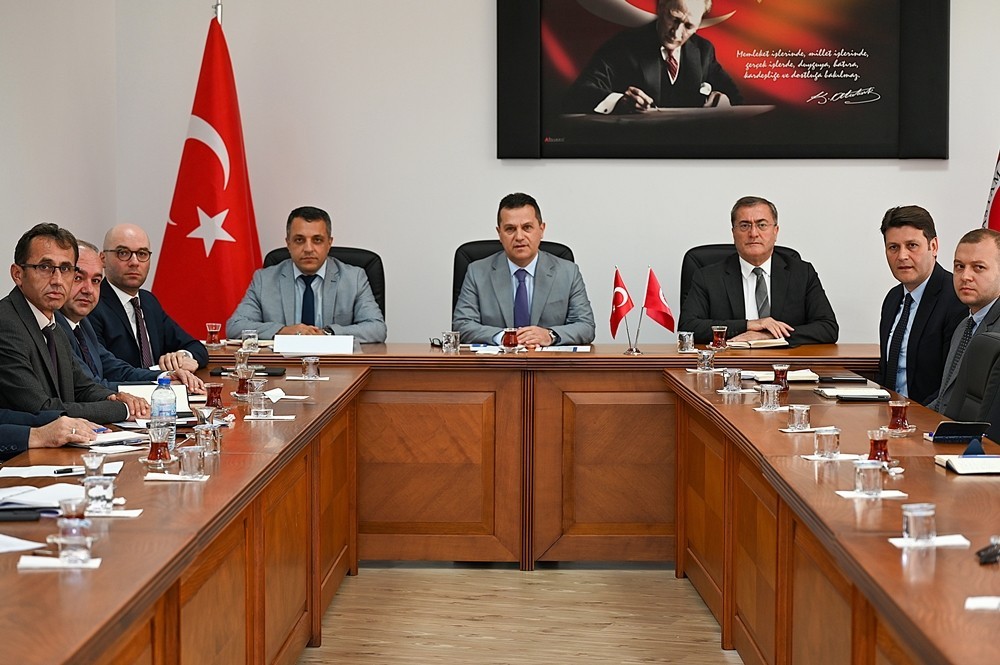
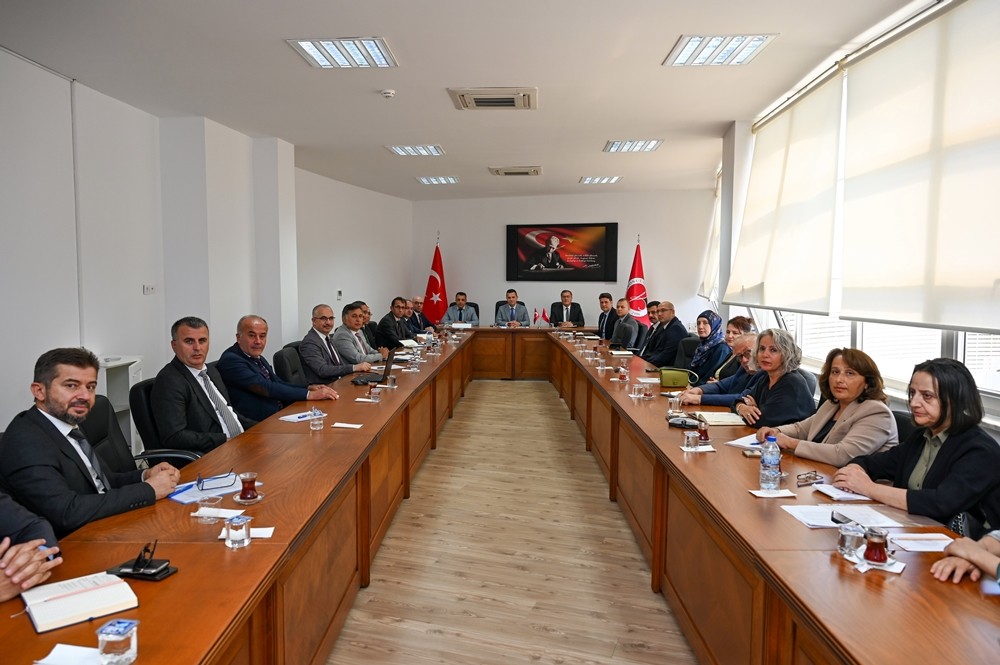
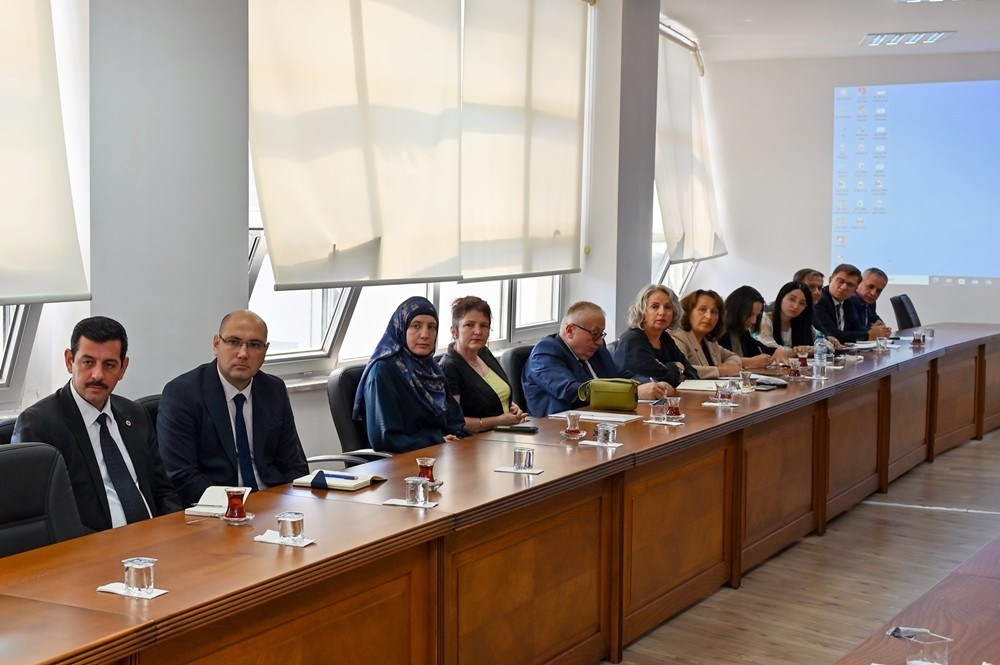
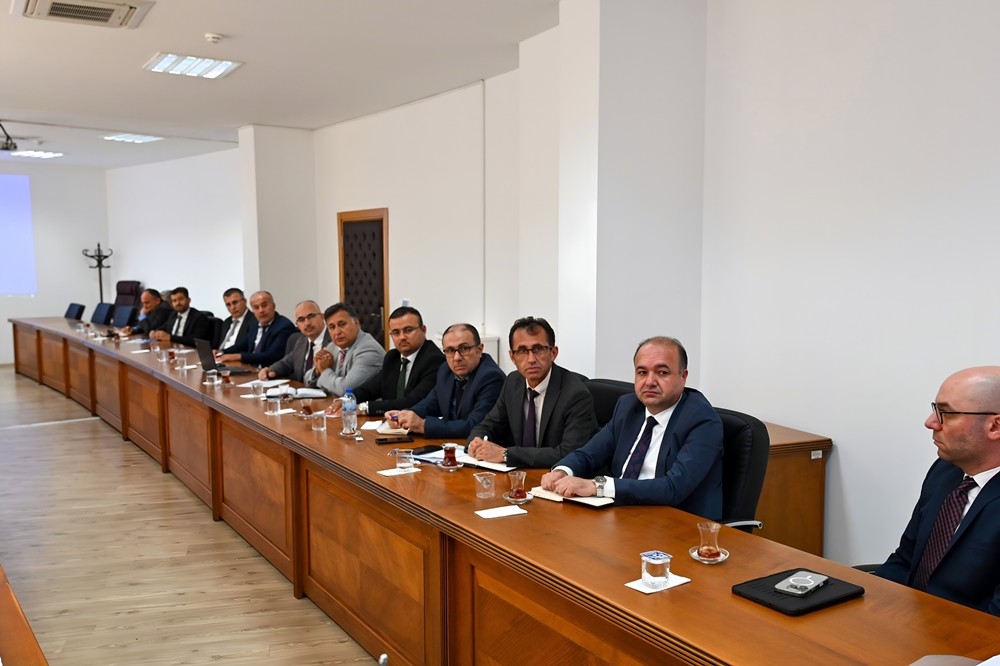
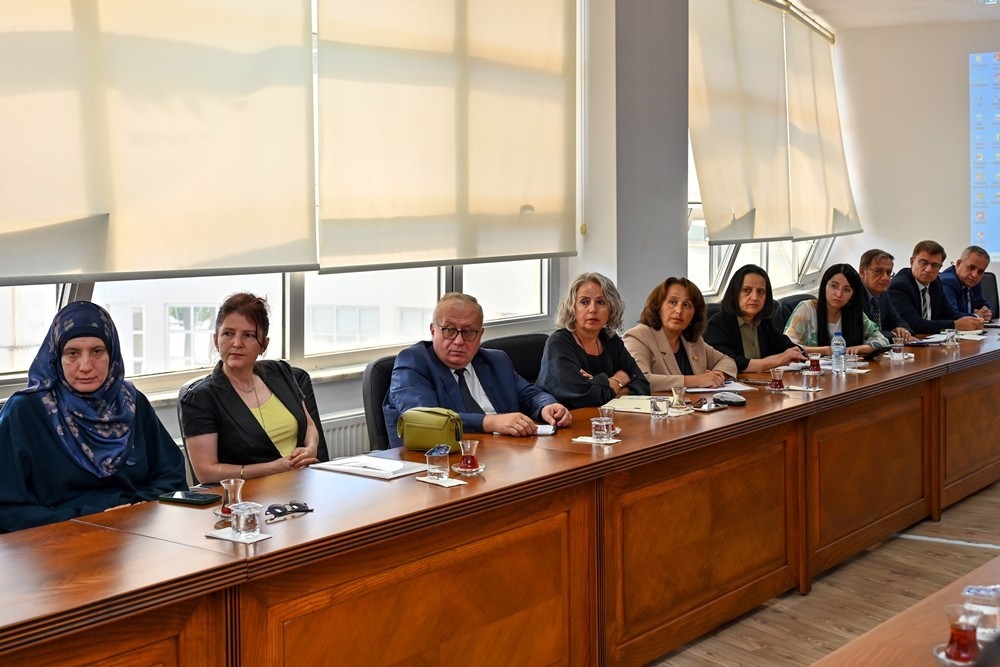
Before the new academic year at Kastamonu University, a Consultation and Coordination Meeting was held with the Secretaries of the Faculty, School, and Vocational School to evaluate preparations to be carried out within the academic units, improve educational environments, and enhance cooperation in administrative processes.
In the meeting attended by our Rector Prof. Dr. Ahmet Hamdi Topal, Vice Rectors Prof. Dr. Mehmet Atalan and Prof. Dr. Selahattin Kaymakcı, Acting Secretary General Assoc. Prof. Dr. İbrahim Demirbaş, Education Excellence Coordinator, Prof. Dr. Berat Ahi, Lecturer Ahmet Tabanlıoğlu, and the secretaries of faculties, colleges, and vocational schools discussed the preparations for the new academic year, the physical and technical conditions of the academic units, the currency of classroom and building inventories, inter-unit coordination, and the identification and resolution of problems.
Our Rector: "We must act with a sense of shared responsibility and effective communication"
In his opening remarks at the meeting, our Rector, Prof. Dr. Ahmet Hamdi Topal, emphasized the importance of coordination between academic and administrative units for the healthy and efficient conduct of the new academic year.
Our Rector, stating that the secretaries of faculties, colleges, and vocational schools take on responsibilities in the administrative operations of academic units, emphasized that the process should be closely monitored in many areas, from the planning of education and teaching to the preparation of classrooms and common areas, from the functionality of technical equipment to the monitoring of physical conditions.
Emphasizing the importance of the deans, directors, and unit secretaries working together to solve the problems encountered in academic units, our Rector stated that communication between units should be improved and that, in cases where it is needed, problems should be promptly communicated to the upper management of our University and the relevant central units.
Our Rector, stating that our university's corporate governance approach is based on common standards, effective communication, tracking of duties and responsibilities, and solution-oriented work, requested that preparations for the new academic year be completed in line with this understanding.
Educational environments were evaluated from the perspective of students and faculty members
Continuing the meeting, the Coordinator of Excellence in Education, Prof. Dr. Berat Ahi, shared the findings obtained from the studies conducted with students and academic staff by the Coordination Office with the secretaries of the academic units.
Stating that student and faculty feedback is an important data source for improving educational environments, Ahi emphasized that the quality of education is not limited to course content and teaching processes; the physical environment where students and faculty are located also directly affects the quality of education and teaching.
In this context, the cleanliness of classrooms, heating and ventilation conditions, lighting, acoustics and sound system, classroom layout, student capacity, projection and computer systems, internet infrastructure, and the adequacy of laboratories and workshops were evaluated.
It was emphasized that merely having a technical device in the inventory is insufficient, and that equipment in educational environments should be operational, accessible, and capable of meeting current educational needs.
While emphasizing that the magnitude of problems encountered in classrooms and buildings can affect the educational experience, the importance of timely detection of issues related to technical equipment malfunctions, heating and ventilation problems, cleanliness, internet connectivity, and classroom physical conditions was highlighted.
"We should see the problems before our students do"
Concrete expectations for preparing academic units for the new academic year were also shared at the meeting.
In this context, it was emphasized that classrooms should be inspected on-site before the term starts; the functionality of projectors, computers, and internet connections should be verified; lighting, heating, ventilation, and cleanliness conditions should be reviewed; and the capacities of classrooms and their intended uses should be aligned with the current situation.
It was stated that the fundamental approach is to identify and initiate the resolution process for problems as early as possible, before the start of education and training, rather than only after notifications from students or teaching staff.
It was emphasized that situations directly affecting safety, such as electrical and cable safety, water ingress, the risk of falling objects from ceilings or walls, and laboratory ventilation, should be reported to the relevant units without waiting for routine processes.
The primary role of academic unit secretaries in this process was summarized as "seeing, recording, reporting, and following up."
The pilot program is being expanded with new academic units
In the final part of the meeting, Vice Rector Prof. Dr. Selahattin Kaymakcı provided information about the ongoing efforts to systematically monitor the physical and technical conditions of the academic units.
Sharing the experiences and results from practices initiated in two pilot academic units, Kaymakcı announced that the pilot application would be expanded to include four additional academic units.
The study aims to systematically monitor the current status of classrooms, technical equipment, inventory, and fixed assets in academic units; record needs and malfunctions; direct issues to the relevant units; and make the resolution processes traceable.
Based on the experiences gained from the pilot applications, we plan to develop the system and establish a sustainable structure across our University.
Objective: More qualified educational environments
The meeting also emphasized the importance of the effective and efficient use of existing resources. It was emphasized that unused or surplus technical equipment in the units should be identified and evaluated in other academic units that need them, thereby ensuring more effective use of existing resources across our University.
It was emphasized that improving educational environments is not a process that can be carried out solely by central or academic units; rather, it is a shared institutional responsibility that requires coordination among academic and administrative managers and the relevant central units.
The meeting continued with the faculty, vocational school, and higher vocational school secretaries sharing the problems, needs, and proposed solutions they encountered in their respective units. After the question-and-answer session and mutual evaluations, the meeting concluded.