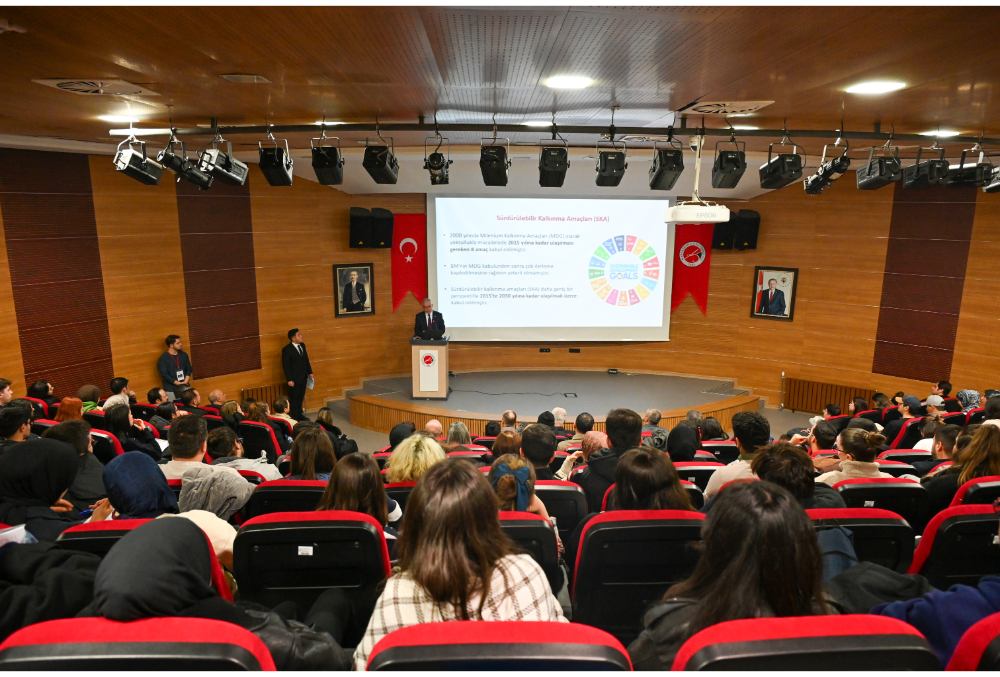
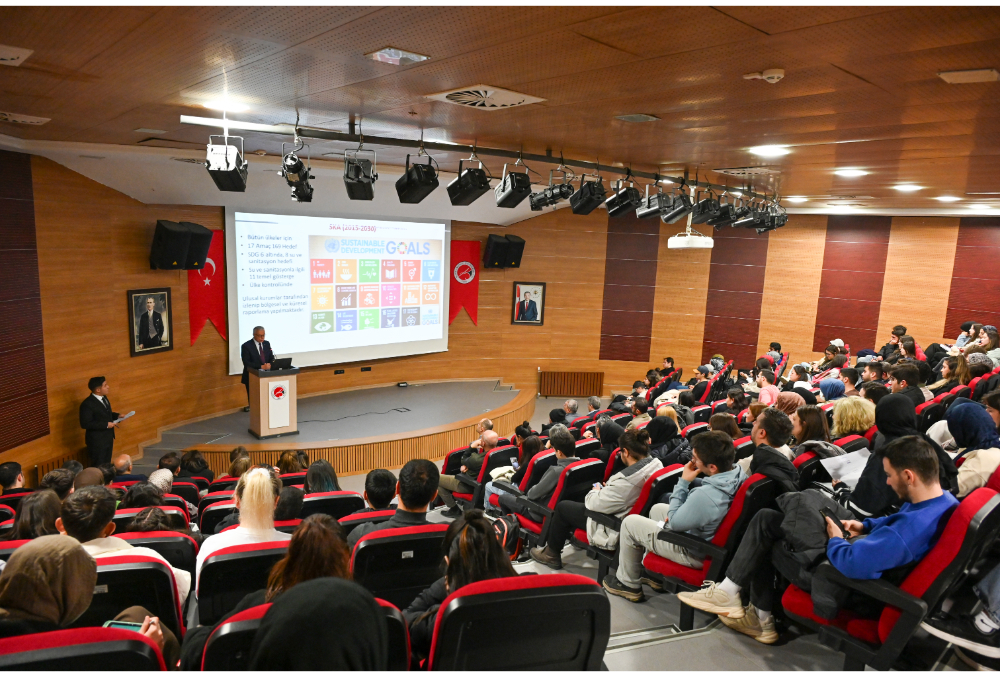
Kastamonu University hosted another scientific event as part of the "Academy and University Conferences" program conducted by the Turkish Academy of Sciences (TÜBA).
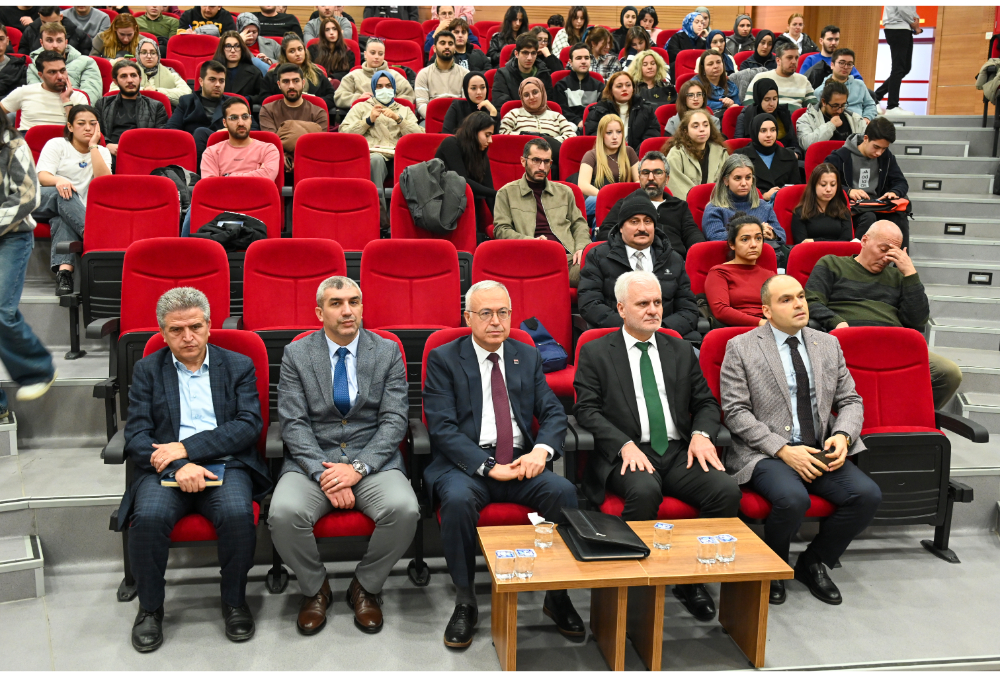
The fourth conference in a series of programs aimed at supporting the transfer of scientific knowledge, bringing together TÜBA's academy members and university students, was held on November 27, 2025, in the Central Library's Cemil Meriç Hall.
The conference was attended by Vice Rector Prof. Dr. Ömer Küçük, a faculty member of Necmettin Erbakan University and TÜBA Fellow, as well as TÜBA Environment, Biodiversity, and Climate Change Working Group Leader Prof. Dr. Mehmet Emin Aydın, academic staff, and a large number of students.
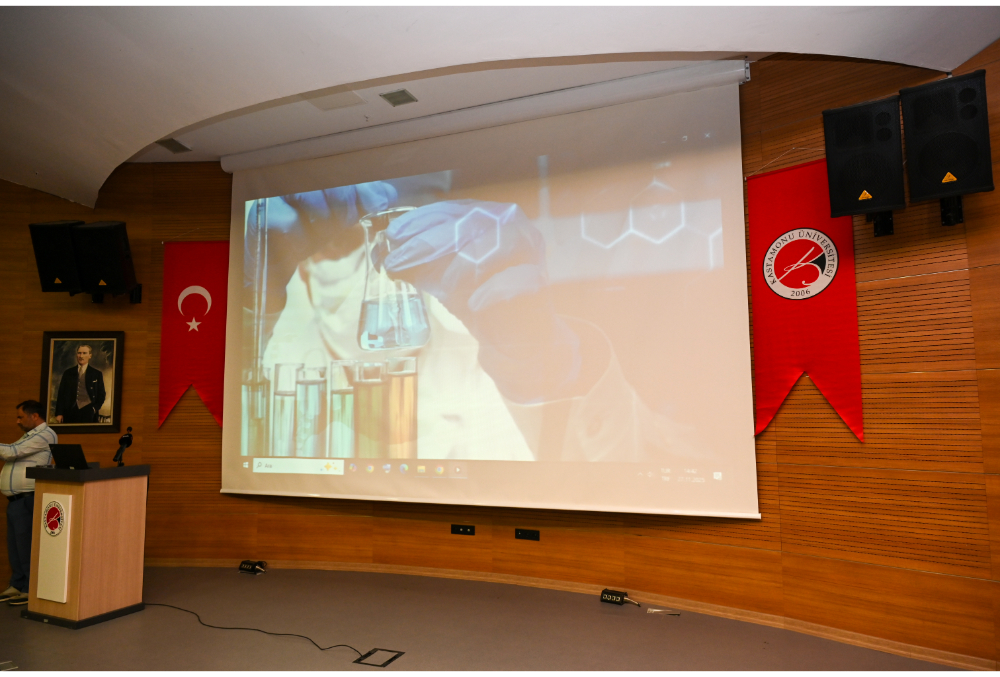
The program began with the screening of the TÜBA promotional film. Subsequently, the speaker, Prof. Dr. Mehmet Emin Aydın's academic studies, international projects, and contributions to the field of environmental sustainability were introduced.
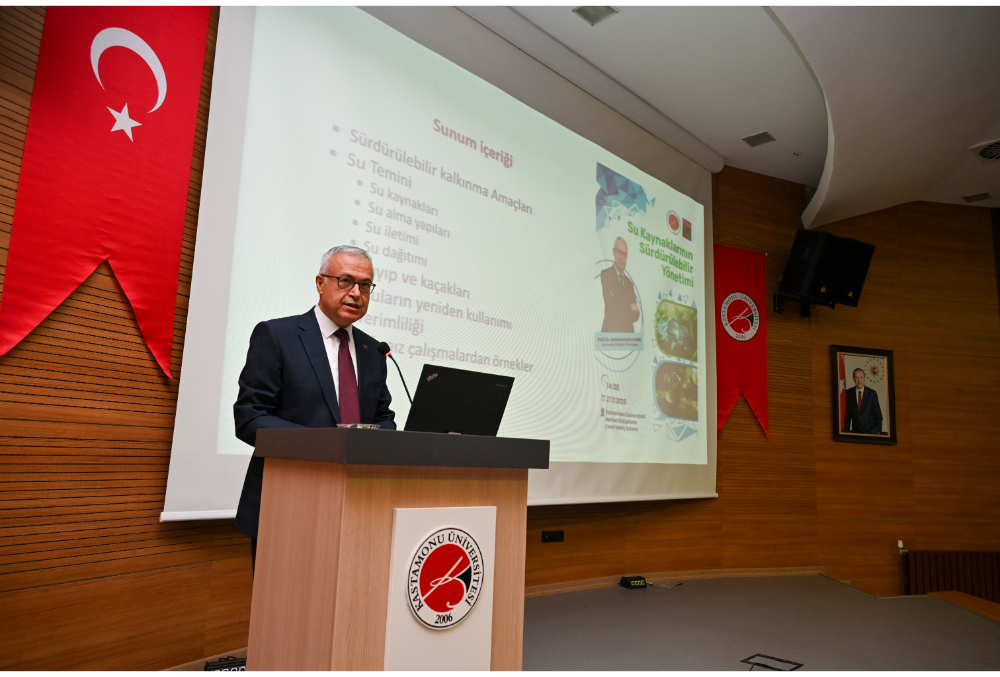
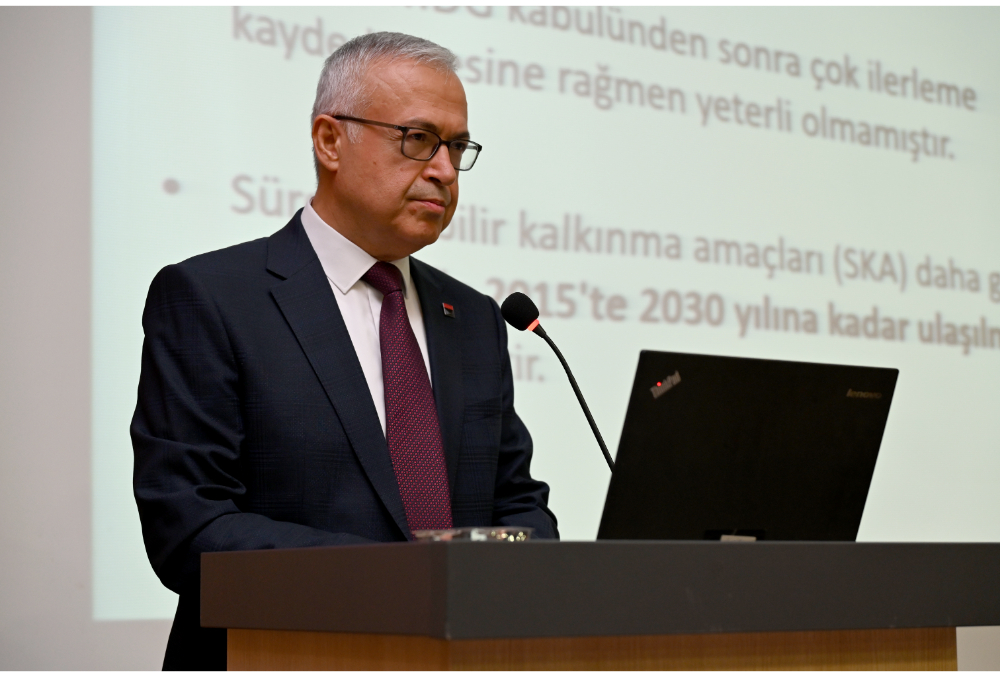
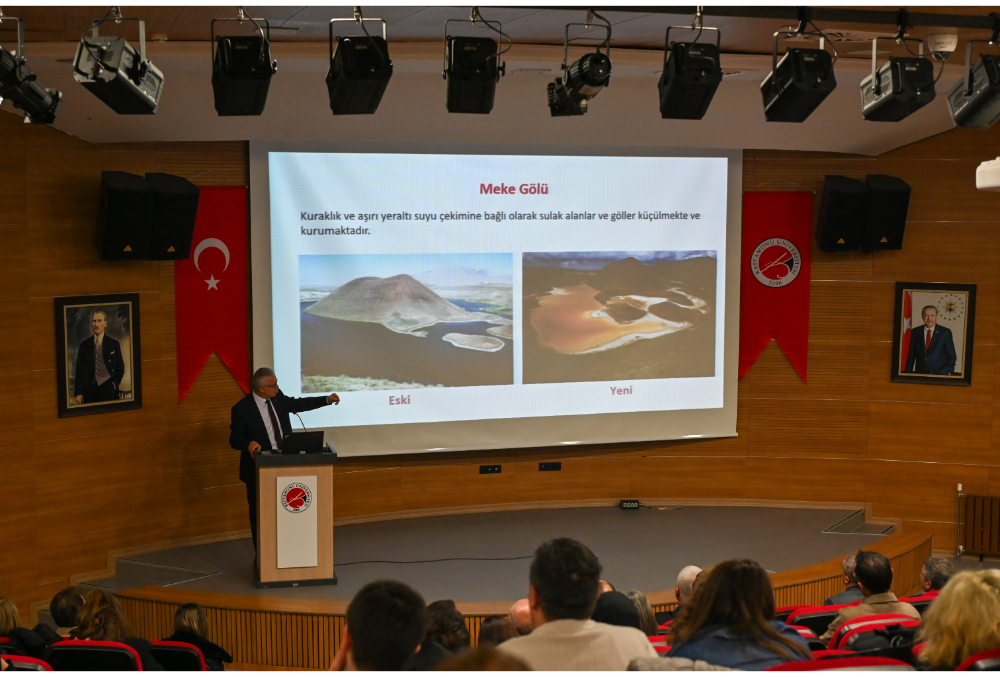
Later, Prof. Dr. Aydın took the stage and, in his presentation titled "Sustainable Management of Water Resources," emphasized that water is a fundamental element for life, stating that sustainable water use was brought to the international agenda in the 1980s.
Reminding that the principle of "Clean Water and Sanitation for All" was adopted within the framework of the Sustainable Development Goals covering the years 2015-2030 by the United Nations, Prof. Dr. Aydın stated that goals such as increasing water conservation, improving water use efficiency, integrated water management in transboundary basins, and protecting and restoring water-dependent ecosystems are important for all countries.
Stating that access to potable water is decreasing globally, Prof. Dr. Aydın pointed out that water resources are unevenly distributed across continents, and this situation also applies to Türkiye.
Stating that water resources are used intensively in domestic, industrial, and agricultural areas, Prof. Dr. Aydın emphasized that water must be taken from the source using appropriate methods, and that it must be treated and distributed to homes if its quality is insufficient.
Stating that strong infrastructure networks in cities will reduce water loss and leakage, and that strengthening the infrastructure used in agricultural irrigation and preventing evaporation and leakage are of great importance for sustainable water management, Prof. Dr. Aydın said that even with drip irrigation methods, there is a loss of approximately 5%, while this rate varies between 17% and 40% in other irrigation methods.
Stating that certain regions in Turkey are experiencing water stress, and that the primary reason for this is the country's dense population and industrialization, Prof. Dr. Aydın noted that there are also significant problems with groundwater usage.
Stating that groundwater is consumed the most in agriculture, Aydın noted that water is being transported from Lake Beyşehir to Konya as part of the KOP Project, with the aim of solving the water problem by 2050. However, the desired progress has not yet been achieved due to the drought in 2025. Stating that a 10% decrease in water resources is expected by 2030, Prof. Dr. Aydın reminded that approximately 1500 liters of water will be needed to produce one kilogram of wheat in 2050.
Stating that the concept of "water footprint" has become increasingly important in recent years, Prof. Dr. Aydın emphasized that the total amount of water used in production and consumption processes should be taken into account.
In this context, he stated that it has become mandatory to cultivate agricultural products suitable for the quantity and type of water resources. Stating that studies are being conducted on wastewater reuse for sustainable water management, Prof. Dr. Aydın mentioned that Germany has successful examples in this regard.
In his speech, Prof. Dr. Aydın assessed the pressures on water resources resulting from climate change, population growth, and industrialization, using scientific data. He shared important information on innovative water management models, basin planning, ecosystem-based approaches, and the requirements for international cooperation. Proposed solutions to current issues, such as water safety, wastewater treatment, and environmental pollution, were also well-received by the participants.
Stating that the Ministry of Agriculture and Forestry aims for more efficient use of existing resources within the scope of the water efficiency campaign, Aydın said that research on sustainable water management is being conducted within the framework of the Exceed-Swindon Project, which is participated in by 23 countries and 45 universities in developing countries.
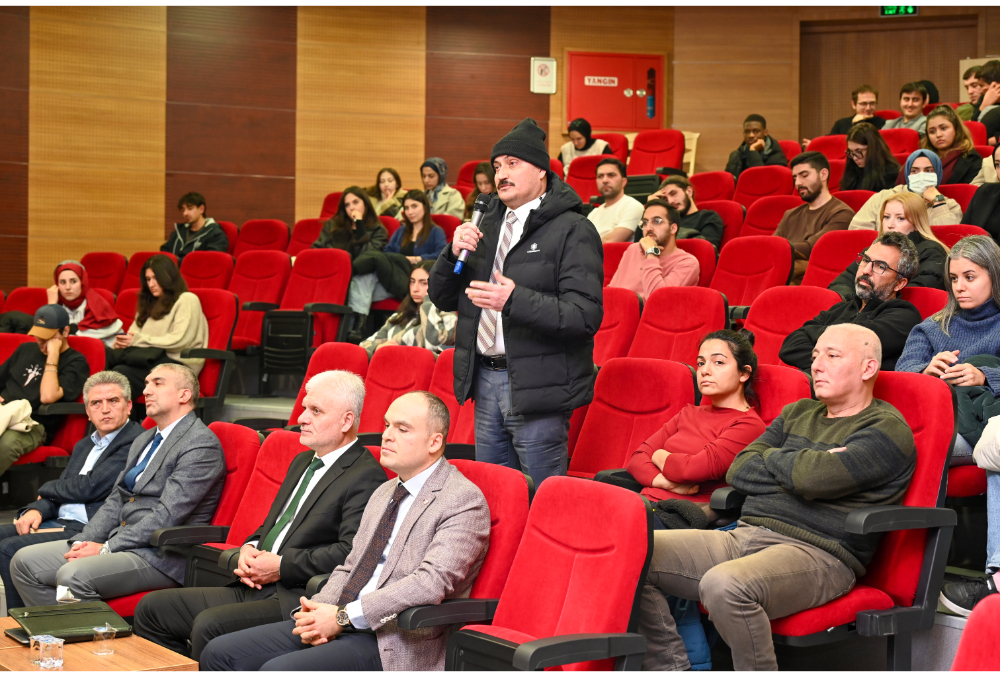
In the Q&A session following the speech, students and academics directed their questions about water resource protection to Prof. Dr. Aydın.
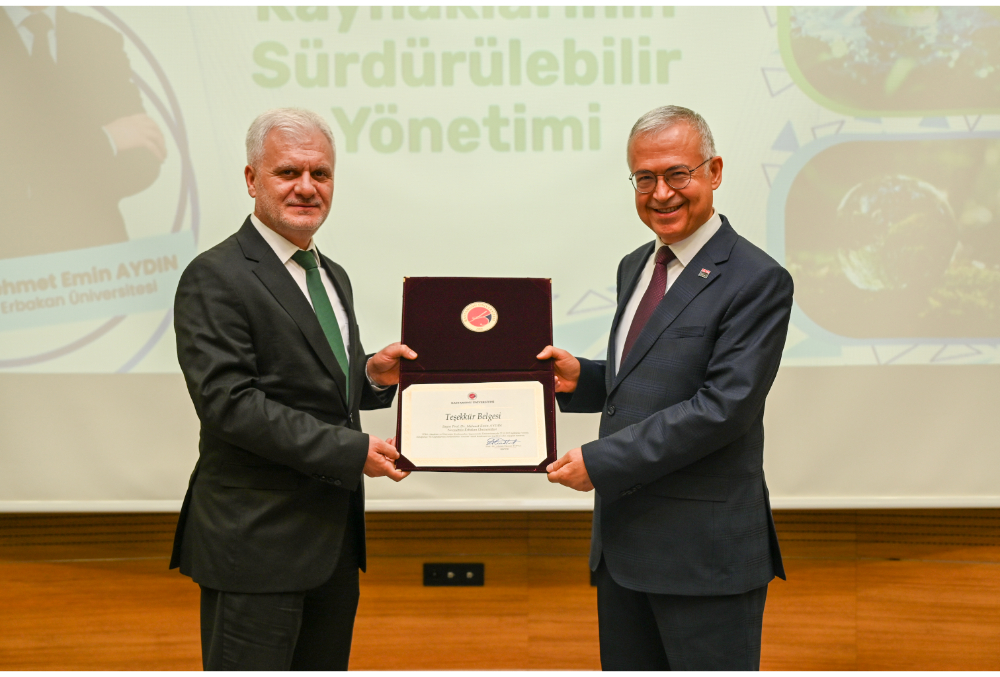
The program concluded with Vice Rector Prof. Dr. Ömer Küçük presenting a certificate of appreciation to Prof. Dr. Mehmet Emin Aydın, followed by a photo session to commemorate the occasion.